Why U.S. Manufacturing Remains Vital to Regional Economic Health
The U.S. is seen as a nation that imports many of its goods from abroad and whose economy runs on high-skilled services, but manufacturing remains a fundamental source of income for many U.S. households and microeconomies. As tariffs, some already in place and others threatened, suddenly complicate the future for American manufacturers, we take a closer look at the sector. Manufacturing has seen great changes in recent years, but its effects on our economy remain considerable.
Is American Manufacturing Really In Decline?
Many assume that U.S. manufacturing is shrinking, but here’s a reality check: America is still the third-largest manufacturer in the world, behind only China and the EU. Growth has stalled, however, and U.S. factories are producing 5% less than they did in 2007. What’s driving this slowdown, and can American manufacturing regain its momentum?
The Manufacturing Multiplier: The Hidden Economic Engine
For every manufacturing job created, five more jobs pop up across the economy, one of the highest ripple effects of any industry. Modern manufacturing is no longer just assembly lines – it’s a powerhouse of tech, innovation and economic growth. Dive into its impact and what it means for your area in “Manufacturing Myth-Buster 1” at Empowering American Cities, the Kenan Institute’s collaboration with Fifth Third Bank.

America Still Builds – But Where?
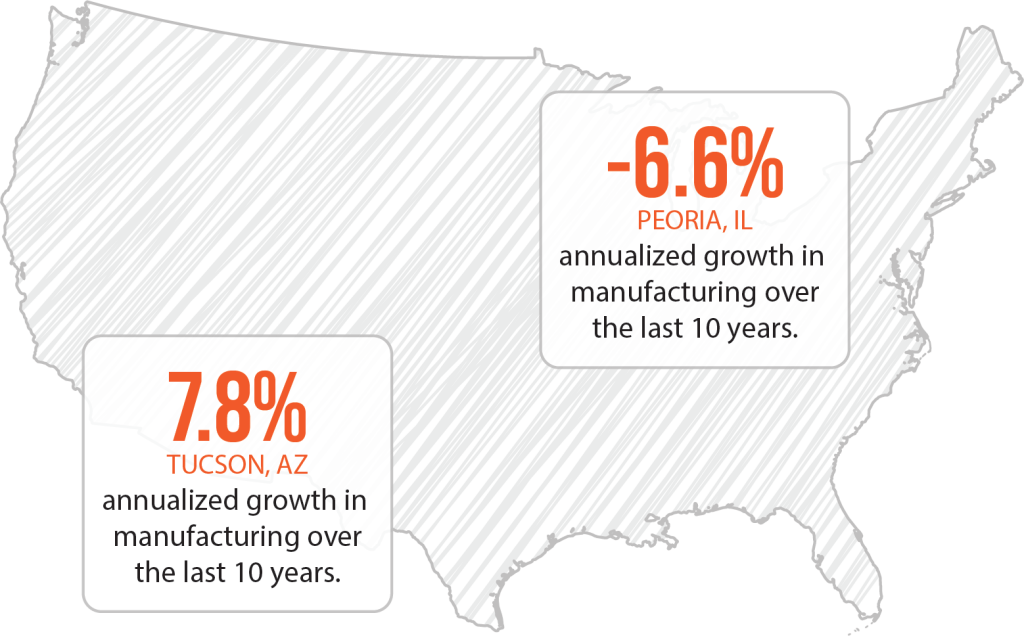
Manufacturing jobs aren’t disappearing – they’re moving. The past decade has seen explosive growth in the South and West, with places like Tucson surging while traditional hubs like Peoria, IL, have struggled. What’s behind this shift? And what does it mean for the future of U.S. manufacturing?
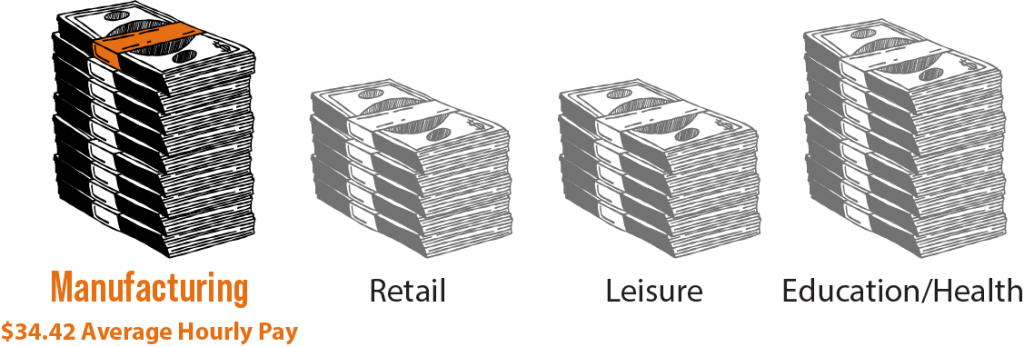
The $50-an-Hour Factory Job You Didn’t Know Existed
Think manufacturing jobs are low-wage, low-skill gigs? Think again. In high-tech sectors like semiconductor and aerospace manufacturing, average wages exceed $50 an hour, far outpacing many other industries. Head to “Manufacturing Myth-Buster 1” on the Empowering American Cities website to see how manufacturing is becoming a high-skill, high-reward career path for American workers.

RESEARCH TRIANGLE AND PIEDMONT TRIAD:
TWO PATHS, ONE FUTURE
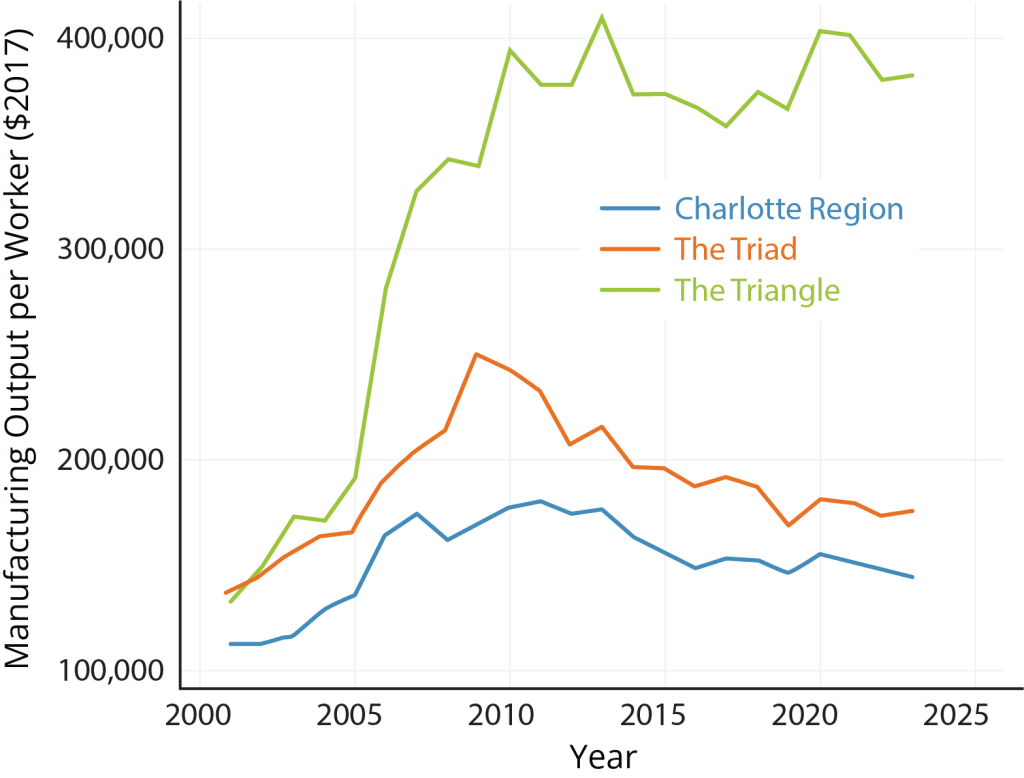
Why has the Research Triangle skyrocketed while the Piedmont Triad has faced a slower transition? One of these NC regions leveraged research, innovation and tech while the other worked to adapt from legacy industries. But with new aerospace and EV battery plants breaking ground, is the Triad poised for a resurgence?
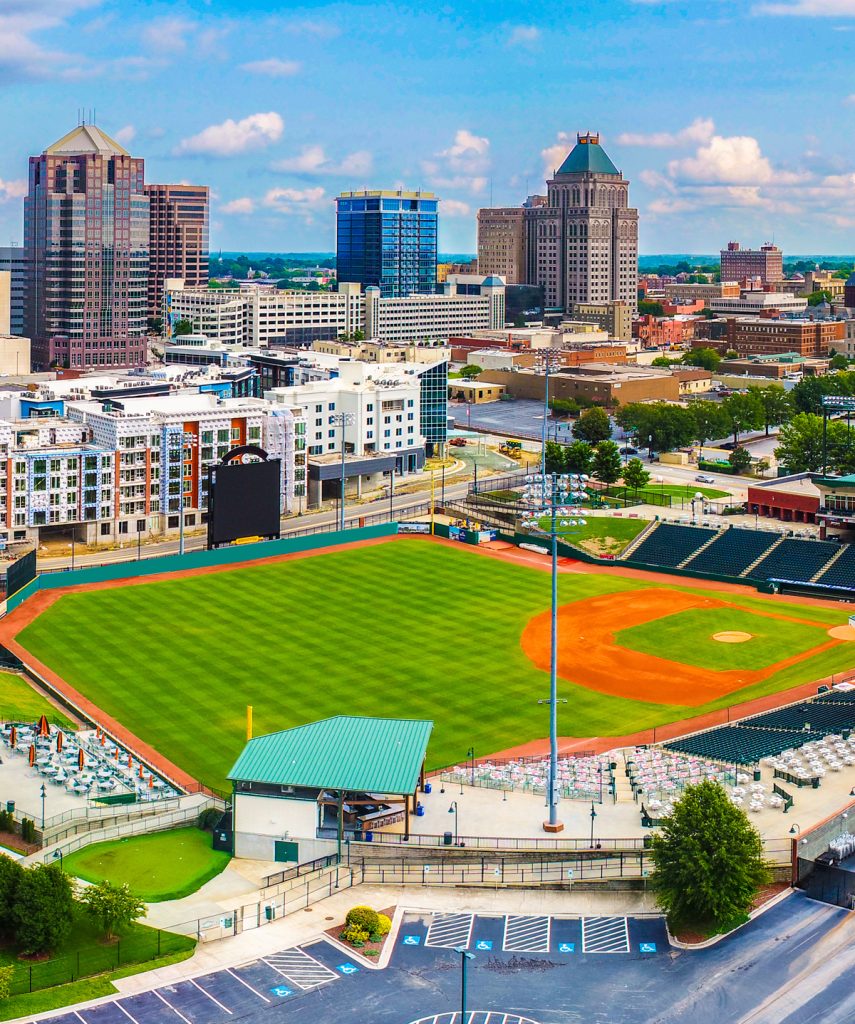
NC’S Secret Manufacturing Superpower: Productivity
North Carolina’s Research Triangle has one of the most productive manufacturing sectors in the U.S. Only 5% of the Triangle’s workforce is in manufacturing, but it generates nearly 15% of the region’s GDP. What’s the secret behind this outsized impact?