


Key Takeaways
- Housing challenges are a significant barrier to recruiting and retaining teachers in rural North Carolina.
- Nonprofit ownership structures unlock interest-free financing that makes teacher housing construction viable.
- Local partnerships, from community foundations to local businesses, help close funding gaps.
- The model can be adapted to different types of housing challenges, such as supply and affordability.
- Once loans are repaid, teacher housing becomes a lasting asset for the school system.
Rural districts across North Carolina face persistent challenges recruiting and retaining teachers. In some communities, housing has become a clear barrier, with local leaders identifying availability and affordability as critical roadblocks, particularly for early-career teachers relocating to rural communities.
In response, several counties have developed teacher-specific housing through partnerships between school foundations, local governments and the SECU Foundation, creating new options for educators and long-term assets for local school systems.
We’ll examine teacher housing efforts in Hertford, Bertie and Brunswick counties — each in a different stage of implementing a shared model. Drawing on interviews with local leaders and project partners, we outline the basic development model, highlight differences in local conditions and identify practical lessons for other communities considering similar efforts.
Housing as a Structural Barrier to Teacher Recruitment in Rural NC
In many rural communities, the rental housing market for early-career teachers is extremely limited. New teachers, who are often recent graduates on a single income, find that available units are scarce, and existing affordable housing is often reserved for low-income tenants or elderly residents. Teachers who can’t find suitable housing near their schools face long commutes from neighboring counties or, in some cases, leave their positions altogether.
Private developers rarely fill this gap. Construction costs are relatively consistent across regions, but potential rental income in low-wealth counties is significantly lower than in urban or fast-growing areas. As a result, developers often determine that new apartment construction is financially unviable in these communities.
Public sector solutions are also limited. North Carolina law generally limits the ability of counties and municipalities to use public funds for workforce housing unless units are designated for low- or moderate-income households. These programs serve important populations, but they do not typically accommodate early-career teachers, whose incomes may exceed eligibility thresholds but still be insufficient to afford local housing markets. Together, these conditions create a structural housing gap for the education workforce, particularly early-career teachers. Without accessible housing options, rural districts face increased turnover, reduced applicant pools and greater difficulty attracting teachers from outside their immediate region.
The Teacher Housing Model
In response, several North Carolina counties have begun experimenting with teacher housing initiatives. Through partnerships between school foundations, community organizations, and financial institutions such as the State Employees’ Credit Union Foundation, they have built apartment complexes specifically designed to support teachers. Early results suggest these efforts can play an important role in stabilizing rural education workforces and strengthening community resilience.
Although each community has adapted the approach to its local context, several common elements/processes have emerged across counties:
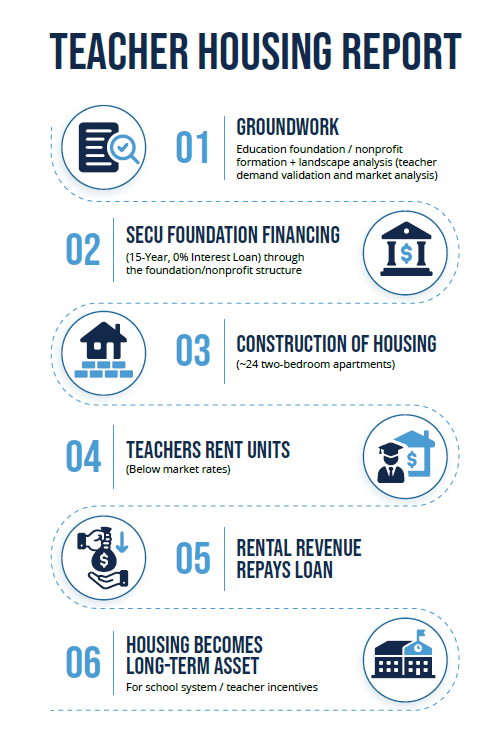
Most projects involve the development of small apartment complexes, typically about 24 units of two-bedroom housing, designed primarily for early-career teachers. These developments are often owned and managed by local education foundations or nonprofit partners, which allows the housing to operate outside many of the statutory limitations that restrict direct public investment in workforce housing.
Financing typically comes from interest-free loans through the SECU Foundation, structured over 15 years. Rental income repays the loan while keeping rents below local market rates. In several cases, grants from community foundations, local governments or philanthropic partners have helped close remaining funding gaps.
Once the loan is repaid,the housing complex can become a long-term community asset. Rental revenue may be reinvested into teacher recruitment and retention programs, student scholarships or other initiatives that strengthen local school systems.
Case Studies
We spoke with leaders in several counties across North Carolina,each at a different stage of developing teacher housing. While every project reflects its community’s specific needs, these efforts share a common structure and offer practical lessons for other counties considering similar approaches.
| County | Stage | Units | Financing | Key Outcome |
|---|---|---|---|---|
| Hertford County | Mature model | 24 units | $2.5M SECU Foundation loan | Loan repaid; ~$100K annual revenue for schools |
| Bertie County | Operating model | 24 units | $3.1M SECU Foundation loan + ARPA + Golden LEAF | Turnover rate among teachers in the complex was 0% |
| Brunswick County | Early stage | 24 units (planned) | $3.5M SECU loan planned + grants | Project currently in development |
Hertford County: Establishing a Proof-of-Concept Model
Hertford County was the first in North Carolina to develop a dedicated teacher housing complex. In the early 2000s, local leaders recognized that a shortage of rental housing was making it difficult to recruit and retain teachers.
The Partners for Hertford County Public Schools Foundation secured a $2.5 million interest-free loan from the SECU Foundation to develop a 24-unit apartment complex in Ahoskie. Known as Hertford Pointe, the development opened in 2006 and consists of three buildings with eight two-bedroom units each.
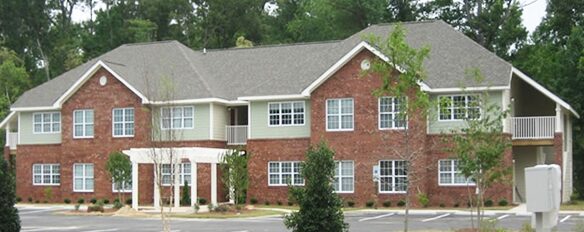
The apartments, designed primarily for teachers working in Hertford County Schools, saw strong demand from the beginning. Local surveys found that nearly all teachers expressed interest in the housing, and the apartments have remained fully occupied since opening.
Rental revenue repaid the SECU loan over 15 years. Once the loan was retired, the complex began generating surplus revenue for local education initiatives. Today, it produces roughly $100,000 annually, supporting teacher incentives, scholarships for graduating seniors and student attendance programs.
Hertford County’s experience shows the model works and has the potential to become a lasting asset for rural school systems long after the initial loan is repaid.
Bertie County: Expanding the Model Through Local Partnerships
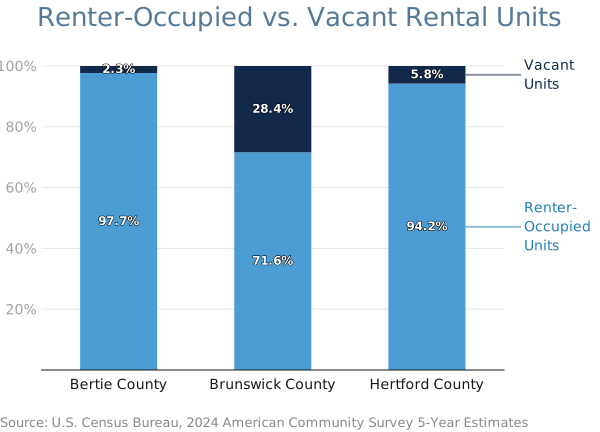
Building on Hertford County’s example, leaders in Bertie County pursued a similar approach. Bertie is a low-wealth rural county that has seen significant population decline, and its limited housing supply made it especially difficult to attract teachers from outside the region.
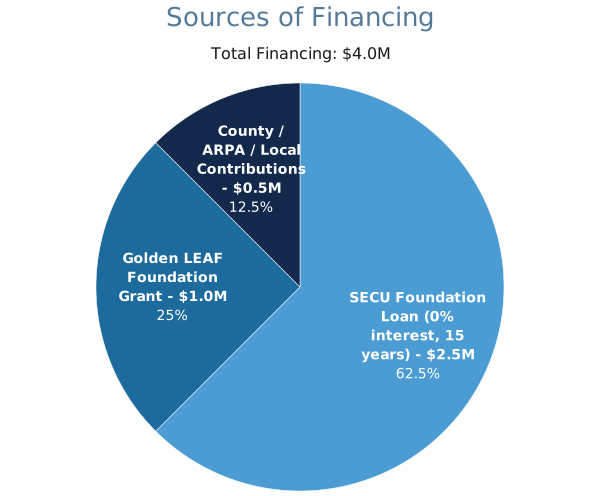
Local officials financed the project through a $3.1 million interest-free loan from the SECU Foundation, supplemented by additional local and philanthropic contributions from the Golden LEAF Foundation, the town of Windsor and Bertie County Schools.
The results were striking. Before the apartments opened in July 2024, teacher turnover in the county approached 40 percent in the first few years of employment. Turnover among teachers living in the complex stood at zero at the time of our interview with Bertie County staff.
Beyond supporting teacher retention, the project also helped catalyze broader community initiatives. Bertie County leaders simultaneously expanded home repair programs for seniors, partnered with nonprofit organizations to rehabilitate existing housing stock, and used repurposed public facilities to host community service organizations.
Brunswick County: Early-Stage Development in a High-Cost Market
Not every county is starting from the same place. Brunswick County represents an earlier stage of the same process, one where the housing challenge is real but the solution is still taking shape.
Local leaders in Brunswick County have identified rising housing costs as a major barrier to recruiting beginning teachers. Rental rates in the county frequently exceed $1,700 per month, far above what many early-career educators can afford.
To address this challenge, the Brunswick County Education Foundation is pursuing the development of a 24-unit apartment complex designed specifically for beginning teachers. The project is expected to cost about $6 million and would be financed in part through a $3.5 million interest-free loan from the SECU Foundation.
The project is in the planning phase. Leaders are working to secure land, for the complete environmental and market analyses, and are surveying teachers to confirm demand. Additional grants and philanthropic support will be needed to close the remaining financing gap.
As Steve Gainey of the Brunswick County Education Foundation put it: “[Partners for Bertie County Public Schools board Chairman Ron Wesson’s] challenge … was that they didn’t have housing. Our challenge in Brunswick County is different: We have housing, but it isn’t affordable for beginning teachers.”
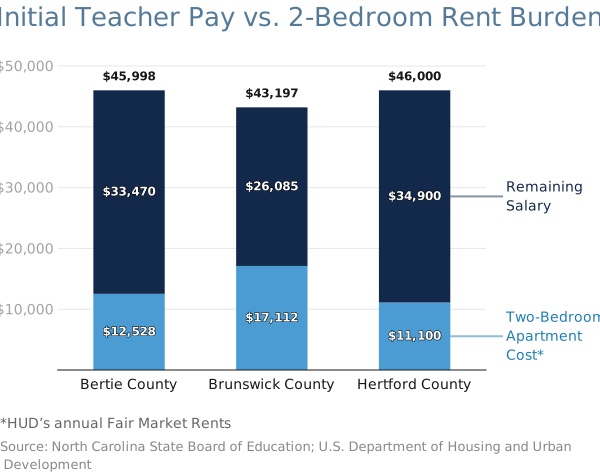
“Beginning teachers in Brunswick County earn around $46,000 to $49,000 a year, but a typical two-bedroom apartment here can cost $1,600 to $1,700 a month once utilities are included. So we recruit teachers who want to come here, but after they look at the housing costs, they realize they can’t afford to live here — or they leave a year or two later because the numbers just don’t work.” — Steve Gainey, Brunswick County Education Foundation
Steps for Communities Considering Teacher Housing
The counties in this paper each took a different path, but their experiences point to a common set of steps. What follows is a practical framework drawn from what has worked in North Carolina.
1. Identify and Validate the Local Housing Challenge
The problem isn’t the same everywhere. Bertie County lacked rental housing altogether; Brunswick County has housing, but it was unaffordable for early-career teachers. Before pursuing a project, confirm what type of challenge you are facing, through:
- Surveys of beginning teachers and teacher candidates.
- Analysis of local rental market conditions.
- Exit interviews with departing educators.
- Recruitment feedback from human resources departments.
This documentation also strengthens loan and grant applications down the road.
2. Establish Local Leadership and Build Institutional Partnerships
In each of the counties examined here, success depended on collaboration between school leadership, county government, education foundations or nonprofits, and philanthropic partners. The foundation structure matters in particularbecause it can serve as the project’s primary organizational vehicle and manager, unlocking financing options that wouldn’t otherwise be available.
3. Develop a Sustainable Financing Model
The SECU Foundation’s 15-year, interest-free loan has been the anchor of every project profiled here, but it rarely covers everything. Hertford County supplemented with local contributions; Bertie added a Golden LEAF Foundation grant and American Rescue Plan Act funds; and Brunswick County is still working to close its gap. The key is structuring the project so that rental income covers loan repayment while keeping rents affordable for teachers.
4. Secure Land and Complete Feasibility Analysis
Site selection and feasibility work are often where projects stall, and Brunswick County’s experience shows why this step takes time. Environmental assessments, zoning review, rental market analysis, and construction cost estimates all need to happen before financing can be finalized. This groundwork also gives lenders and grantmakers confidence that the project is viable.
5. Design Housing That Meets Teachers’ Needs
The projects in this paper used a similar design: roughly 24 two-bedroom units, built simply and cost-efficiently, located near schools and professionally managed. Two-bedroom units matter. By allowing teachers to share costs with a roommate, it makes the rent more manageable on an early-career salary. Proximity to schools reduces commute burden, and professional management keeps the property functioning well without placing that burden on the foundation.
6. Plan for Long-Term Community Impact
In Hertford County, the loan is fully repaid and the complex now generates roughly $100,000 a year, funding teacher incentives, student scholarships and attendance programs. That didn’t happen by accident; it happened because the project was designed with a long-term revenue model in mind. Communities considering teacher housing should think from day one about what the rental revenue will support once the loan is retired. The housing itself is the first investment; what it enables afterward is the lasting one.