
Oct 19, 2026
Monthly Economic Briefing
Join our monthly economic briefings as Kenan Institute experts analyze the latest employment report from the Bureau of Labor Statistics and discuss top-of-mind business topics.
economic outlook
Join our monthly economic briefings as Kenan Institute experts analyze the latest employment report from the Bureau of Labor Statistics and discuss top-of-mind business topics.

Join us for the Kenan Institute monthly economic briefing with Research Economist Cody Morris at 9 AM EDT Wednesday, October 14, the morning that the Bureau of Labor Statistics will release the consumer price index for September.
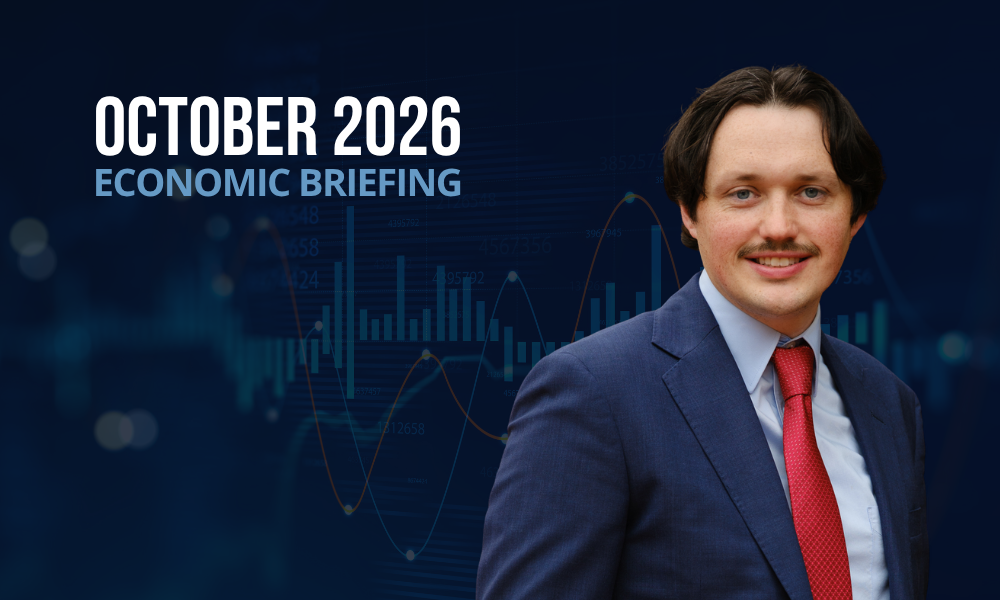
Research Economist Cody Morris reviews a new energy-driven rise in inflation and its potential effects on whether the Federal Reserve will adjust interest rates at its October 27-28 meeting.

A labor market shedding jobs plus continuing inflation concerns will give the Fed much to think about at its midmonth policy meeting. Join Research Director Christian Lundblad as he analyzes the new jobs numbers.
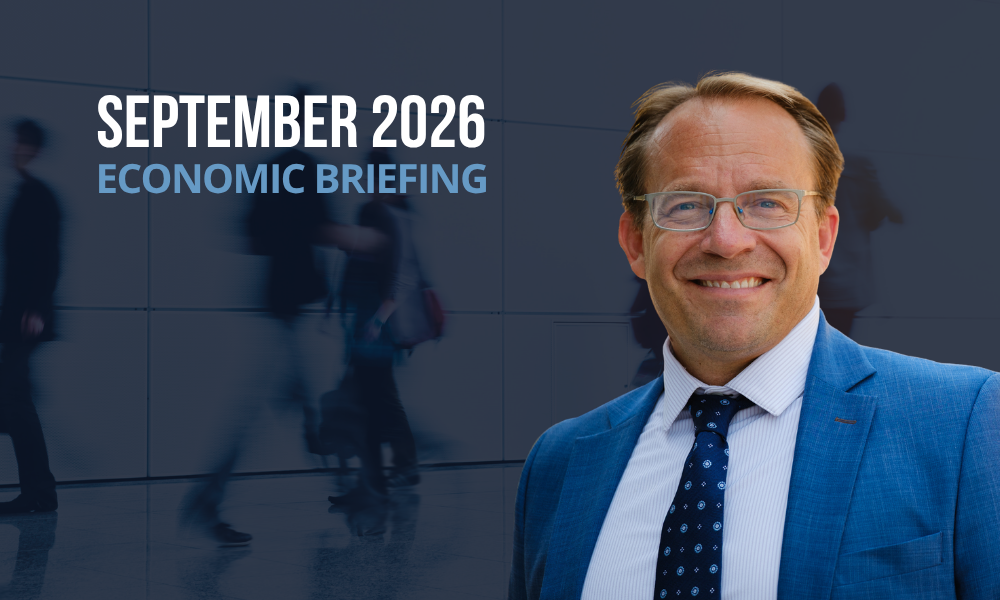
Research Director Christian Lundblad reviews a big rebound in hiring and its potential effects on Fed decision-making during our September 2026 briefing.

Looking back at our "Five Economic Trends to Watch in 2026" from January, we're impressed by the resilience of the US economy in the face of one thing we did not foresee, a war in Iran.
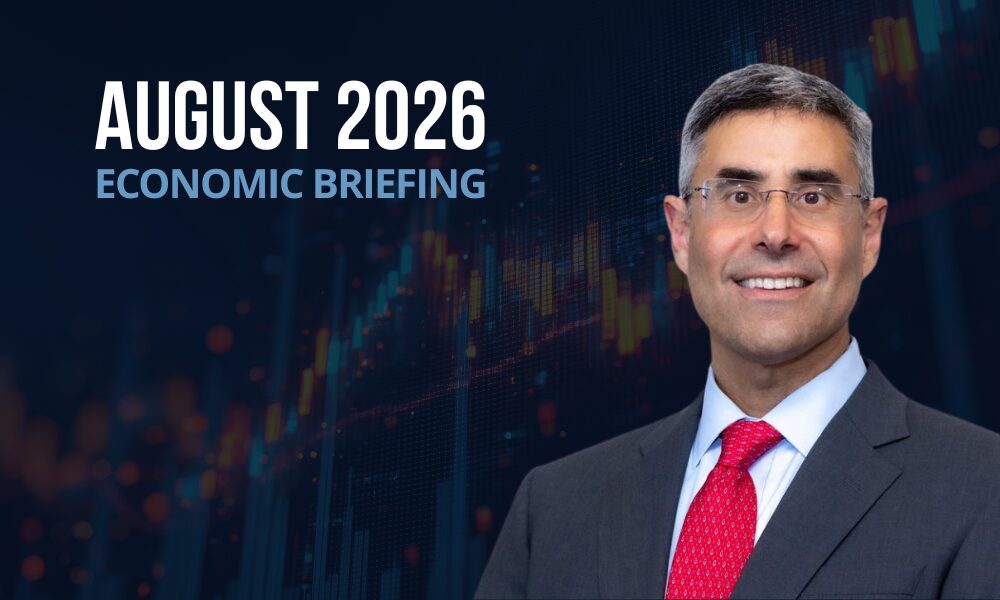
Chief Economist Gerald Cohen took a fresh look at our Five Economic Trends for 2026 and analyzed a disappointing jobs report in our August 2026 briefing.

It’s time to look back at our Five Economic Trends for 2026 from January and see where things stand. Don't miss our monthly briefing at 9 AM EDT Friday, August 7, with Chief Economist Gerald Cohen.
UNC Kenan-Flagler's Camelia Kuhnen spoke with The Wall Street Journal for an article on wage growth among the lowest-earning US households.
Research Director Camelia Kuhnen discusses the labor market's conflicting signals after job growth slowed in June and addresses topics such as inflation and the Fed's next move.

Join Kenan Institute Research Director Camelia Kuhnen as she discusses the latest employment report during the institute’s monthly briefing at 9 AM EDT Thursday, July 2.
Kenan Institute Research Economist Sarah Dickerson analyzes what she calls strong but softening employment numbers in our June briefing after the economy added jobs for the third straight month.

Join the Kenan Institute on June 4, 2026, for the fourth annual Conference on Market-Based Solutions for Reducing Wealth Inequality, as we reimagine what’s possible and chart new pathways toward inclusive economic growth.

Join Kenan Institute Research Fellow Greg Brown as he discusses the up-and-down year for job growth and the fresh employment report during the institute’s monthly briefing at 9 AM EDT Friday, May 8.
Kenan Institute Research Fellow Greg Brown breaks down another solid employment report and discusses potential challenges ahead in our May briefing.

Beneath the headlines about Iran and oil, a quieter story is building. Join Kenan Institute Research Fellow Christian Lundblad as he discusses the situation and takes your questions during the institute’s monthly briefing at 9 AM EDT Friday, April 3.
Research Fellow Christian Lundblad discussed a surprising jobs number and a complicated time for the Fed, as the possibility of an oil-driven increase in the inflation rate looms over future interest rate decisions.

During the institute’s monthly briefing at 9 AM EST Friday, March 6, Chief Economist Gerald Cohen will discuss two new forces affecting the US economy, artificial intelligence and the Middle East.
Kenan Institute Chief Economist Gerald Cohen discusses an unexpected decline in jobs and potential economic effects of artificial intelligence and the Middle East conflict in our March briefing.

During the institute’s next monthly briefing at 9 AM EST Wednesday, February 11, Kenan Institute Director of Research Camelia Kuhnen will assess the economy’s health following the delayed release of the Bureau of Labor Statistics data.
Research Director Camelia Kuhnen gave her analysis of the morning’s new employment numbers and the US economic picture at the institute's February briefing.

Some Extended Metropolitan Areas will be more resilient to 2026's economic challenges than others. Find out which EMA economies the American Growth Project expects to expand the most.
Want to know which issues are top of mind for business leaders as we enter 2026? Chief Economist Gerald Cohen gives you the big questions for the new year in his annual Five Trends.

Join us at 9 AM EST Friday, January 9, as Chief Economist Gerald Cohen examines fresh employment numbers from the Bureau of Labor Statistics and previews his Five Trends commentary in our monthly economic briefing.
Chief Economist Gerald Cohen saw reason for concern in the December employment numbers and previewed his Five Economic Trends for 2026 piece. He also answered questions on productivity growth and reductions in the federal workforce.

Join us Friday, December 5, at 9 AM EST as Research Fellow Greg Brown examines how federal agencies are tackling a historic data backlog and what it means for policy and business amid ongoing uncertainty.
With government economic data reports only beginning to resume, institute Research Fellow Greg Brown looked at a variety of available indicators pointing in different directions and the theory that “the economy is actually pretty strong.”
With no government employment data to discuss, institute Chief Economist Gerald Cohen ran through a scorecard of alternative measures, calling the country's economic road “curvy and foggy” and concluding that things are “OK but not great.”

The government shutdown has slowed the flow of economic data out of Washington to a trickle. Kenan Institute Chief Economist Gerald Cohen will look at available indicators to fill the gap during the institute’s monthly briefing at 9 AM EST Friday, November 7.
With the government shut down, there was no new employment report to analyze for our October briefing, but institute Research Fellow Greg Brown ran through his “U.S. Economy Scoreboard,” examining available economic indicators.
Join Kenan Institute Research Fellow Greg Brown at 9 AM EDT Friday, October 3, for the institute’s monthly briefing, discussing the real uncertainty and potential effects of the government shutdown.
Kenan Institute Research Director Camelia Kuhnen talked to the Wall Street Journal about the “two-speed economy,” where high earners and many older Americans are in good shape but unemployment for others has jumped.

Kenan Institute Research Director Camelia Kuhnen will analyze the new employment report and assess the overall financial health of American households during the institute’s monthly briefing at 9 AM EDT Friday, September 5.
For our September economic briefing, Kenan Institute Research Director Camelia Kuhnen discussed the morning's employment report, which showed a lower-than-expected number of jobs created in August, as well as other indicators that the economy is slowing.

During the institute’s next monthly briefing at 9 AM EDT Friday, August 1, Kenan Institute Research Fellow Christian Lundblad will examine Friday’s employment data for some clarity on the economy's trajectory.
Research Fellow Christian Lundblad saw more "muckiness" than clarity as he analyzed fresh employment numbers in addition to several other date drops from the week leading up to the institute's August briefing.
Research Economist Sarah Dickerson shared news of healthy jobs numbers from June and looked at the effects of a decrease in foreign-born workers on new home construction.

Join us on Thursday, July 3, as Research Economist Sarah Dickerson explores the economic impacts of current U.S. policy during our monthly briefing.

Kenan Institute Chief Economist Gerald Cohen will evaluate the morning’s employment data in the context of new policy during the latest monthly economic briefing at 9 AM EDT Friday, June 6.
In the institute's June briefing, Chief Economist Gerald Cohen reviewed the morning’s employment report for May and examined a number of economic indices for potential effects from recent policy changes.

Despite positive labor market indicators, consumer sentiment has declined steadily in 2025 as fears of inflation rise. The result could be a reduction in consumer spending.
In the institute’s May 2 briefing, Research Economist Sarah Dickerson reviewed another surprisingly solid employment report, weighing it with falling consumer confidence and a raft of other indicators both positive and negative in an effort to get clarity on the future of the economy.

We can't call it a recession yet but join Kenan Institute Research Economist Sarah Dickerson as she addresses a mixed bag of economic news during the institute’s monthly briefing at 9 AM EDT Friday, May 2.

In a continuing effort to examine the business sector's contributions to inclusive economic growth, join us April 10-11 for two days of discussions and exploration during the third annual Conference on Market-Based Solutions for Reducing Wealth Inequality.
In the institute's April 4 briefing, Research Director Camelia Kuhnen dissected consumer confidence and sentiment data with an emphasis on growing pessimism among young people and answered questions on potential economic effects of new tariffs.

Kenan Institute Research Director Camelia Kuhnen will explore consumer confidence and sentiment, federal policy uncertainty, and economic activity during the institute’s monthly virtual briefing at 9 AM EDT Friday, April 4.

The Kenan Institute's projected 2025 GDP growth rates for 150 Extended Metropolitan Areas across the United States anticipate a slowdown, but our data indicate that all of those areas will see GDP growth this year.

The Research Triangle and the Piedmont Triad epitomize North Carolina’s economic evolution. The Triangle transitioned from legacy industries to high-tech manufacturing and experienced explosive economic growth; the Triad may be poised to join it.
For the institute's March 7 briefing, Chief Economist Gerald Cohen discussed an encouragingly “benign” employment report and discussed “animal spirits,” the slower growth of inflation-adjusted wages, and potential effects of tariffs across the economy.

Will uncertainty over new administration policy dent the economy? Kenan Institute Research Fellow Greg Brown will look at this question and more during the institute’s monthly virtual briefing at 9 AM EST Friday, February 7.
In the institute's February 7 briefing, Research Fellow Greg Brown analyzed the morning's employment report and discussed how the unpredictability of changes rippling through Washington could impact the US economy.

Dive into the Kenan Institute’s monthly virtual press briefing on Friday, Jan. 10, as institute Chief Economist Gerald Cohen explores economic trends to watch for 2025.
In the institute's January 10 briefing, Chief Economist Gerald Cohen discussed the morning's employment report and shared his thoughts on some top-of-mind issues for business executives and policymakers this year.

Kenan Institute Chief Economist Gerald Cohen kicks off 2025 with a rundown of five issues that will be top of mind for business leaders and policymakers, accompanied by his analysis.

Kenan Institute Research Director Camelia Kuhnen will discuss consumer confidence along with recent changes in the labor market and inflation during the institute’s monthly virtual briefing at 9 AM EST Friday, December 6.
For our December 6 economic briefing, Kenan Institute Research Director Camelia Kuhnen discussed the morning's employment report, which showed a bounce back from October's numbers, and the rise in the level of consumer confidence in recent months.

How will the hurricanes affect economic data for October? Kenan Institute Research Fellow Greg Brown will look at the data during the institute’s monthly virtual briefing at 9 AM EDT Friday, November 1.
For our November 1 economic briefing, Kenan Institute Research Fellow Greg Brown discussed the morning's employment report and the effects that two hurricanes and a major strike had on some of the numbers it contained.

Join Chief Economist Gerald Cohen for the institute's monthly virtual briefing this Wednesday, Oct. 9, discussing how the Federal Reserve employment report will impact future cuts.
For our October 9 briefing, Chief Economist Gerald Cohen noted that the previous Friday's strong employment report caused the markets to reassess the path of Federal Reserve easing and discussed whether the Fed might do the same.

Is there an interest rate cut coming at the Fed’s meeting this month? Kenan Institute Research Fellow Christian Lundblad will discuss during the Kenan Institute’s monthly briefing at 9 AM EDT Friday, September 6.
Institute Research Fellow Christian Lundblad discussed the morning's employment report, factors the Federal Reserve is considering before possibly cutting interest rates at its next meeting, and the vital role that government economic data plays.

Our country's cities, towns and rural communities hold the key to understanding current and forecasted national trends – but for far too long, our nation’s microeconomic data has been lacking. The American Growth Project is here to help.

Kenan Institute Research Fellow Greg Brown will discuss the effects of a slowing economy during the institute’s monthly virtual briefing at 9 a.m. EST this Friday, Aug. 2.
At the institute's briefing Aug. 2, Research Fellow Greg Brown discussed the morning's employment report, which showed the number of new jobs in July falling below predictions. He also examined how a slowing economy can affect businesses and consumers.

Kenan Institute Research Director Camelia Kuhnen spoke with “Marketplace” reporter Kristin Schwab on July 25 about consumer spending remaining strong even as readings on consumer sentiment are less optimistic.

Kenan Institute Distinguished Fellow Josh Lerner of Harvard Business School says achieving resilience is difficult, in part because businesses are hard to change.

The Federal Reserve is seeing slowing inflation numbers, but the public is skeptical. Join Kenan Institute Chief Economist Gerald Cohen for the institute’s monthly virtual briefing at 9 a.m. EDT this Friday, July 12.

The Kenan Institute and Fifth Third Bank will present insights from our new collaboration, “Empowering American Cities,” at a breakfast Tuesday, June 25, in Charlotte.
During the institute’s monthly briefing June 7, Research Director Camelia Kuhnen discussed the stronger-than-expected new employment report and predicted that the Federal Reserve would still begin lowering interest rates later in the year.
Join Kenan Institute Research Director Camelia Kuhnen for the institute’s monthly virtual briefing at 9 a.m. EDT this Friday, June 7, as she dives into new data that shows a softening economy, raising questions about the Fed's response and labor market impact.
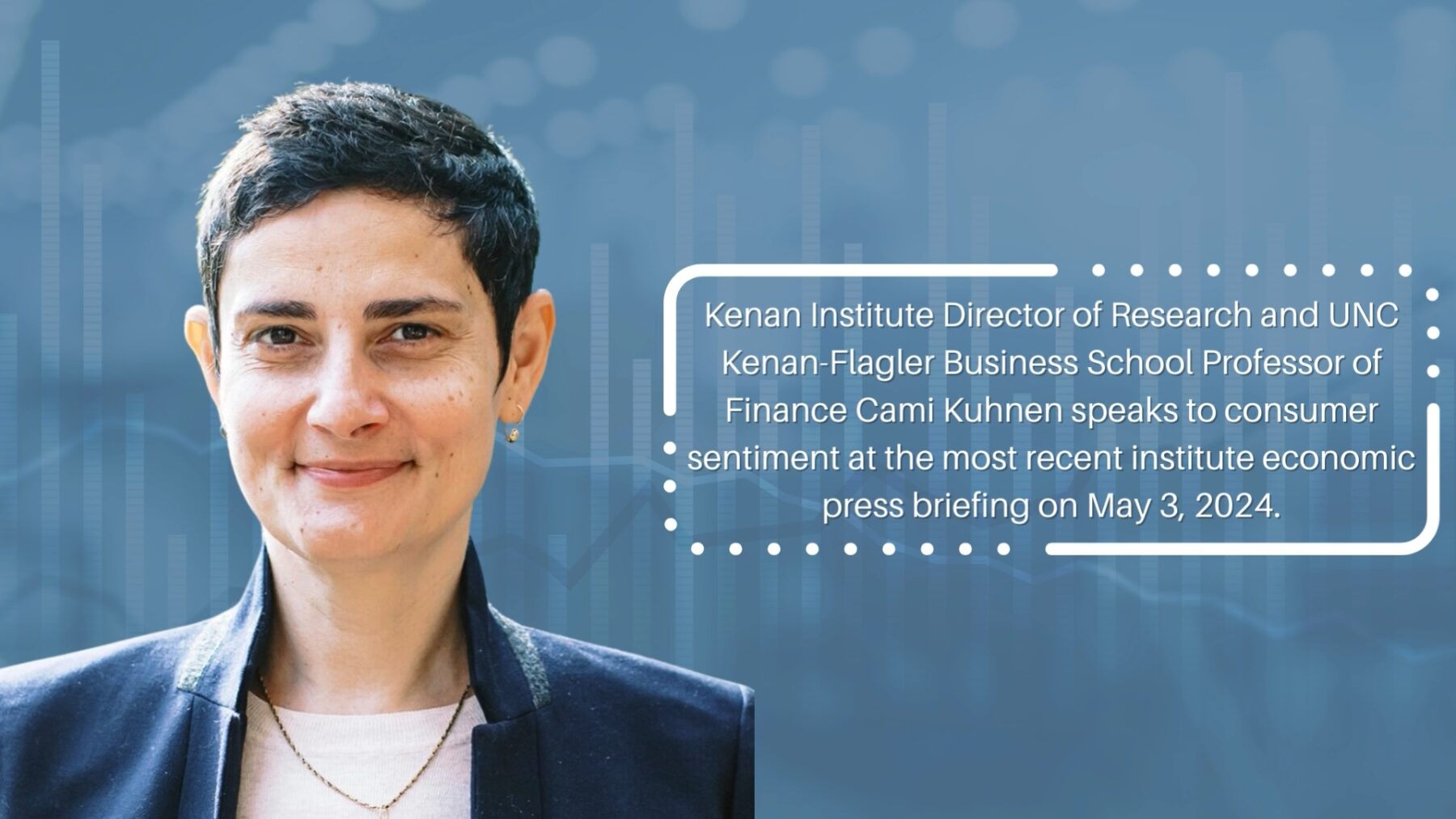
Camelia Kuhnen, Kenan Institute director of research and UNC Kenan-Flagler Business School finance professor, speaks to consumer sentiment during the institute's May 3 economic briefing.

Despite strong economic indicators—2.5% GDP growth, unemployment under 4%, and easing inflation—American consumer sentiment remains low. Kenan Institute experts explore why the public's mood doesn’t match the upbeat data, highlighting deeper sources of economic unease.
During the institute’s monthly press briefing May 3, Research Director Camelia Kuhnen discussed slower growth in the labor market and explored what creates the gap we now see in consumer sentiment numbers.
Do employment and wage growth numbers line up with consumer confidence? It's time for a confidence check with Kenan Institute Research Director Camelia Kuhnen during this month's virtual economic briefing at 9 a.m. EDT this Friday, May 3.

The Center for Interuniversity Research in Quantitative Economics, known by its French acronym CIREQ, will host an econometrics conference May 10-11 honoring UNC Kenan-Flagler Business School’s Eric Ghysels.

In a continuing effort to examine the business sector's contributions to inclusive economic growth, the second annual Conference on Market-Based Solutions for Reducing Wealth Inequality will bring top researchers and private sector representatives to the University of North Carolina at Chapel Hill on April 25-26.

Please join us for an exclusive conversation with Gov. Deval Patrick on April 23 at 5 p.m. as a part of the Dean’s Speaker Series, hosted by the Kenan Institute in partnership with UNC Kenan-Flagler Business School Dean Mary Margaret Frank.
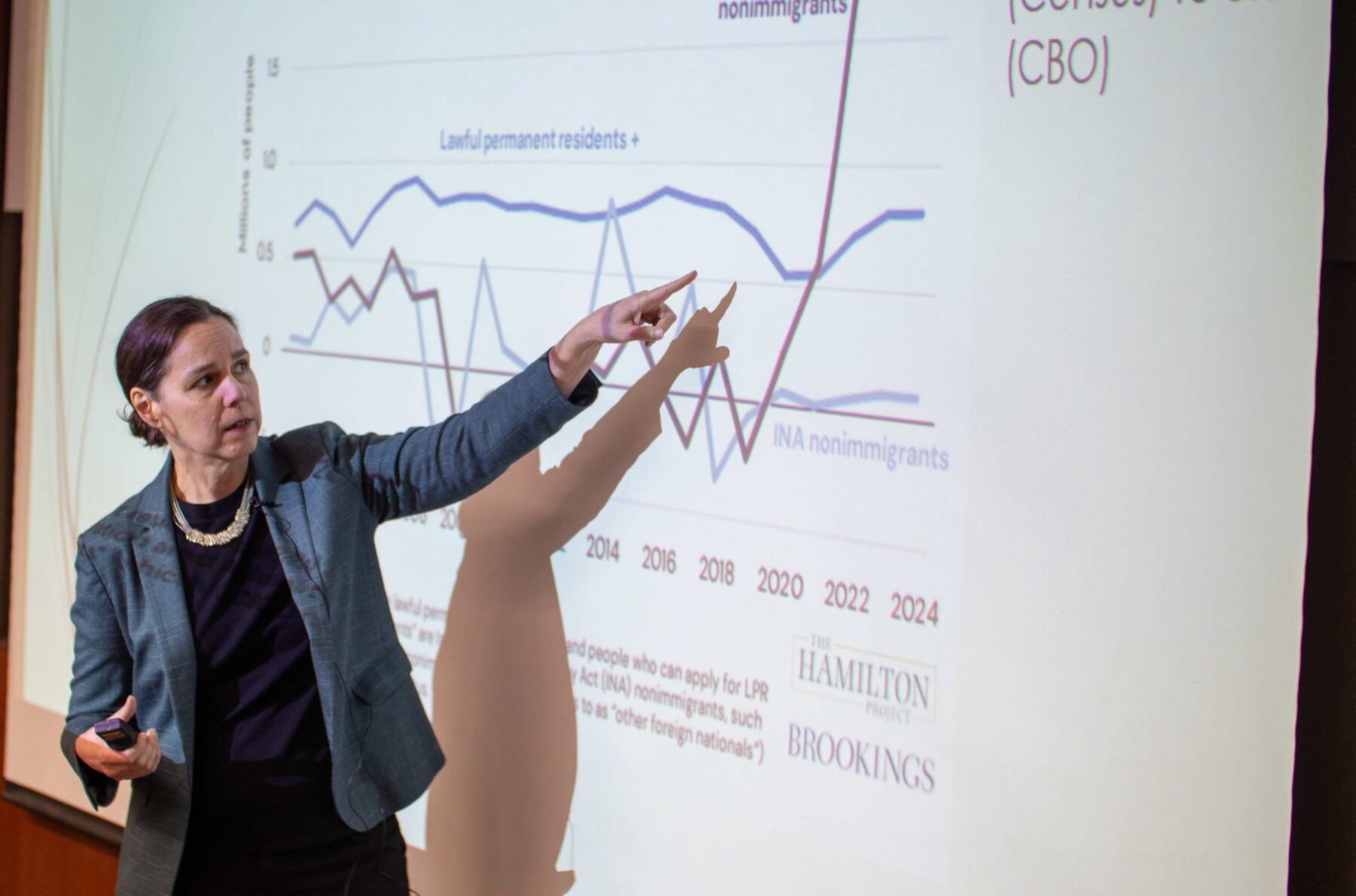
Kenan Institute Distinguished Fellow Tara Watson discussed "An Economist’s Guide to Immigration Reform" before an audience of UNC Kenan-Flagler Business School faculty and students on April 11.

Fifth Third Bank and the Kenan Institute of Private Enterprise at UNC Kenan-Flagler Business School have launched Empowering American Cities, a program that delivers local economic information tailored for business leaders looking to grow their operations.
During the institute’s monthly press briefing April 5, Research Fellow Greg Brown presented thoughts on what’s needed to extend a period of job growth and lower inflation.

How can the economy be running above its potential output level and still experience declining inflation? Join Kenan Institute Research Fellow Greg Brown in the institute’s monthly virtual briefing at 9 a.m. EDT this Friday, April 5 to learn why.
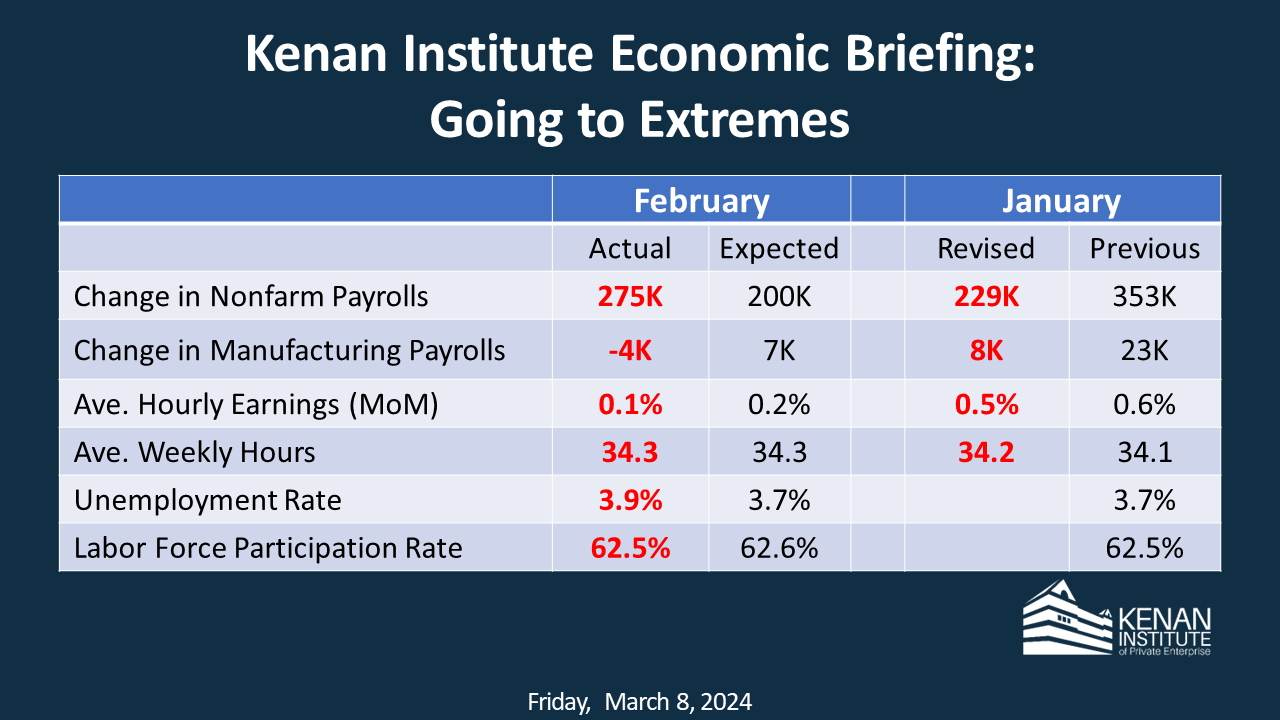
During the institute's monthly press briefing March 8, Chief Economist Gerald Cohen discussed another solid jobs report, in which the U.S. economy added 275,000 jobs for February.

The Kenan Institute's projected 2024 GDP growth rates for 150 microeconomies across the United States anticipate a slowdown, with almost all our 150 Extended Metropolitan Areas experiencing a deceleration.

Join Chief Economist Gerald Cohen for the institute’s monthly virtual briefing at 9 a.m. EST this Friday, March 8, to discuss the morning's employment report and the latest economic data.
By all accounts, there is steady good news coming the Federal Reserve’s way. And yet, the Fed seems to be in no rush to start cutting rates. Dive deeper into what the Fed will do to make sure inflation remains at that 2% goal.
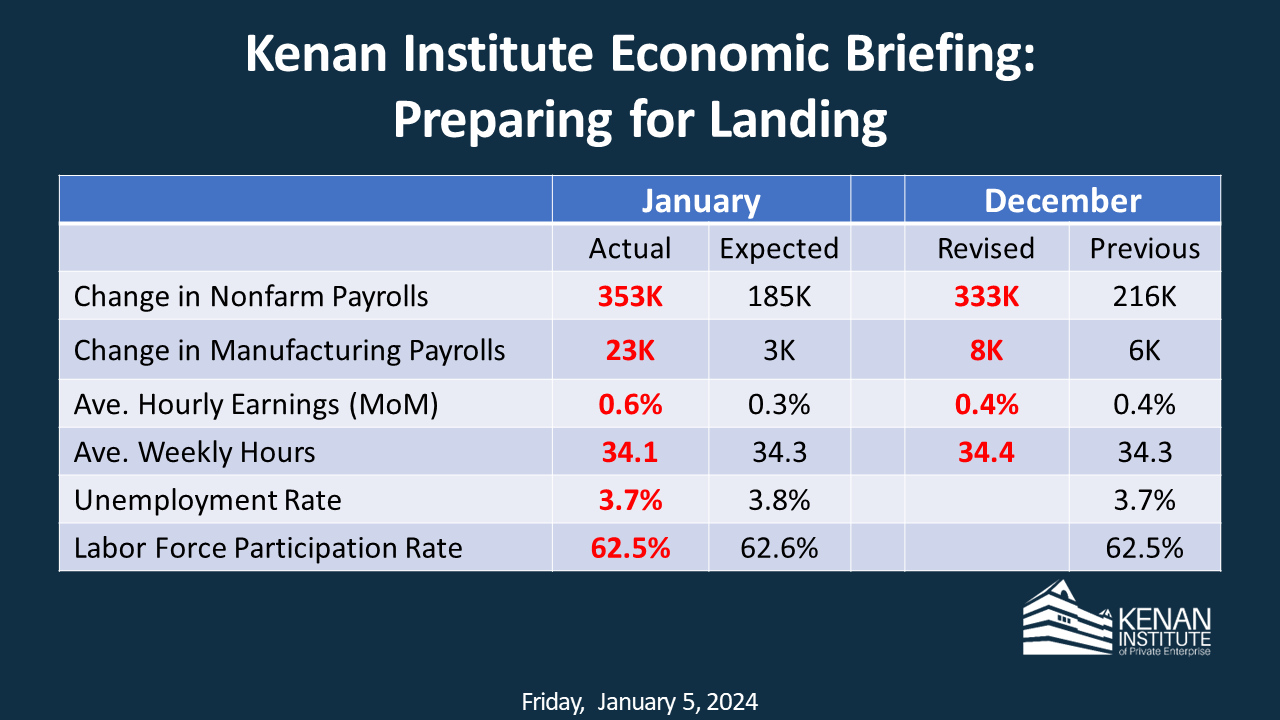
During the institute's monthly press briefing Feb. 2, Senior Faculty Fellow Christian Lundblad discussed a "Wow!" employment report for January in which job growth beat all expectations.

Kenan Institute Senior Faculty Fellow Christian Lundblad will discuss Friday’s employment report and other economic issues during the institute’s monthly virtual briefing at 9 a.m. EST this Friday, Feb. 2.

American Growth Project models project that all 150 of the top Extended Metropolitan Areas will see slower growth in 2024 than they did last year and that 56 of them will contract. See what else the data tell us.

The year ahead is full of economic uncertainty, but institute Chief Economist Gerald Cohen knows that some topics will be in the thoughts of many business leaders and policymakers. Find out five trends he has in mind.
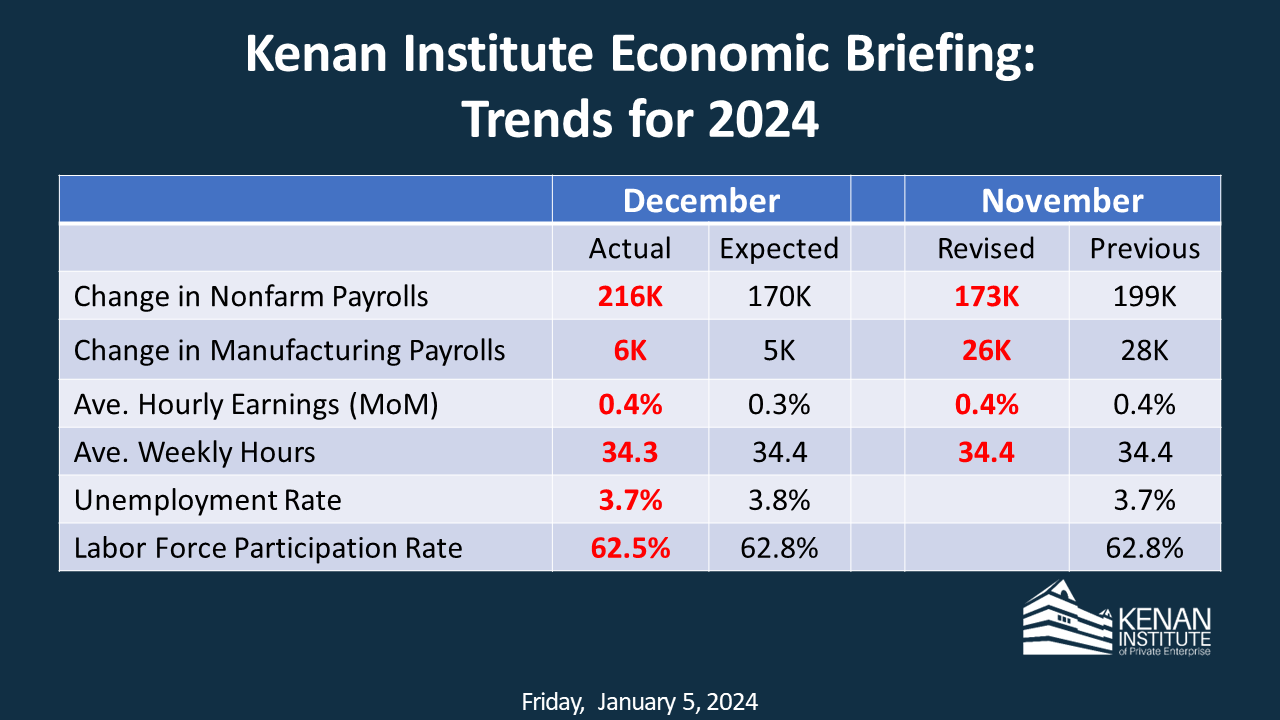
During the institute's monthly press briefing Jan. 5, institute Chief Economist Gerald Cohen analyzed another healthy job growth number and discussed his five economic trends to watch for this year.

Dive into the Kenan Institute’s monthly virtual press briefing from Friday, Jan. 5, as institute Chief Economist Gerald Cohen offered some economic trends to watch for 2024.

Inflation has come down but may still have some fight left in it. One concern is what happens going forward as the relief from pandemic price pressures disappears, but deflationary tailwinds are no longer there.
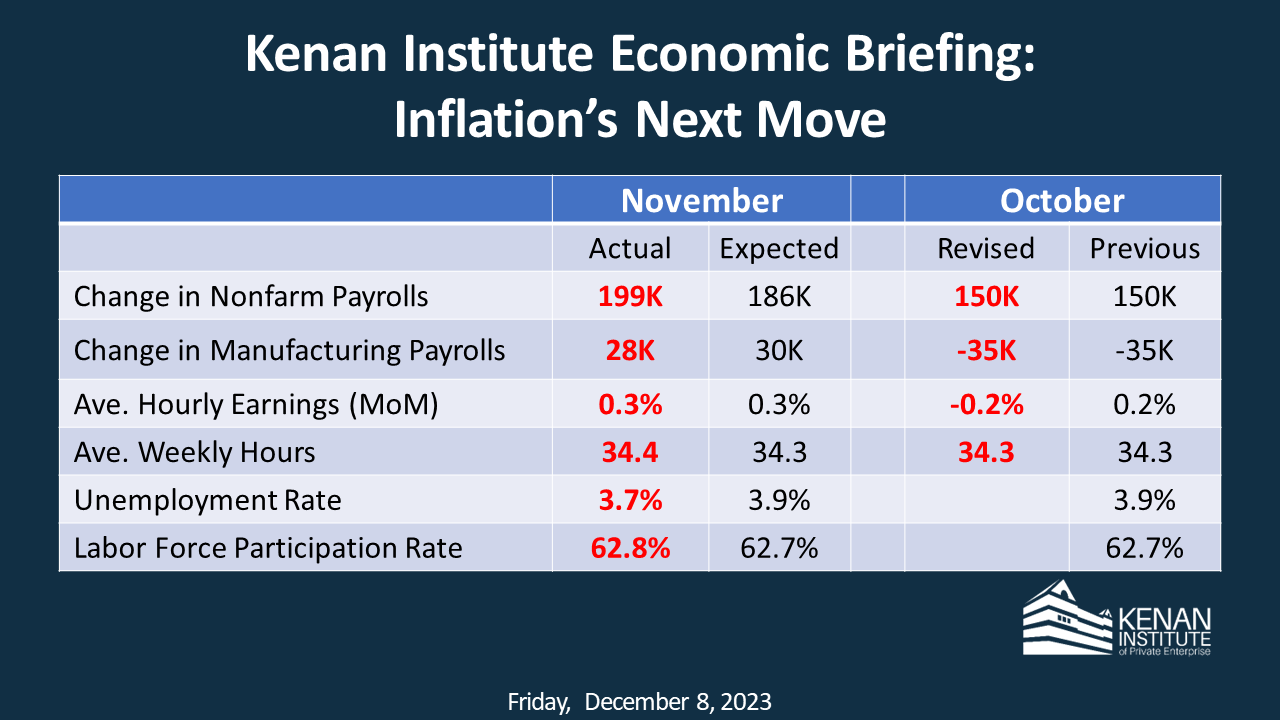
During the institute's monthly press briefing Dec. 8, former institute Executive Director Greg Brown analyzed the “slower slowing” in employment growth and signs that the Federal Reserve should keep its guard up against inflation.

Join us for the Kenan Institute’s monthly virtual press briefing at 9 a.m. EDT this Friday, Dec. 8, as professor and former executive director Greg Brown shares his thoughts on where inflation may be headed from here.

Since March 2022, the Federal Reserve has battled the highest inflation in decades with interest rate increases whose effects are only now starting to be seen. So does this mean the era of rate hikes is coming to an end?

Angelica Leigh, assistant professor of management and organizations at Duke University Fuqua School of Business and 2023 Kenan Institute Distinguished Fellow, defines the characteristics of mega-threats and their potential effects on the workplace.
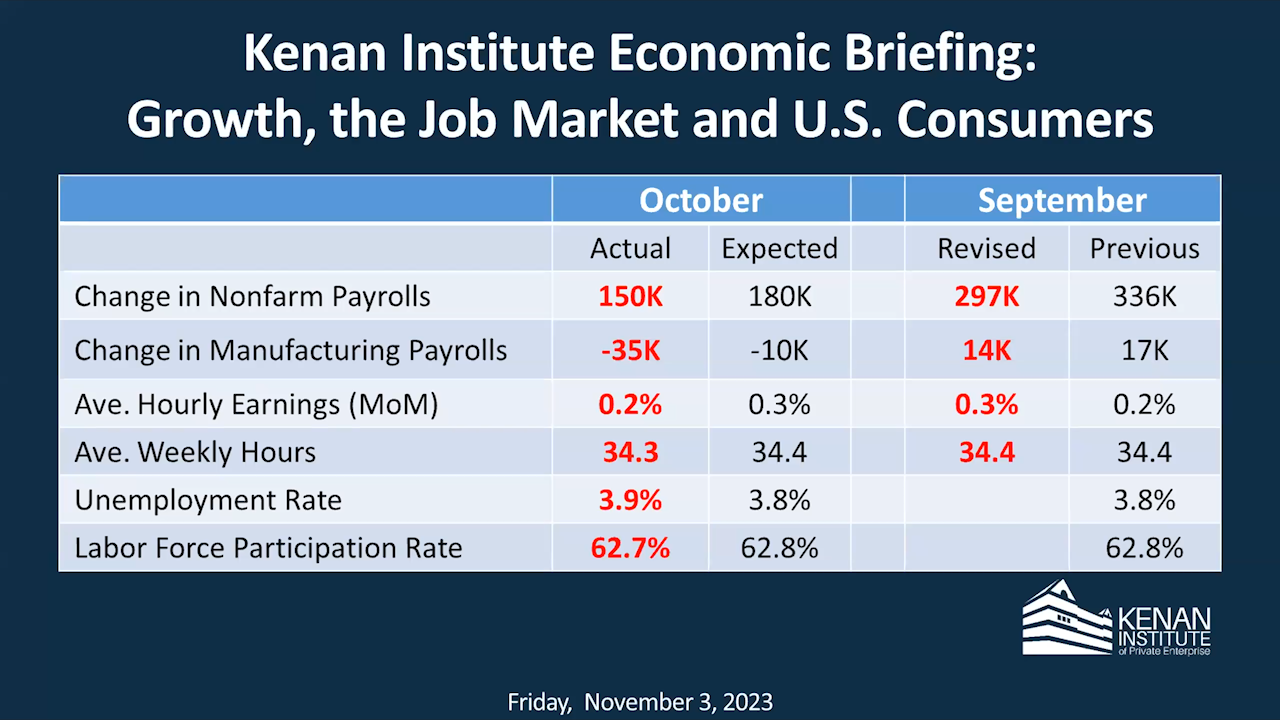
During the institute’s monthly press briefing Nov. 3, Research Director Camelia Kuhnen analyzed the subdued job growth in October’s employment report and why economic growth isn't being distributed evenly among all households.

An advance estimate shows the U.S. economy growing nearly 5% during the third quarter. Join Research Director Camelia Kuhnen in a virtual press briefing at 9 a.m. EDT this Friday, Nov. 3, for more on this and the morning's employment report.

Congressional disputes over discretionary spending escalate, threatening government shutdown. Join Chief Economist Gerald Cohen in a virtual press briefing at 9 a.m. EDT this Friday, Oct. 6 to discuss long-term budget risks.
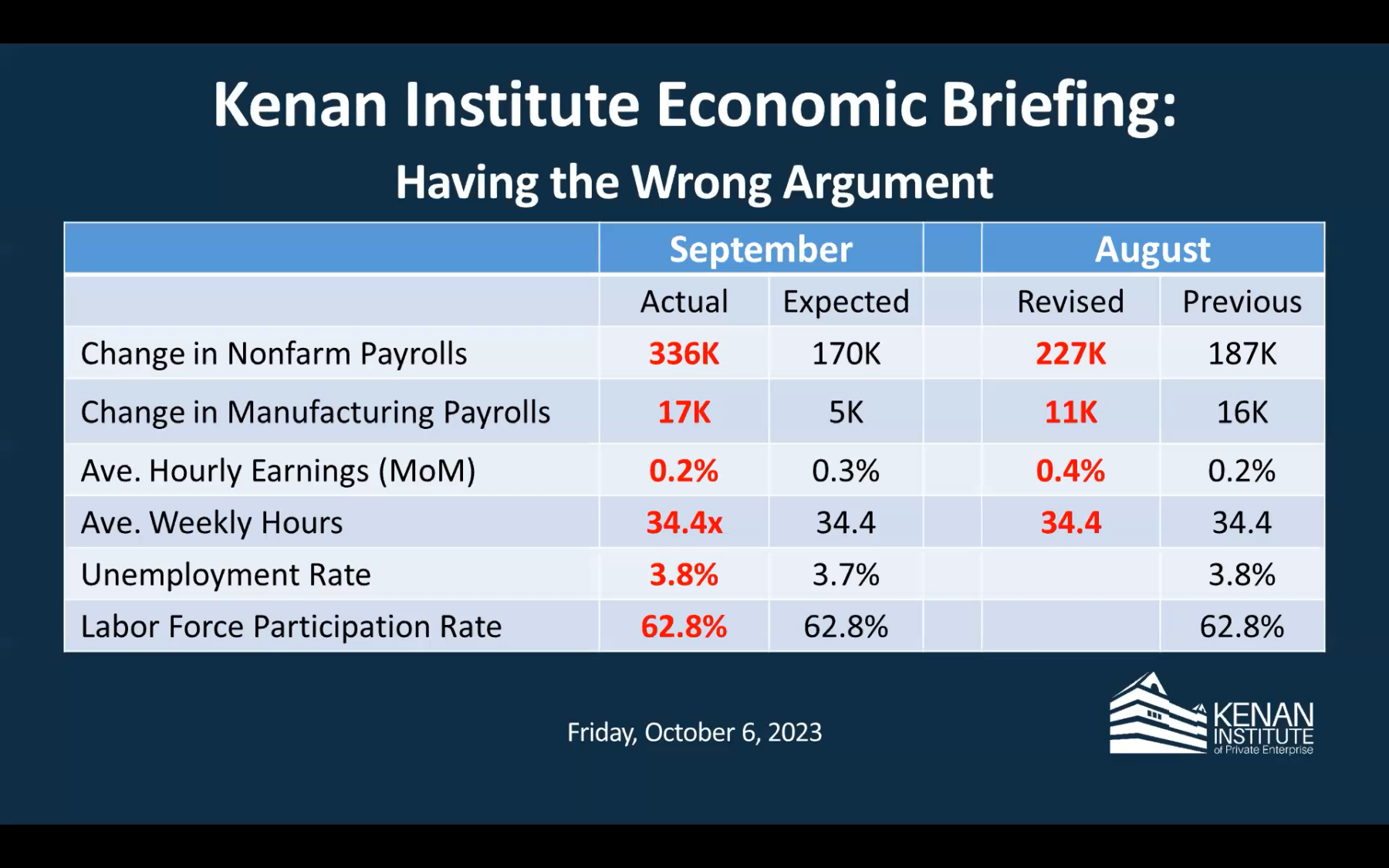
Chief Economist Gerald Cohen analyzed the strong job growth in September’s employment report during the institute’s monthly economic briefing Oct. 6 and looked at why Congress should focus on mandatory spending and tax revenue, not discretionary spending.

With gas prices on the rise, inflation numbers will look less favorable. How should the Federal Reserve handle this, and what does it mean for the economy? Join us for a discussion Friday.
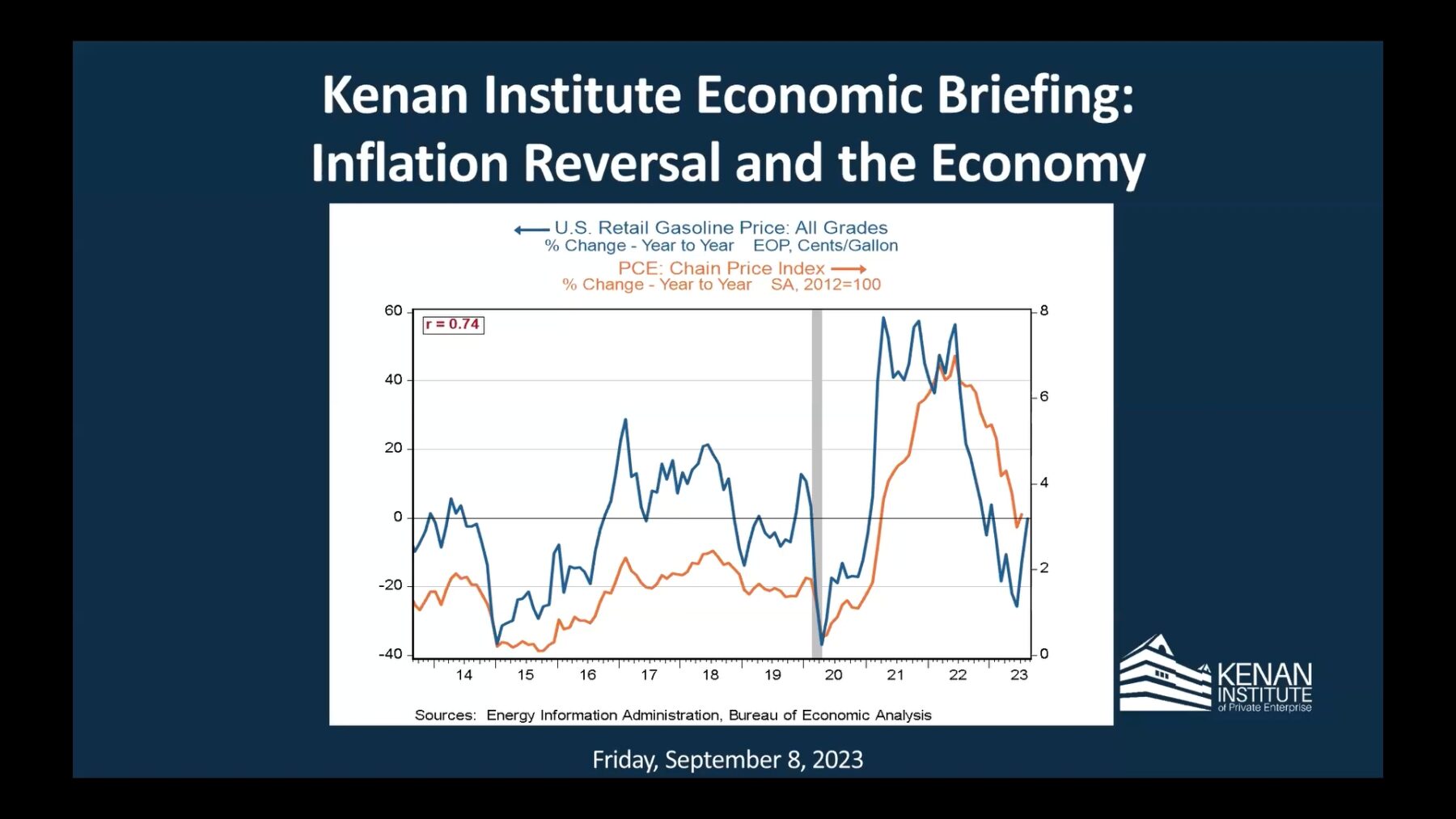
Institute Chief Economist Gerald Cohen examined the effect of rising gasoline prices on overall inflation figures and the Federal Reserve’s probable response during the institute’s monthly economic briefing Sept. 8.
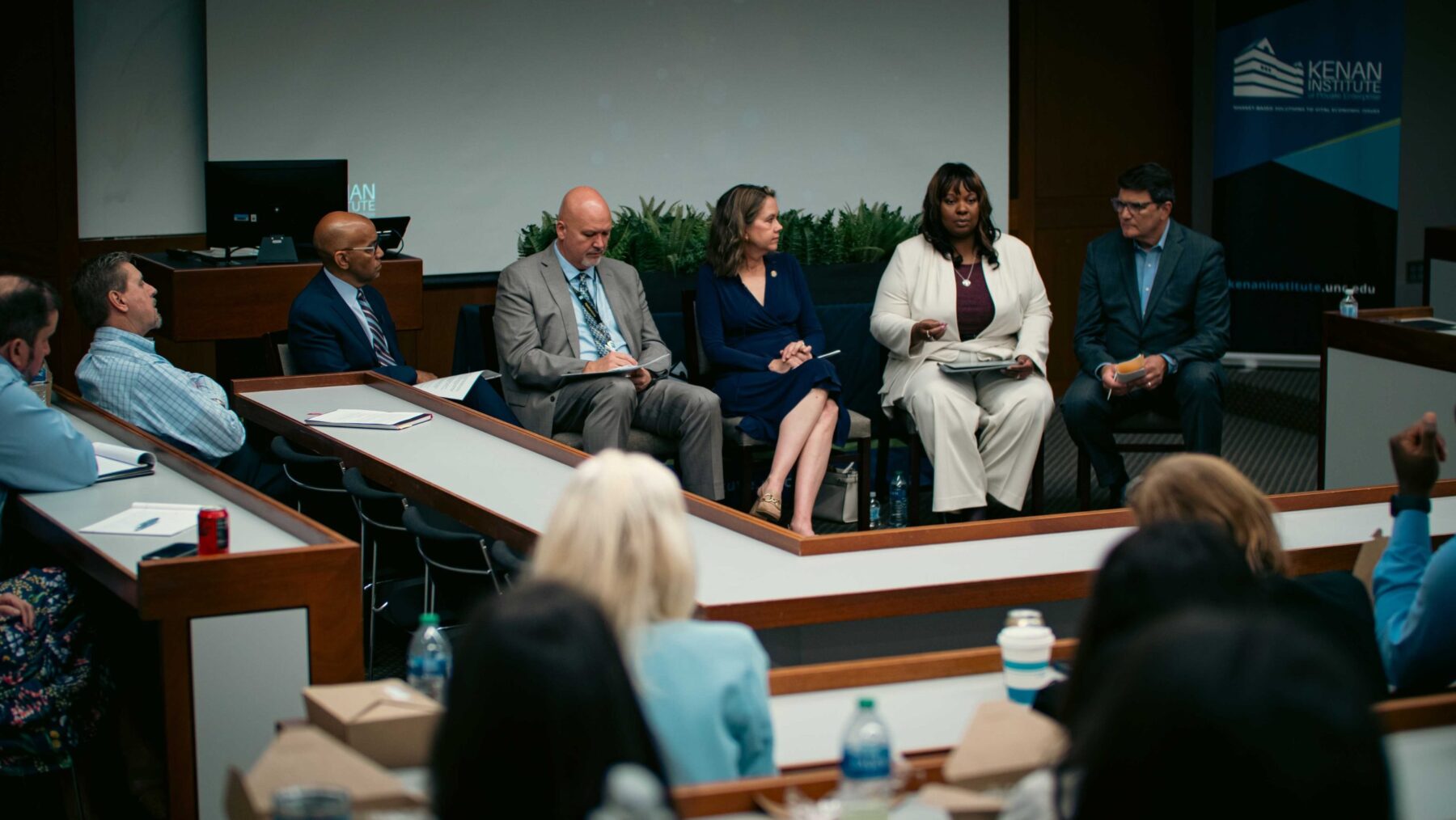
Kenan Institute Distinguished Fellow Thomas Stith moderated the panel discussion "Seeking a New Labor Market Equilibrium: A Leadership Perspective" on Aug. 23.

Join us for the Kenan Institute’s monthly virtual press briefing at 9 a.m. EDT this Friday, Aug. 4, as Executive Director Greg Brown discusses whether declining inflation has put an economic soft landing back on the table.
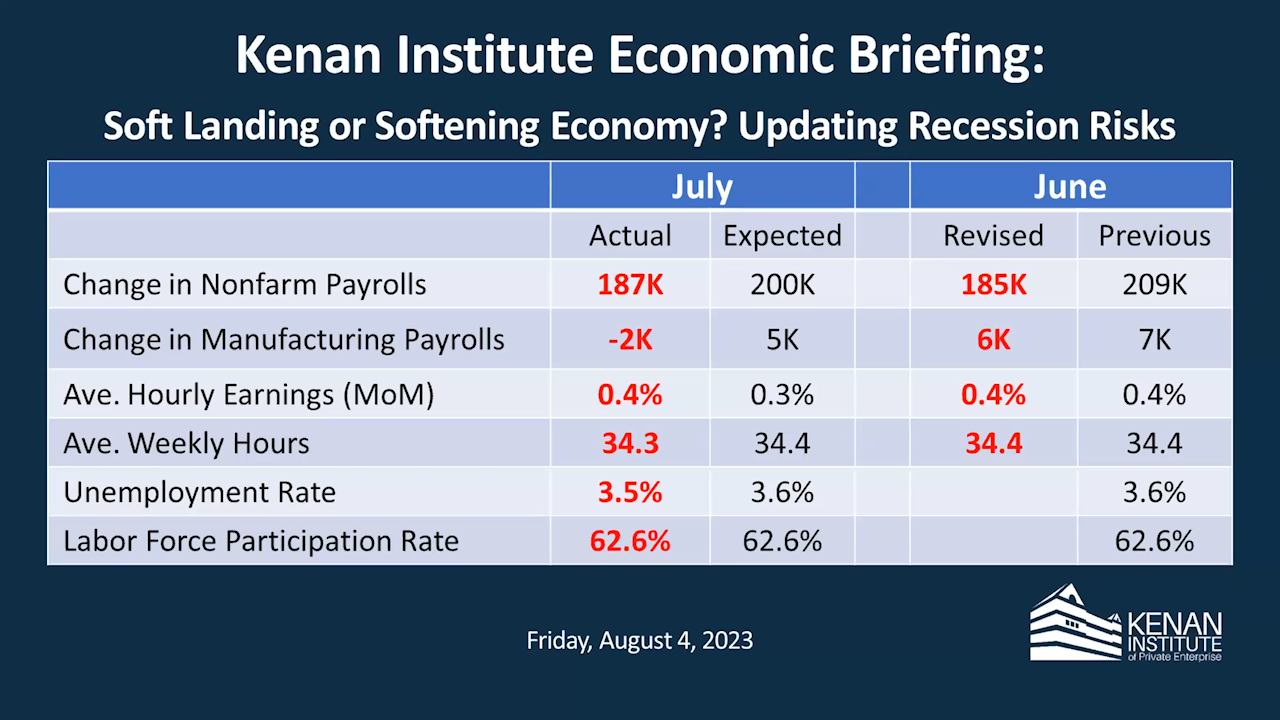
Have the chances of a recession arriving in the next year decreased? Institute Executive Director Greg Brown laid out the conflicting economic indicators around this question and offered his analysis of the Aug. 4 employment report, which showed 187,000 jobs added in July. He also answered questions on the yield curve’s performance and the potential effects of Fitch’s downgrade of the U.S. credit rating.

Academics and innovators recently convened at the institute's wealth inequality conference to discuss the effects of income disparity and how education and research can create opportunities for more equitable access.

Chief Economist Gerald Cohen outlines mid-year updates to our 2023 economic forecasts, discussing which EMAs have changed since our January projections.
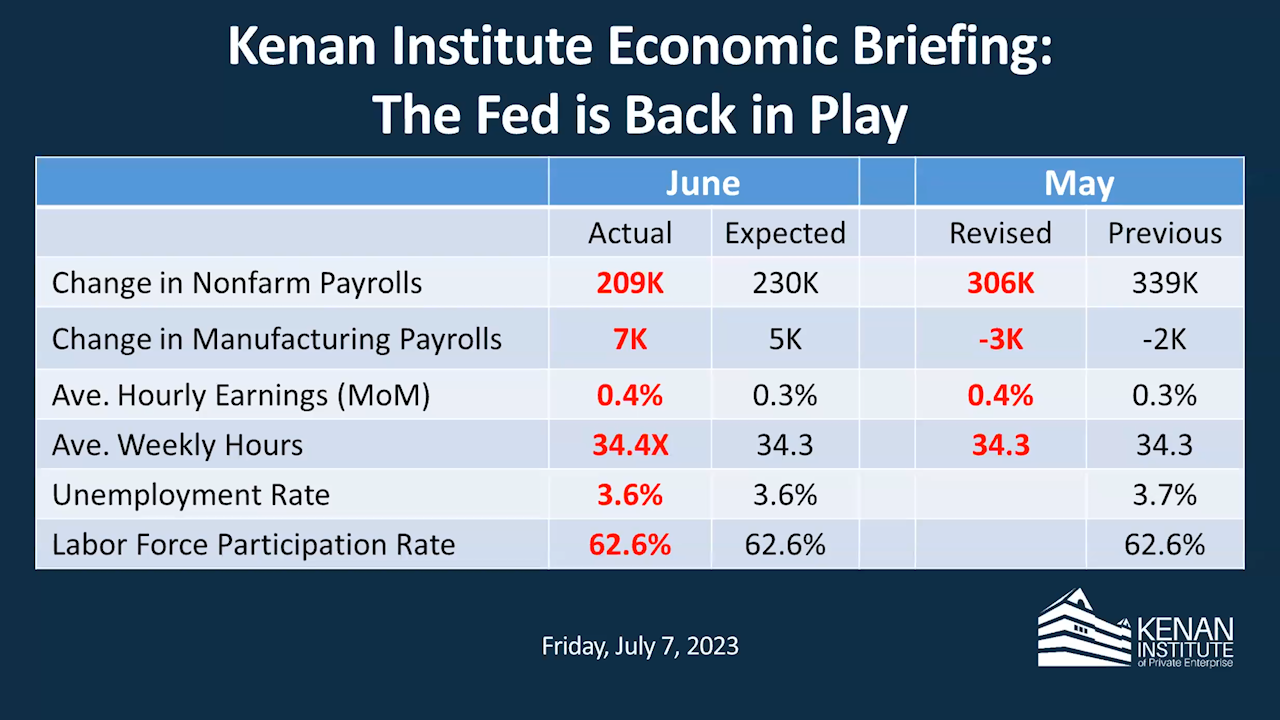
Institute Chief Economist Gerald Cohen offered his analysis of the July 7 jobs report, which showed an additional 209,000 jobs in June, and discussed why the Fed may be looking at interest rates increases in the near future but not beyond that.
Join us for the Kenan Institute’s monthly virtual press briefing at 9 a.m. EDT this Friday, July 7, as institute Chief Economist Gerald Cohen offers his insights on the labor market and the decision facing the Federal Reserve.
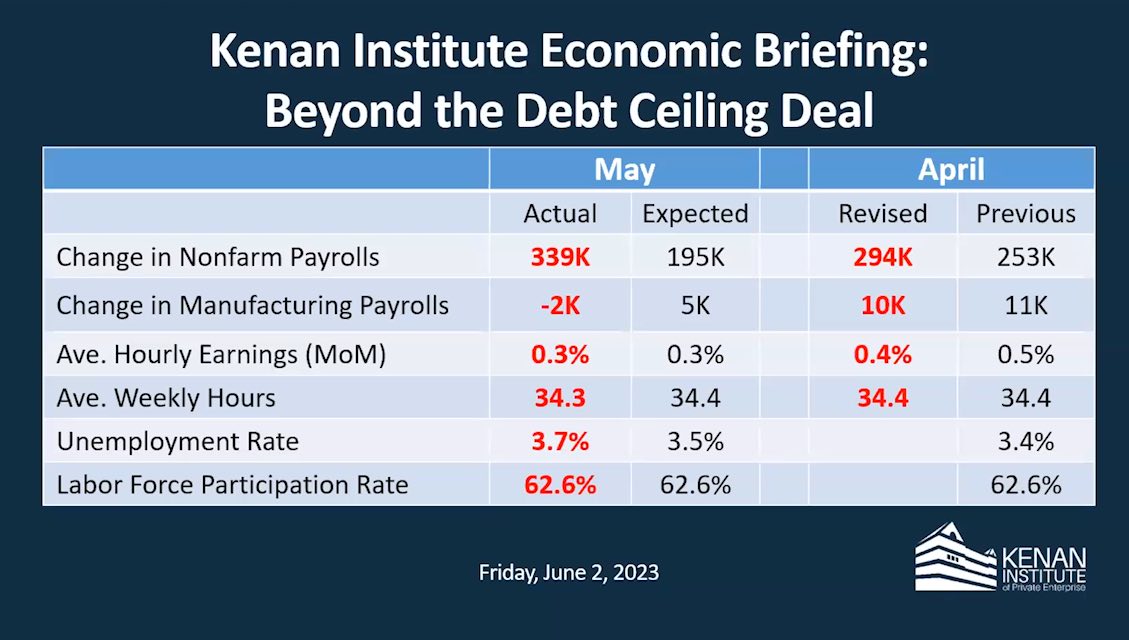
Institute Executive Director Greg Brown offered his analysis of the June 2 employment report and talked about why now may be a good time to tackle the country’s spending and revenue issues.

Join us for the Kenan Institute’s monthly virtual press briefing at 9 a.m. EDT this Friday, June 2, as institute Executive Director Greg Brown offers his insights on the labor market and the long road back to fiscal responsibility.
Chief Economist Gerald Cohen discusses why the uncertainty caused by the debt ceiling crisis is bad for the economy - regardless of how the situation ends.
Chief Economist Gerald Cohen outlines three possible paths for the U.S. economy in coming months, as well as the indicators to keep an eye on.
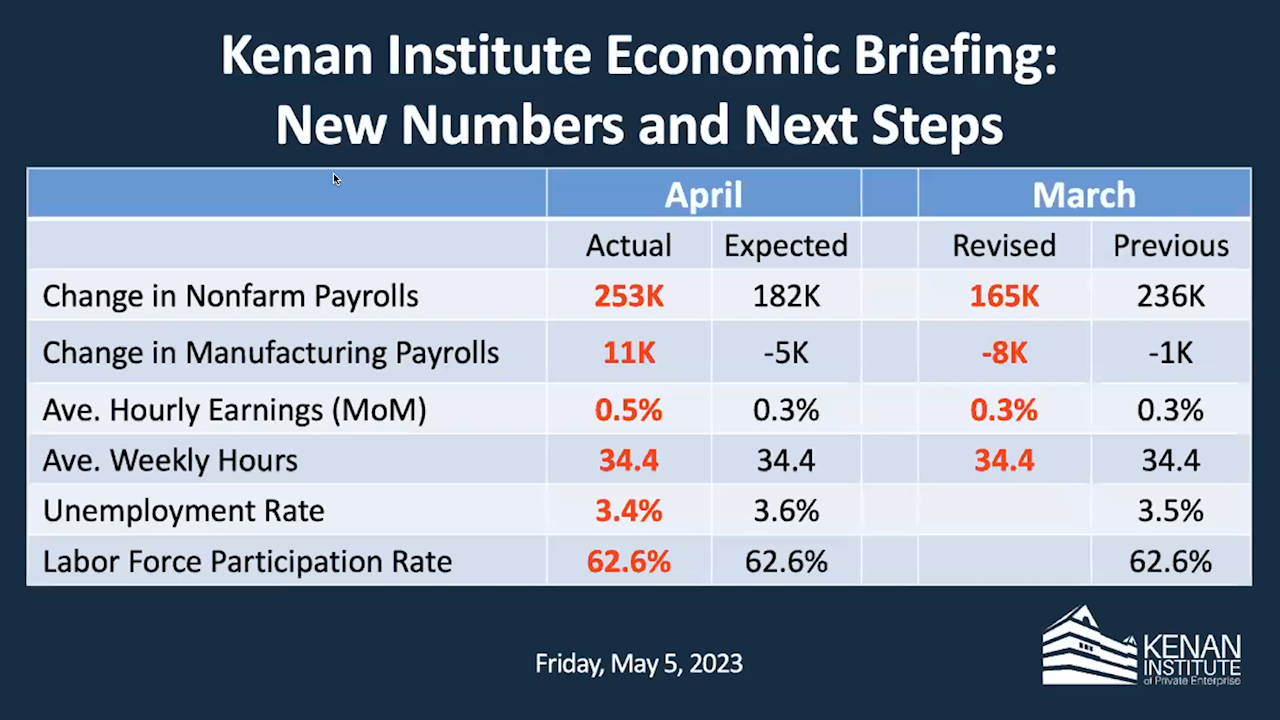
UNC Kenan-Flagler Business School’s Christian Lundblad offered his analysis of the May 5 employment report, which showed employers adding 253,000 jobs in April, far above forecasts. He also answered questions about the Fed’s next move and what a sharp revision in March’s numbers might mean.
Join us for the Kenan Institute’s monthly virtual press briefing at 9 a.m. EDT this Friday, May 5, as UNC Kenan-Flagler Business School Professor Christian Lundblad offers his insights on both the labor market and the Fed's response to continuing inflation.

Haltiwanger, a Kenan Institute Distinguished Fellow, will discuss implications for the continuing restructuring of the U.S. economy associated with the surge in new business creation.
Craig Allen, president of the U.S.-China Business Council, provides insights on U.S.-China relations and its impact on U.S. firms. The Q&A session facilitated by UNC Kenan-Flagler Business School's Denis Simon further delves into the issue's complexities.

The SVB collapse offers many lessons, but they are more about properly hedging against interest rate risk and the importance of timely intervention by regulators than the current state of the economy.

Recent bank failures have revived the old debate "Are banks too big to fail?" Chief Economist Gerald Cohen spoke with "Marketplace" to discuss comparisons to the 2008 bank crisis and whether we should be worried about what comes next.
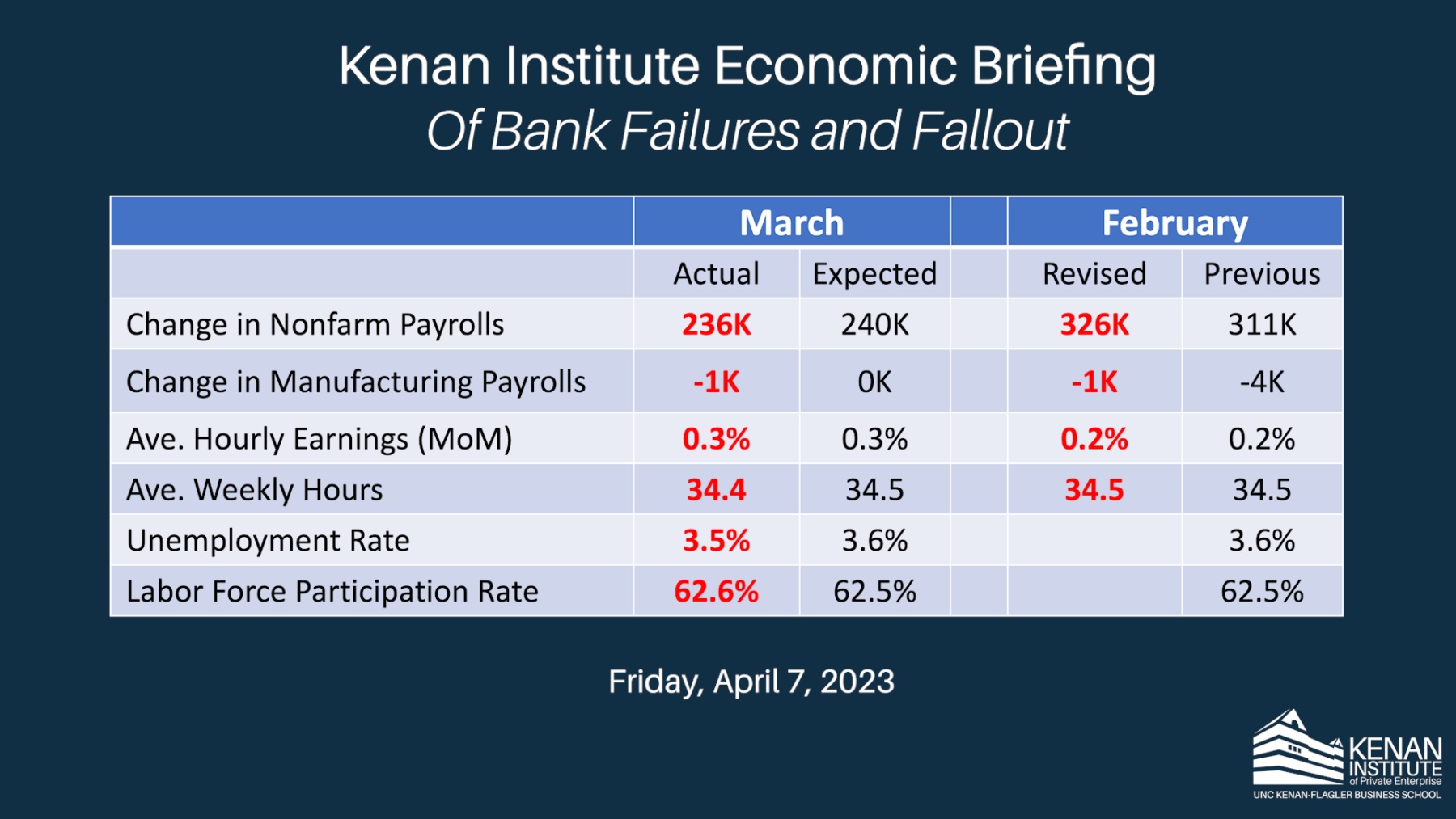
The economy continued to add jobs in March, but Chief Economist Gerald Cohen pointed out some underlying indicators that point to a slowdown. Also: effects from March’s bank collapses.

Join us for the Kenan Institute’s monthly virtual press briefing at 9 a.m. EDT this Friday, April 7, as institute Chief Economist Gerald Cohen offers his insights on both the labor market and the questions surrounding March's bank failures.

Soon after releasing the American Growth Project’s February report on projected economic growth for U.S. midsize cities, we realized several places near the top of our rankings featured prominently in songs. Naturally, a playlist was born.

Professor Denis Simon, who recently joined the UNC Kenan-Flagler Business School faculty, will provide expert commentary about the ups and downs of business and technology relations between the U.S. and China.

A UNC Kenan-Flagler professor doesn’t foresee long-term effects from the failure of Silicon Valley Bank, given that other banks and financing companies can step in to replace SVB as an issuer of venture debt.
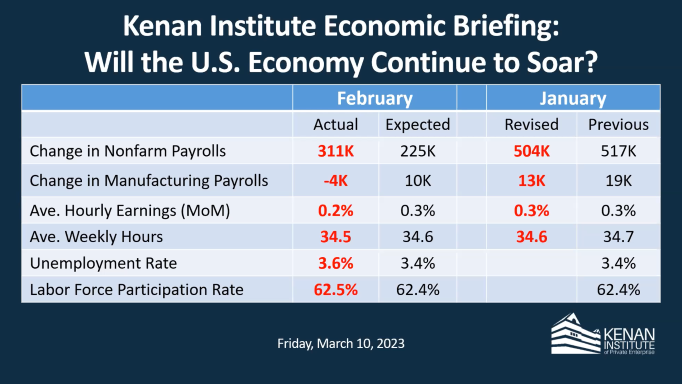
Kenan Institute Executive Director Greg Brown discussed the 311,000 jobs that the economy added in February during the institute’s monthly briefing March 10 and answered questions about labor participation rates and news of trouble at Silicon Valley Bank.
Join us for the Kenan Institute’s virtual economic briefing at 9 a.m. EST this Friday, March 10, as we provide instant analysis following the report from the Bureau of Labor Statistics. Institute Executive Director Greg Brown will offer his insights and answer questions from the audience.

Issues constricting the supply of workers, the sector-by-sector employment effects of a potential recession, the emergence of new technologies – these are the primary labor demand themes we’ll focus on in our 2023 grand challenge.
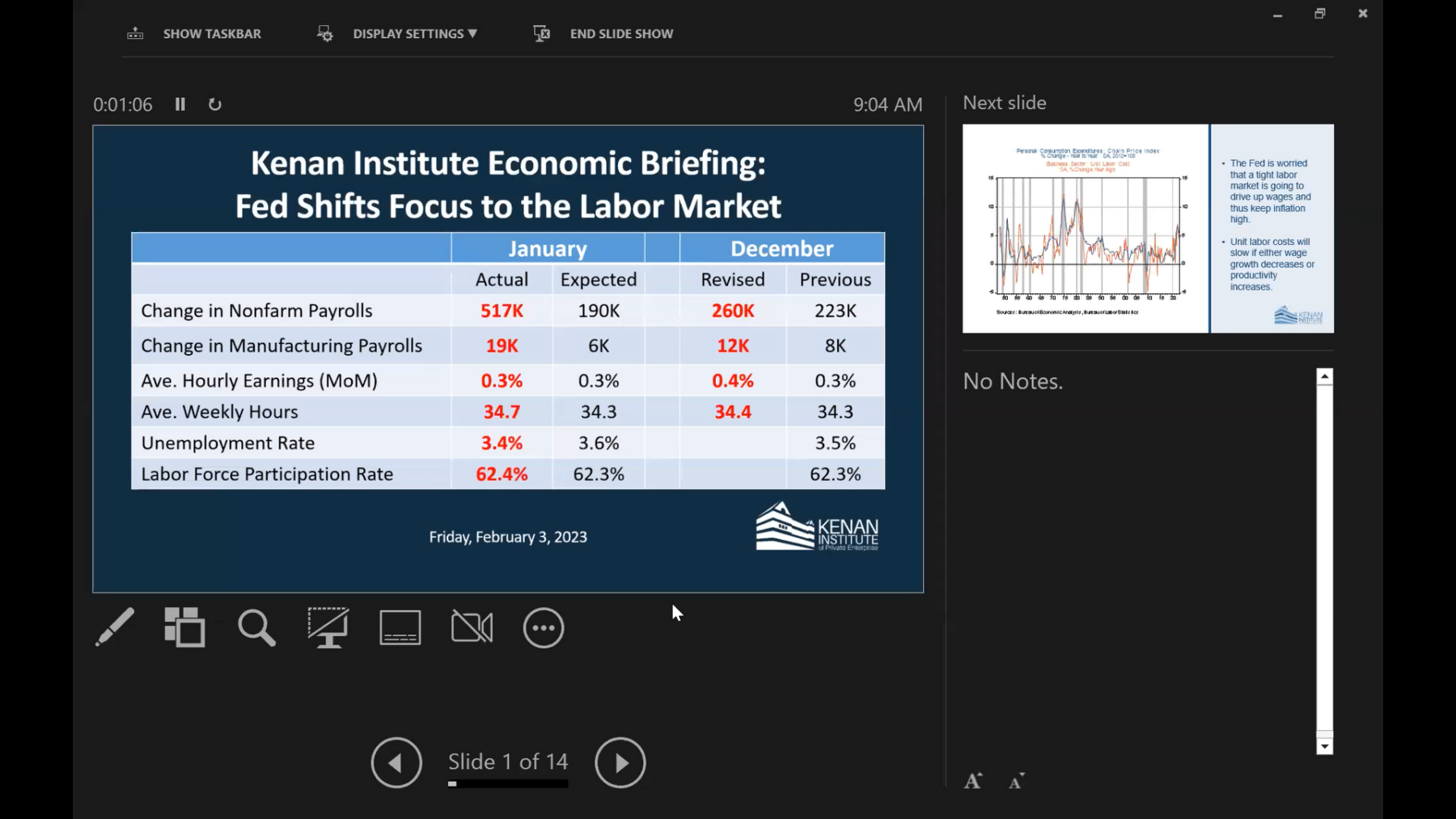
Kenan Institute Chief Economist Gerald Cohen discussed the 517,000 jobs that employers added in January during the institute’s monthly economic briefing Feb. 3 and answered questions from the press on where workers to fill those jobs are coming from.

2022 was a tumultuous year: NASDAQ, a tech-heavy stock index, closed the year down more than 30%; inflation proved more stubborn than policymakers initially thought and reached 40-year highs; Russia invaded Ukraine, sending commodity prices even higher; and central banks cranked up rates in response, the Federal Reserve raising interest rates at an unprecedented pace in recent history from around zero to over 4%. As we entered 2023, the global economy stood “on a razor’s edge,” the World Bank warned in its latest projections. Add to that a divided Congress with razor-thin majorities, political wrangling over the debt ceiling, and increasingly frequent catastrophic weather events, and it leaves one wondering where we are all headed.
Join us for the Kenan Institute’s virtual press briefing at 9 a.m. EST this Friday, Feb. 3, as we provide instant analysis following the latest employment report from the Bureau of Labor Statistics. Institute Chief Economist Gerald Cohen will offer his insights and answer questions from the audience.

Andra Ghent, Professor of Finance at the University of Utah’s David Eccles School of Business, discusses the current state of housing affordability in an era of high interest rates.
COVID-19 sent shockwaves through the global economic system, disrupting financial markets, slowing productivity and exacerbating inequities. But its unprecedented impact on the labor market may serve as the pandemic’s most enduring economic effect.
As Congress refused to raise the debt ceiling and the U.S. government moved closer to its first default, Spectrum News spoke to institute Chief Economist Gerald Cohen about the message being sent to the rest of the world.

Chief Economist Gerald Cohen spoke to WTVD-TV about the American Growth Project’s projection for a 1.6% increase in GDP for Raleigh and Durham this year, good for fourth best among the 50 biggest U.S. microeconomies.
In kicking off the new year, we at the Kenan Institute want to highlight five topics we anticipate will be top of mind for business leaders and policymakers during the 12 months ahead.

Join us for the Kenan Institute’s virtual press briefing at 9 a.m. EST this Friday, Jan. 6, as we provide instant analysis following the latest employment report from the Bureau of Labor Statistics. Institute Chief Economist Gerald Cohen will offer his insights and answer questions from the audience.

Kenan Institute Chief Economist Gerald Cohen discusses the power of productivity and what that means for the U.S. economy.

Kenan Institute Chief Economist Gerald Cohen explains the vital importance of productivity to the health of our economy, both domestically and globally, and why that is only one metric of societal health.

The United States may be a highly productive society as a whole, but regionally results vary widely. Institute Chief Economist Gerald Cohen discusses the success stories and trends identified from our American Growth Project study of the top producing cities.

2022 has not been kind to many investment portfolios; as Kenan Institute Executive Director Greg Brown argues, this is all attributable to the change in real interest and inflation rates.
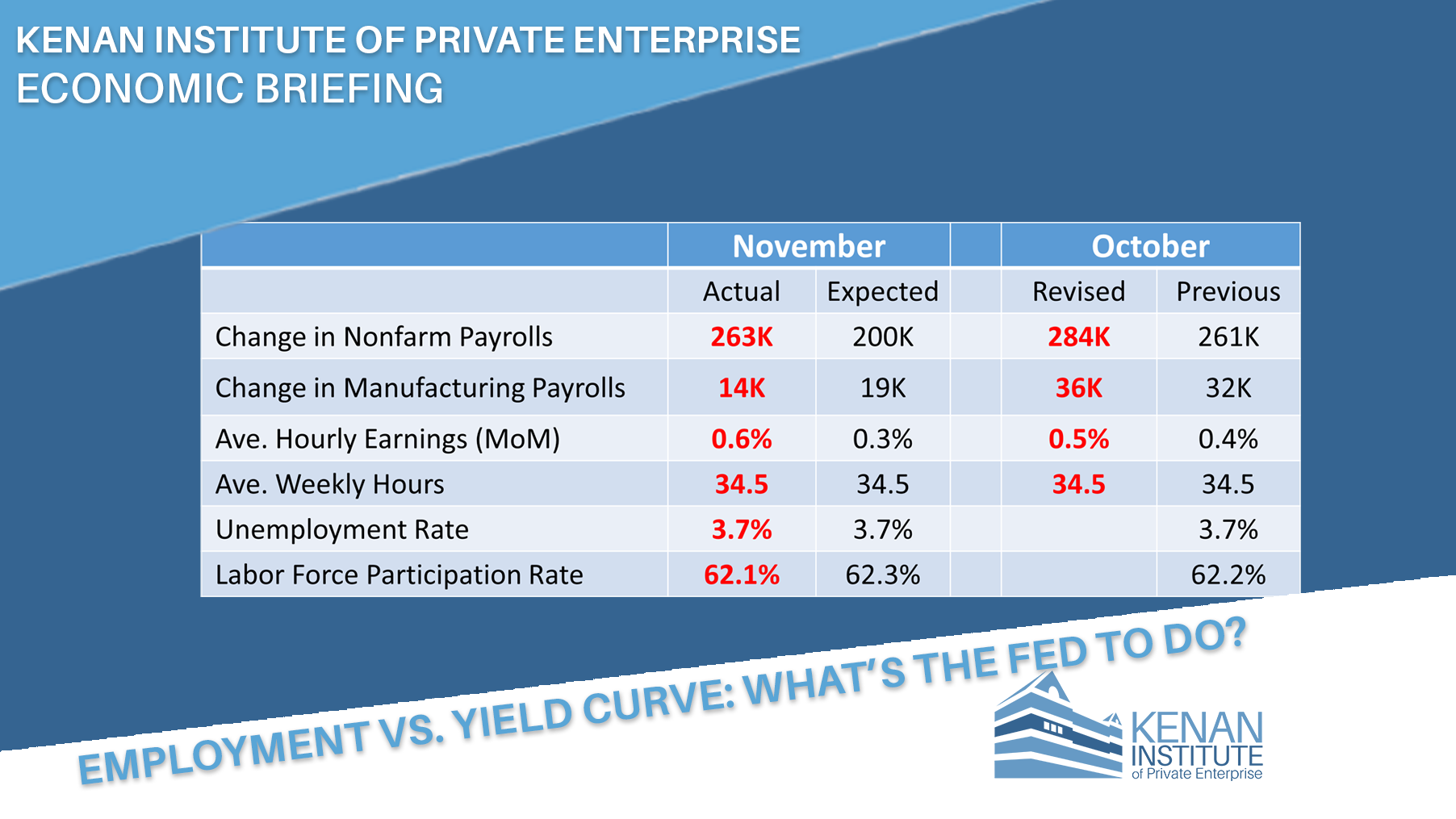
Chief Economist Gerald Cohen discussed the Bureau of Labor Statistics’ fresh employment report and what it means for the U.S. economy during the Kenan Institute’s monthly economic briefing Dec. 2. Cohen also discussed the inversion of the yield curve.
Join us for the Kenan Institute’s virtual press briefing at 9 a.m. EST this Friday, Dec. 2, as we sort it all out and provide instant analysis following the latest employment report from the Bureau of Labor Statistics. Institute Chief Economist Gerald Cohen will offer his insights and answer questions from the audience.

As President Xi Jinping officially begins his third term leading China, his ideological approach will be tested by instability - both within and outside his country.

The institute’s first American Growth Project report suggests that downtown San Francisco had to take a major hit from the shift to working from home so that its surrounding metro area could thrive, Fortune's Prarthana Prakash writes.

In its Changing America section, The Hill explored the institute’s American Growth Project and the variables driving the rankings of the fastest-growing U.S. cities, as well as the outlook for the future.

Institute Executive Director Greg Brown told Axios that the U.S. cities with the fastest-growing economies are undergoing a transformation. "It's going to be a big change over the next few years,” he said.
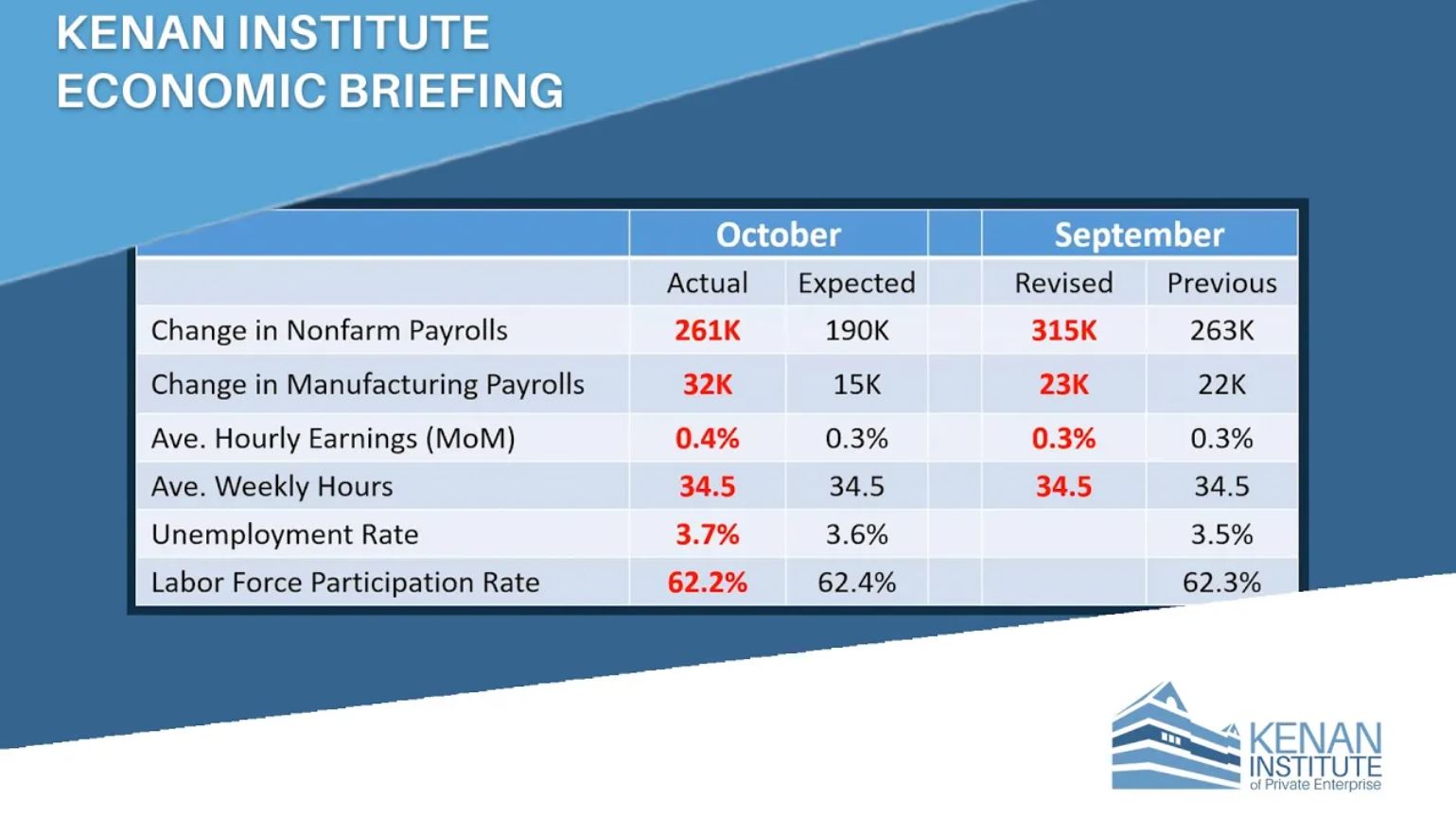
UNC Kenan-Flagler Business School Professor Christian Lundblad discussed the Bureau of Labor Statistics’ fresh employment report and what it means for the U.S. economy at the Kenan Institute’s virtual press briefing on Friday, Nov. 4.
Is the Fed’s aggressive policy working to take the froth off the labor market? Join us for the Kenan Institute’s virtual press briefing at 9 a.m. EDT this Friday, Nov. 4, as we discuss the Bureau of Labor Statistics’ fresh employment report and what it means for the U.S. economy.

High levels of inflation have dominated global headlines for a good part of the last year, but what’s the connection between high global inflation and a strong dollar?
China’s remarkable economic transition was going to face slowing growth at some point, but misallocation of resources and the country’s zero-COVID policy further complicate the picture.
A new, data-driven method of looking at regional economies in more detail will enable a richer discussion of the U.S. economy as a whole and provide forecasts for decision-makers in business and government.
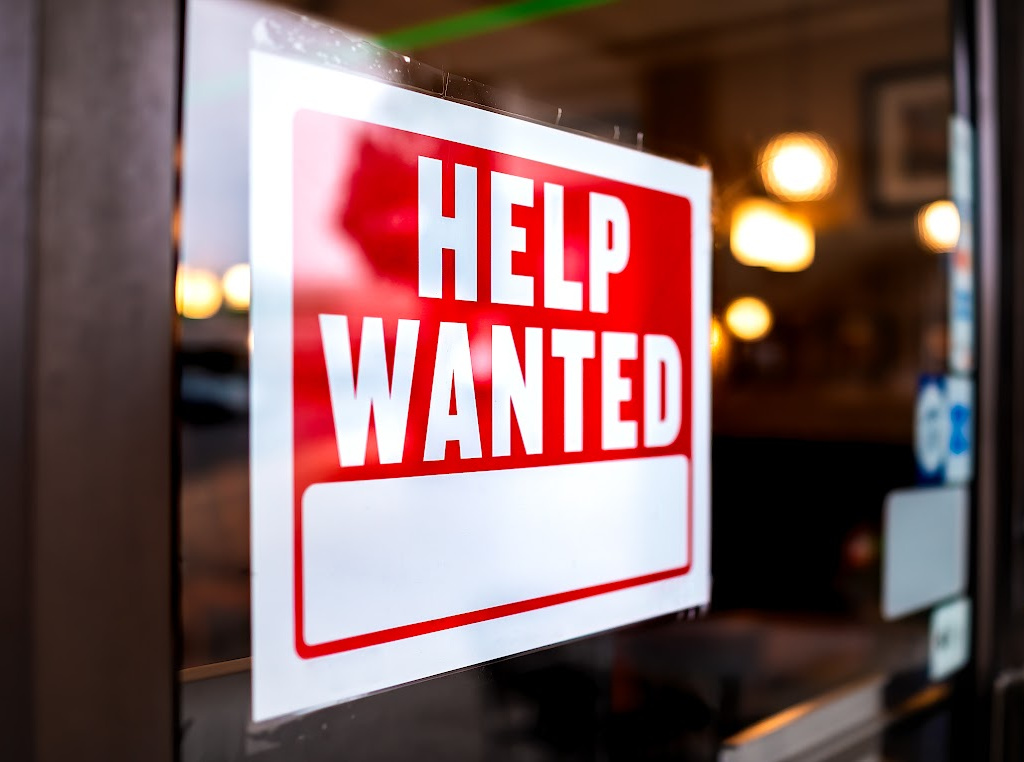
Companies including UPS and Amazon are preparing to hire seasonal workers, and the Triangle’s already hot labor market makes this especially good news for area job seekers, Chief Economist Gerald Cohen tells WTVD.
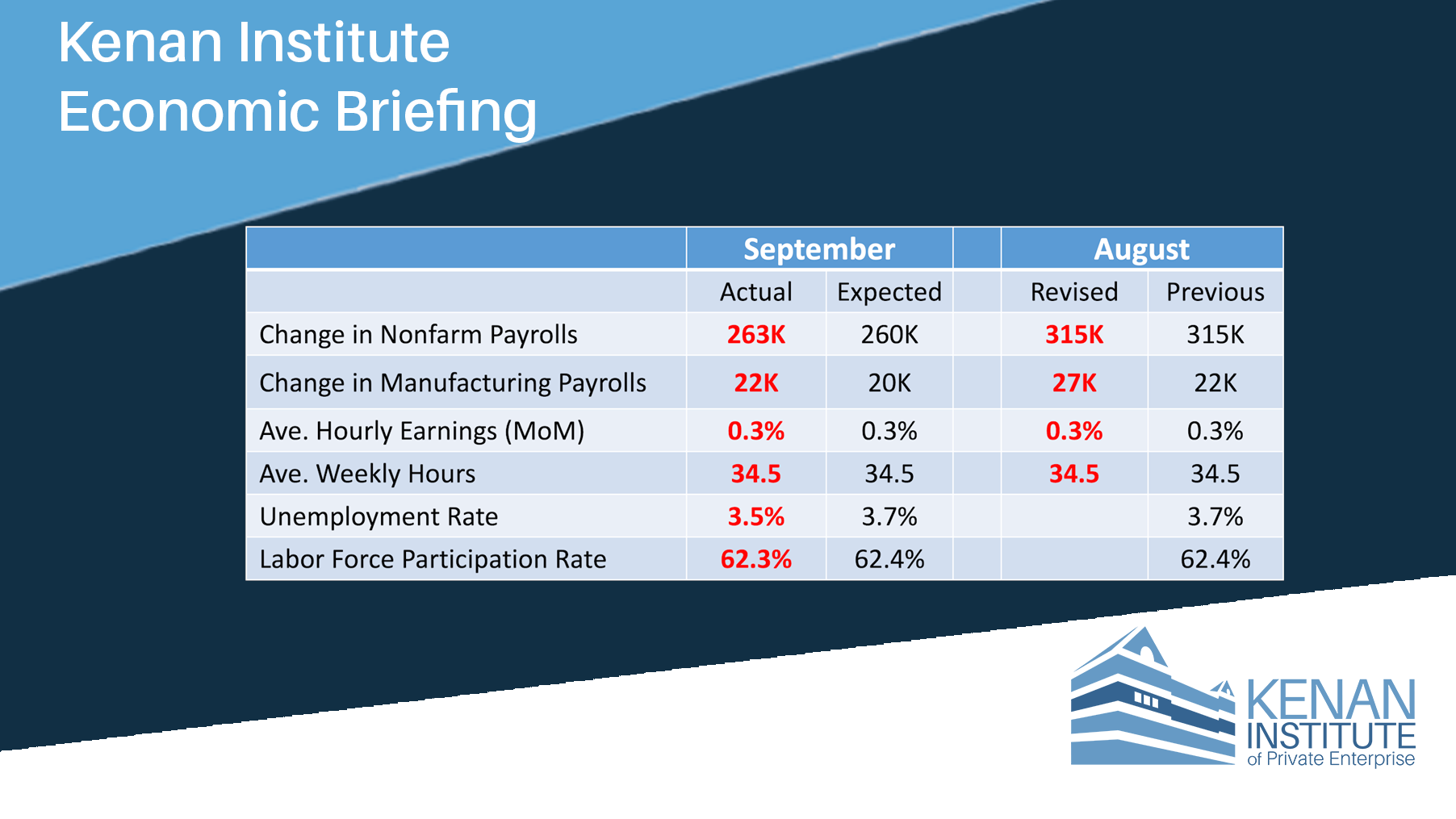
Kenan Institute Chief Economist Gerald Cohen discussed the latest employment report Oct. 7, seeing a few signs of cracks in the economy despite a still respectable number of jobs added during September.
Employment growth has remained exceptionally strong this year, and September is expected to be another healthy month. Join us for the Kenan Institute’s virtual press briefing at 9 a.m. EDT this Friday, Oct. 7, as we discuss the Bureau of Labor Statistics’ fresh employment report and how it may affect the Federal Reserve’s aggressive reaction to inflation.

Economists and investors traditionally see uncertainty as a bad thing that suppresses growth and valuations, but new research shows that downstream uncertainty from customers in the U.S. supply chain can foretell expansion for firms and the economy.
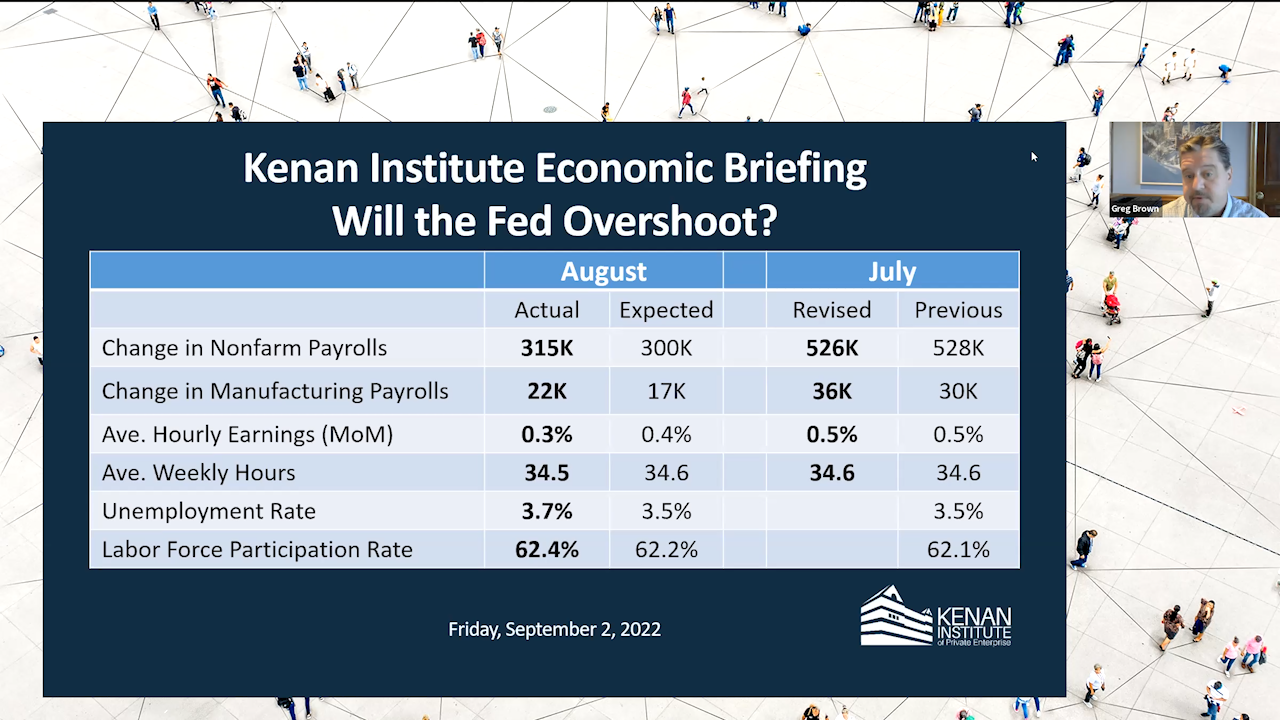
Kenan Institute Executive Director Greg Brown discussed the Federal Reserve’s next move after the Sept. 2 employment report showed slowing but still strong job growth. Brown predicted that the Fed, to protect its reputation as an inflation fighter, would more likely overshoot than come up short in using higher interest rates to tamp down rising prices. He also answered questions from the media on how the global nature of inflation limits the Fed’s effectiveness as well as what can be expected for local and North Carolina labor markets.
The Fed is threading a shrinking needle in its attempts to engineer a soft landing for the U.S. economy. Join Professor Greg Brown for a briefing built on the latest employment data and financial market signals, followed by his answers to questions from the audience.

The cost to rent a one-bedroom apartment in Raleigh and Durham jumped 6% in a month as the area continues to attract new residents, according to a WRAL TechWire report. Rising prices are an indication of an undersupply in homes for rent or sale, said institute Chief Economist Gerald Cohen, adding that this “suggests that the risks of a significant drop in housing is quite low.”

Small-business owners say they’re just beginning to recover from the sudden blow that hobbled many of them during the early 2020 pandemic restrictions. Now mixed economic messages have them wondering what to do next, according to a Washington Post story. “There is so much that’s up in the air, and uncertainty affects small businesses much more so than it does larger ones,” said institute Director of Research Paige Ouimet.
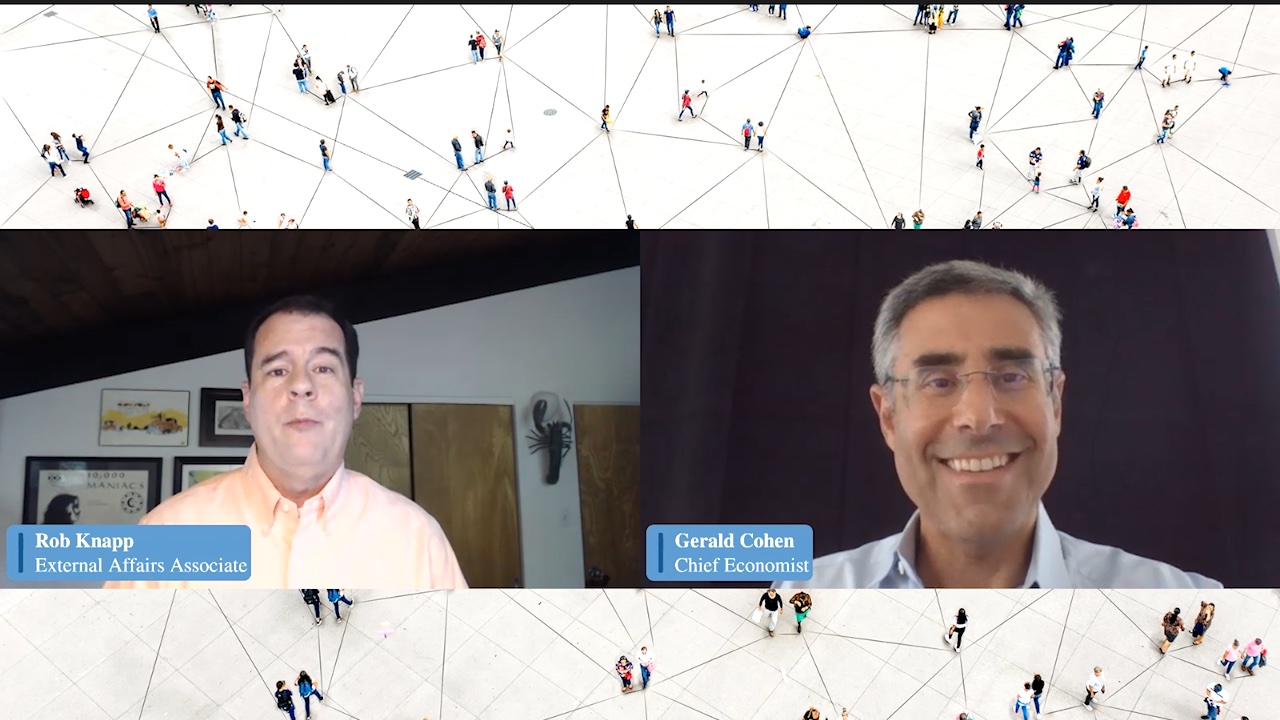
The U.S. economy added 528,000 jobs in July, an unexpectedly strong number that Kenan Institute Chief Economist Gerald Cohen discussed during the Kenan Institute’s economic briefing Aug. 5. Cohen also answered questions from the media about the shifting balance of power between employers and employees, the labor force shortage and what the news means for North Carolina businesses.

July employment numbers suggest that the economy isn’t heading into recession but instead is accelerating as the third quarter begins, Chief Economist Gerald Cohen said during the institute’s monthly economic briefing Aug. 5. “It’s still post-COVID recovery, but … we’ve surpassed the pre-COVID levels by 32,000,” Cohen said, as reported by the Triangle Business Journal.

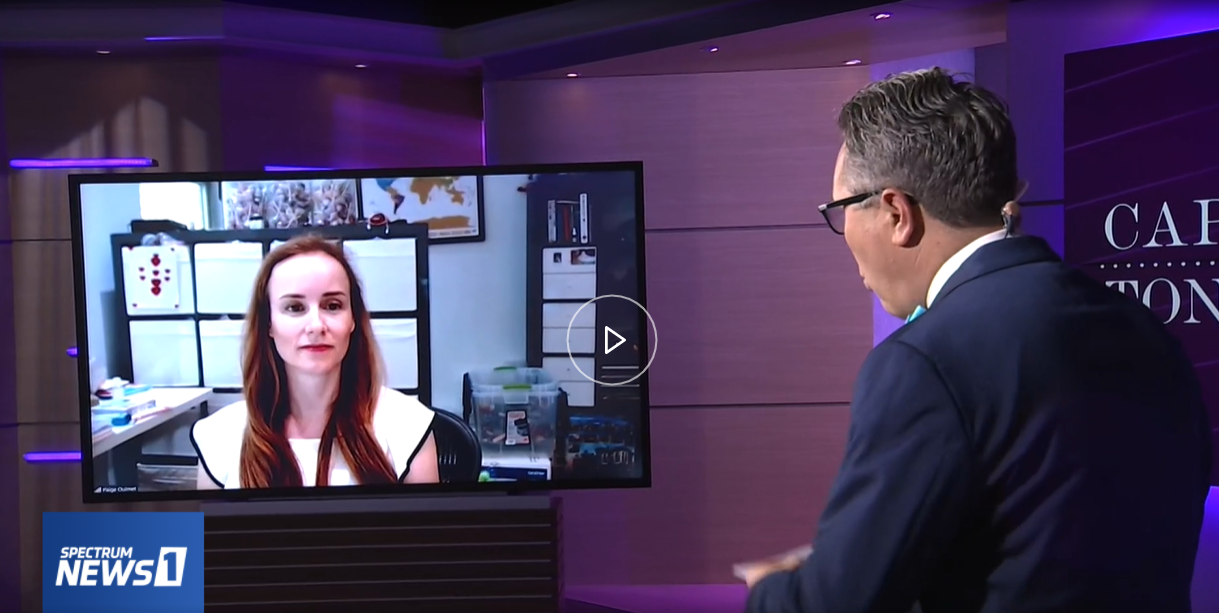
Three institute-associated experts provided analysis for the July 30 edition of WRAL-TV’s “On the Record” news program. In a segment on dwindling child care options in the Raleigh area, Director of Research Paige Ouimet talked about how child care access affects the ability of women to work.
GDP, the broadest measure of economic output, contracted for the second straight quarter, stoking fears that the economy is already in a recession — and has been since the beginning of the year. But the guts of the GDP report coupled with continued strong job growth and decent consumer spending suggest that the expansion remains on track. While the official arbiters of recessions are likely to agree with me — they don’t look at GDP but rather measures like job creation — what really matters to households and businesses is whether their spending power or foot traffic is drying up.
Employment numbers have remained strong recently even as other economic indicators have faltered. We’ll discuss whether the trend continues when the Kenan Institute’s economic briefing returns at 9 a.m. EDT this Friday, Aug. 5, after the Bureau of Labor Statistics releases its monthly jobs report.
Too much or too little? Asked by German network Deutsche Welle about the Federal Reserve’s 0.75 percentage point interest rate increase July 27, Chief Economist Gerald Cohen called it just right, given that a hot job market is now accompanied by high inflation.
Institute Director of Research Paige Ouimet spoke to Ned Barnett for The News & Observer’s Opinion section on how the pandemic has changed workers’ lives. The wages of lower-skilled workers have increased by a higher percentage than those of high-skilled workers, but inflation has effectively wiped out those gains.
Just what does GDP say about the health of the economy? Perhaps not as much as we thought, according to a Reuters report that notes the collision of negative GDP growth — driven down in part by extraordinary supply chain issues — with vibrant employment numbers.
A surprisingly strong jobs report for June only adds to the difficulty of getting a read on the U.S. economy, writes Dan Barkin on the Business North Carolina site. He cites statistics offered by UNC Kenan-Flagler Professor Christian Lundblad in the institute’s July 8 economic briefing and notes Lundblad’s opinion that a “real” recession, rather than a technical recession, is more likely to arrive in early to mid-2023.

UNC Kenan-Flagler Business School Professor Camelia Kuhnen is an expert in corporate finance, behavioral finance and neuroeconomics, the application of neuroscience tools and methods to economic research. As many question whether a recession is on the way, she answers some questions about how the most notable consumer confidence surveys differ and whether Americans are prone to economic gloominess.
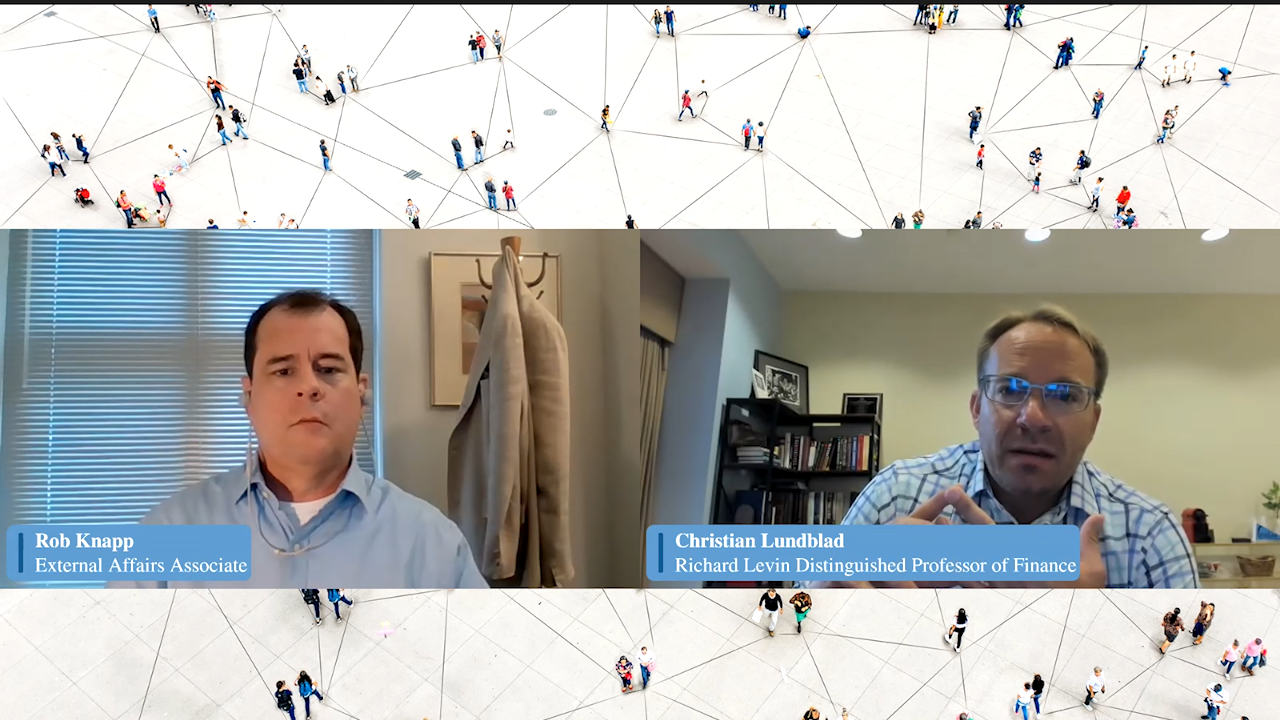
Kenan Institute Research Director Christian Lundblad navigated the cognitive dissonance provided by another strong jobs report when considered alongside more negative indicators during the institute’s latest economic briefing July 8. The virtual event took place at 9 a.m. after the release of the latest monthly employment numbers. Lundblad also answered questions from the audience, including limitations on the Federal Reserve in addressing core consumer price issues, the differences among regional labor markets, and the probability of an actual recession vs. a technical recession occurring this year.
Friday morning’s employment report beat expectations, showing that the U.S. economy added 372,000 jobs in June. That runs counter to other economic indicators at a time when high inflation is hurting consumers’ wallets and some see a recession on the horizon.

Kenan Institute Chief Economist Gerald Cohen was part of a panel on WRAL’s in-depth news program July 2 discussing the whys and how longs of inflation, particularly rising prices for gas, housing and food.

Institute Chief Economist Gerald Cohen spoke to both WRAL-TV and WTVD-TV on July 5, saying the potential downside of a recent decrease in gasoline prices is that it may reflect concerns in the markets that the economy is going into recession. “Economic activity slows, gasoline demand slows,” Cohen said. “If [prices are] coming down because people think we’re in a recession, then that’s bad.”
The central bank has been busy trying to put the brakes on inflation, but are we beginning to see the signs of a Fed-induced recession? Professor Christian Lundblad, the institute’s director of research, will examine that possibility, provide an update on the employment figures and take your questions at 9 a.m. EDT this Friday, July 8.
Chief Economist Gerald Cohen will appear on a panel on WRAL-TV’s “On the Record,” on Saturday, July 2. They’ll discuss how a sharp increase in the inflation rate over the last few months is affecting Americans and when they may begin to feel some relief. The program is scheduled to air at 7 p.m.

UNC Kenan-Flagler Business School Finance Professor Stephen Arbogast discusses why embargoes on Russian oil aren’t working, why renewable energy sources aren’t the fix and how the missing link in increasing production could stabilize Europe’s energy outlook.
The Fed tried to show its inflation-fighting mettle by raising the federal funds rate, the short-term interest rate it directly controls, by 0.75 of a percentage point. This is the largest increase since 1994, though the funds rate remains at a quite low 1.625%, especially relative to the 8.6% inflation reading last week. The Fed seemed to be spooked by the inflation print — which, rather than declining as many forecasters (including myself) expected, rose to its highest level since 1981. More important, in my opinion, longer-term measures of consumer inflation expectations and uncertainty increased.
Higher prices for gas, groceries and nearly everything else are on consumers’ minds after a government report Friday showing that inflation is up 8.6% on a year-over-year basis, the largest jump since late 1981. Chief Economist Gerald Cohen tells WTVD-TV, “When people start saying, ‘I think inflation is going to continue to occur, that means that the Fed has to work harder and that it could end badly.”
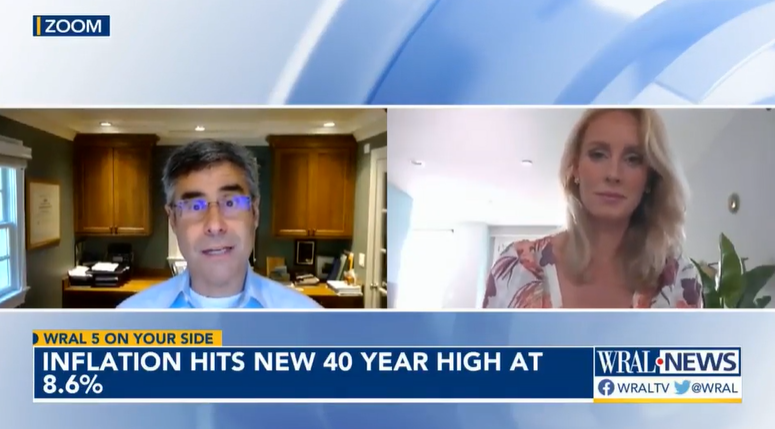
After government statistics showed another big annualized jump in inflation Friday, talk turned to how aggressively the Federal Reserve will act in raising interest rates this week. “Many people are expecting a half a percentage point increase,” Chief Economist Gerald Cohen told WRAL-TV. “Perhaps this would raise the discussion of doing a three-quarters of a percent increase.”
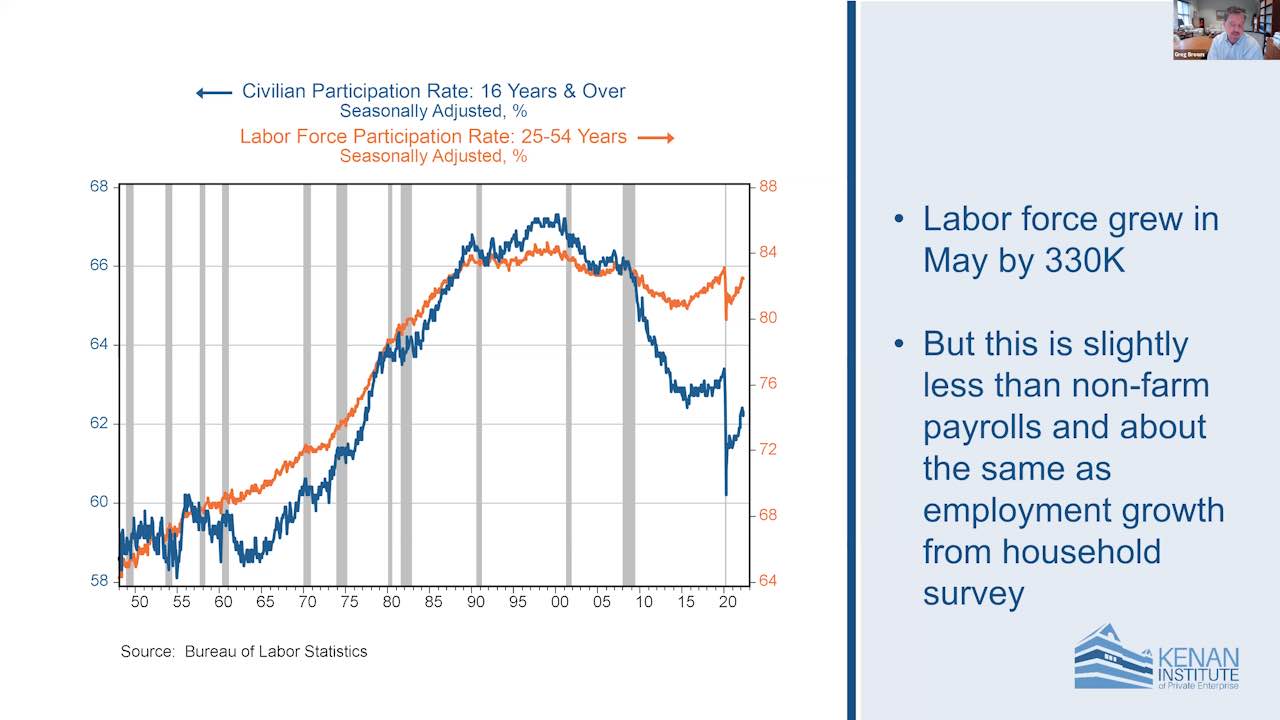
The Kenan Institute of Private Enterprise’s new series of economic briefings returned June 3 following the release of the U.S. Department of Labor’s monthly employment report. In the 9 a.m. ET briefing, Executive Director Greg Brown provided insight on another relatively strong report and talked about how jobs numbers could help influence the Fed to either push past its expected target on interest rates or take a pause in its increases.
CHAPEL HILL, N.C. (May 31, 2022) — Learn how the Department of Labor’s monthly employment report and recent market gyrations will affect expectations for the Fed’s interest rate policy and views on the economic outlook when the Kenan Institute’s new series of virtual press briefings returns this week.
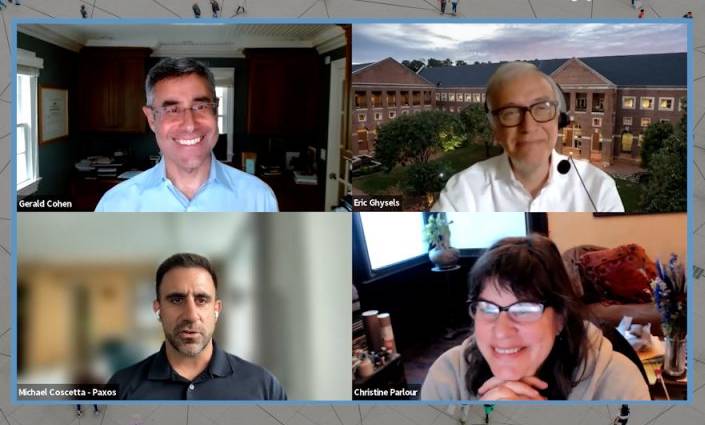
What is a stablecoin, and why did the one known as TerraUSD break the buck and crash? Kenan Institute Chief Economist Gerald Cohen moderates this timely crypto conversation with University of California-Berkeley Haas School of Business Professor Christine Parlour, UNC Kenan-Flagler Business School Professor Eric Ghysels and Chief Revenue Officer Michael Coscetta of Paxos.

The hits just keep coming for the cryptocurrency market following last week’s collapse of TerraUSD. The stablecoin, created to maintain its value equal to the U.S. dollar, today is worth an estimated 11 cents – a drop in market value from nearly $19 billion to roughly $1.3 billion. How could this have happened, and what could it – along with the wider market selloff – mean for the future of crypto? We invite you to join us at 11 a.m. ET this Friday, May 20, for a discussion with key experts.

First, the good news. Given what we know about current economic conditions, it is likely that the consumer inflation rate has peaked in the U.S. for the current cycle. Recent inflation reports on the Consumer Price Index (CPI) and Personal Consumption Expenditures (PCE) Implicit Price Deflator, which is the Federal Reserve’s preferred measure, show a jump to new 40-year highs in March but signs of moderation in coming months. For example, consumer goods with very large 12-month cost runups such as used cars and food away from home are starting to see prices moderate. Likewise, prices of important household goods like apparel, furnishings, prescription drugs and recreation commodities (think TVs and Pelotons) are flattening. Furthermore, some important energy prices such as crude oil and gasoline have stabilized in April after jumps in the first quarter. So, while inflation will surely remain elevated for some time, it is unlikely to get much worse.

The latest employment figures show a strong economy and indicate the U.S. is not at risk of recession, Chief Economist Gerald Cohen says in a story by WRAL TechWire’s Jason Parker.
The recent surge in inflation is making things worse for “a much larger number of people than one might think,” Urban Investment Strategies Center Director Jim Johnson tells The News & Observer.

The Kenan Institute of Private Enterprise launched its State of the Economy Press Briefing, a quick-response roundup of information and commentary following the U.S. Department of Labor’s monthly employment report, with a virtual presentation May 6. Areas for analysis included how the jobs numbers may affect GDP growth, inflation, and the Fed’s plans, with an eye toward what it all means for business.
In the 9 a.m. ET briefing, Chief Economist Gerald Cohen offered additional insights into the effects of COVID-19 on employment and the labor market’s continuing recovery. He also answered questions on the likelihood of a recession and the EU’s response to economic conditions.
The Kenan Institute of Private Enterprise launched its State of the Economy Press Briefing, a quick-response roundup of information and commentary following the U.S. Department of Labor’s monthly employment report, with a virtual presentation May 6.
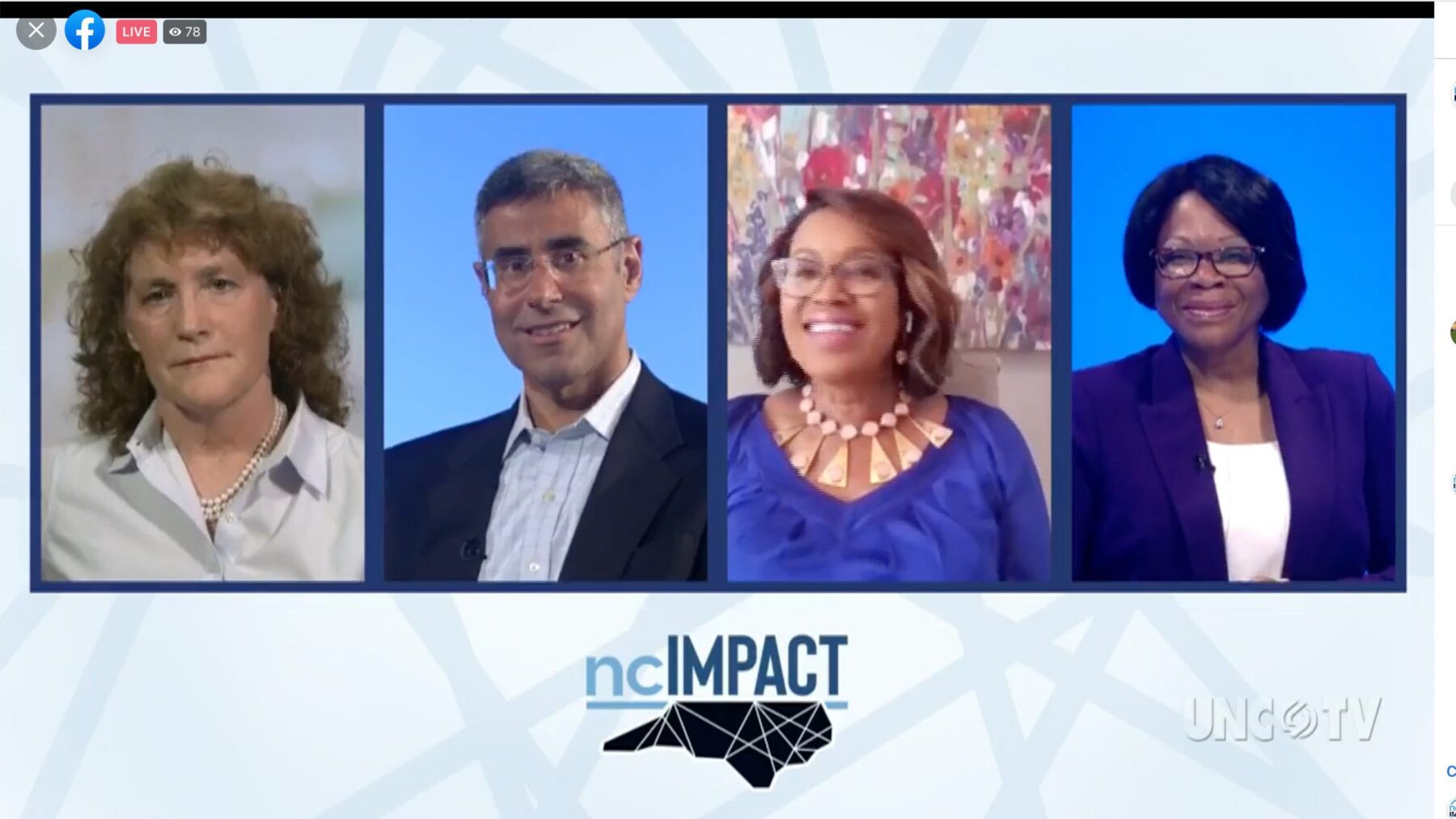
Chief Economist Gerald Cohen joined N.C. Commerce Secretary Machelle Baker Sanders and UNC Associate Professor Erin Fraher, deputy director of the Sheps Center for Health Services Research, on Wednesday for an ncIMPACT Virtual Town Hall with host Anita Brown-Graham. The panelists discussed which sectors have been hit by worker shortages particularly hard and where the talent to fill those positions will come from.

CEOs of the Triangle saw significant raises last year, according to a recent Axios analysis. Kenan Institute Chief Economist Gerald Cohen weighs in on these surging salaries and the gap between managers and company leaders, calling it the “superstar effect.”
Chief Economist Gerald Cohen will be a panelist for an ncIMPACT Virtual Town Hall on workforce shortages in the state that will be livestreamed at 11 a.m. Wednesday, May 4 on Facebook Live.
The spread between 10-year and 3-month Treasuries – my favorite economic indicator – remains strongly in positive territory, suggesting a recession is not in the cards soon. This indicator has predicted all recessions since the mid-1960s, with a lead time of roughly one year, though the timing is inexact. The 10-year/2-year spread, which briefly inverted recently, is less reliable.

The latest report from the Department of Labor showed continued robust job growth. Employers added 431,000 jobs in March. The news of sustained job gains speaks to the strength of the U.S. economy. Moreover, the labor force participation rate inched up slightly to 62.4% in March, from 62.3% in February, indicating more Americans are reentering the workforce. We still have a long way to go to resolve the imbalance between job openings and unemployed people, however, and this means that current issues of worker burnout will also linger.
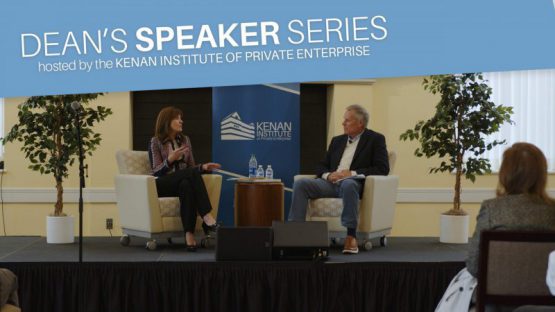
On Tuesday, March 29th, First Citizens Bank Vice Chairwoman Hope Bryant joined UNC Kenan-Flagler Business School Dean Doug Shackelford for a fireside chat. Bryant discussed the history of First Citizens Bank, the impacts of COVID-19 on the workforce and her experiences as a woman in a leadership position.
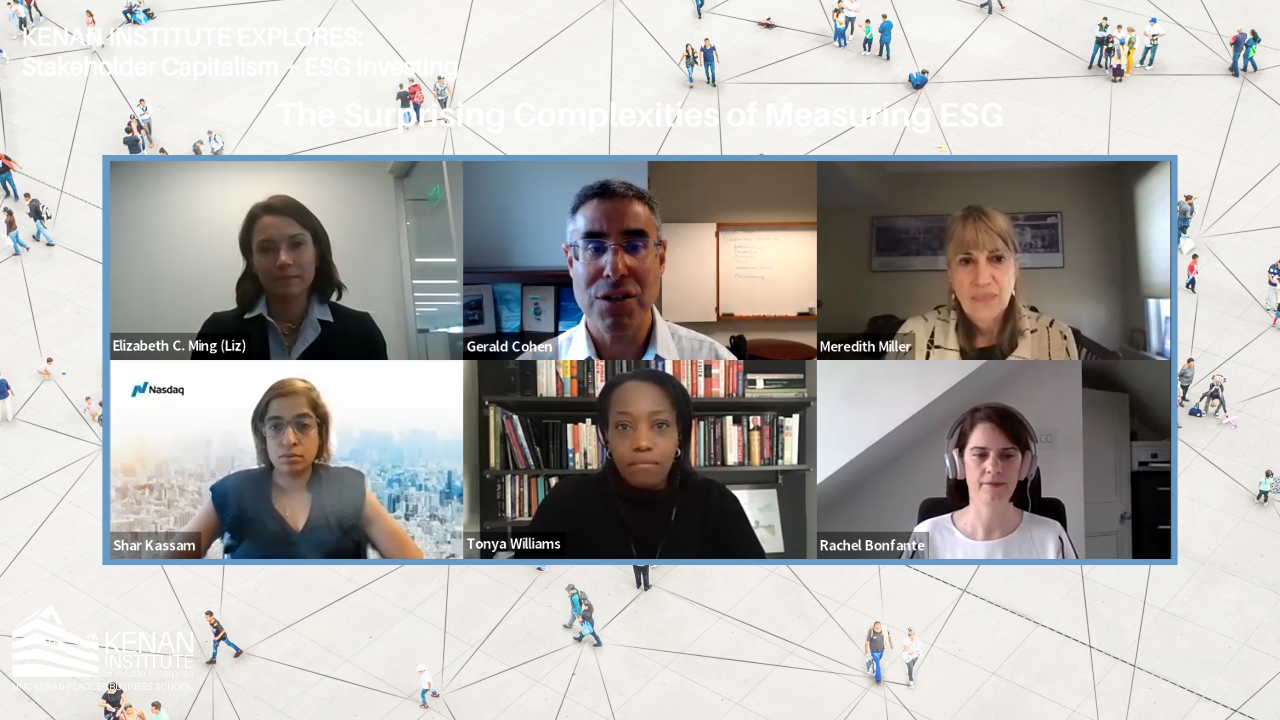
The Kenan Institute’s deep dive into stakeholder capitalism has exposed shortcomings in a key building block: ESG measurement. Our experts have explored the issue at length, proposing ways of refining these measures to produce structures that could meet the needs of multiple stakeholders while also working to design reporting free from political influence and agendas. As a next step, the Kenan Institute hosted a conversation featuring a business leader, investor and standard setter to discuss how we might turn these ideas into solutions to help integrate stakeholder capitalism principals into business and investment decisions.

Concerns about further supply-chain troubles are on the rise. Just a few months ago the “temporary disruptions” stemming from covid were predicted to work themselves out in 2022. However, businesses are now faced with the possibility of disruptions much more severe than those experienced to date. These stem from two sources: interrupted supplies in essential raw materials and agricultural commodities resulting from Russia’s invasion of Ukraine and the potential for a rapid (and massive) spread of COVIC-19 in China resulting in suspensions to manufacturing operations there.

In this interactive virtual workshop, learn how news gets made and how you can evaluate the credibility of news you find on the web. These practical skills will help you become news literate in your professional and personal lives.
“Every business I enter is looking for employees” was a common refrain in our Carolina Across 100 survey, with 79% of the total survey sample selecting employment/staffing concerns among their top three negative impacts of COVID-19 on their organization. Is the staffing shortage just a function of COVID-19 that will correct itself as COVID abates or are there larger demographic and economic forces at work? The answer is a bit of both.
The idea of the Federal Reserve using monetary policy to help mitigate climate risk has gained traction in some circles, but Director of Research Christian Lundblad writes in a new piece for Fortune that such a shift would come with its own set of risks. In addition, nothing the Fed might do would change the fact that Congress must lead any governmental response to climate change.

Society faces a series of major problems, such as climate change, which require transformative technological change as part of the solution. From our 2022 Frontiers of Entrepreneurship Conference, MIT Sloan School of Management Professor Jacquelyn Pless, Duke University Professor Emeritus Eric Toone and Kenan Institute Chief Economist Gerald Cohen explore the potential and limits of entrepreneurship in solving these problems.
Businesses across the state have their Help Wanted signs up, and respondents to the Carolina Across 100 survey confirm that it’s a pressing issue: Nearly 80% of the total sample put employment and staffing concerns among the top three negative effects of COVID-19 on their organizations. Chief Economist Gerald Cohen writes that COVID has played its part in the hiring problems but that other economic and demographic factors are in play. Data provides a mixed picture of what might lie ahead.

Russia’s invasion of Ukraine has disrupted the movement toward globalization that has benefited investors since the end of the Cold War. This development, combined with inflationary pressures not seen in three decades, should prompt individual and institutional investors to reconsider their approach to managing their money, Director of Research Christian Lundblad recently shared with the Raleigh News & Observer.
Inflation hit a 40-year high of 7.8% in February. We estimate energy prices will raise inflation by another percentage point in March. If sustained, the runup in gas prices will take a $100 billion-sized bite out of households’ wallets, weighing on consumer spending – and ultimately, inflation.
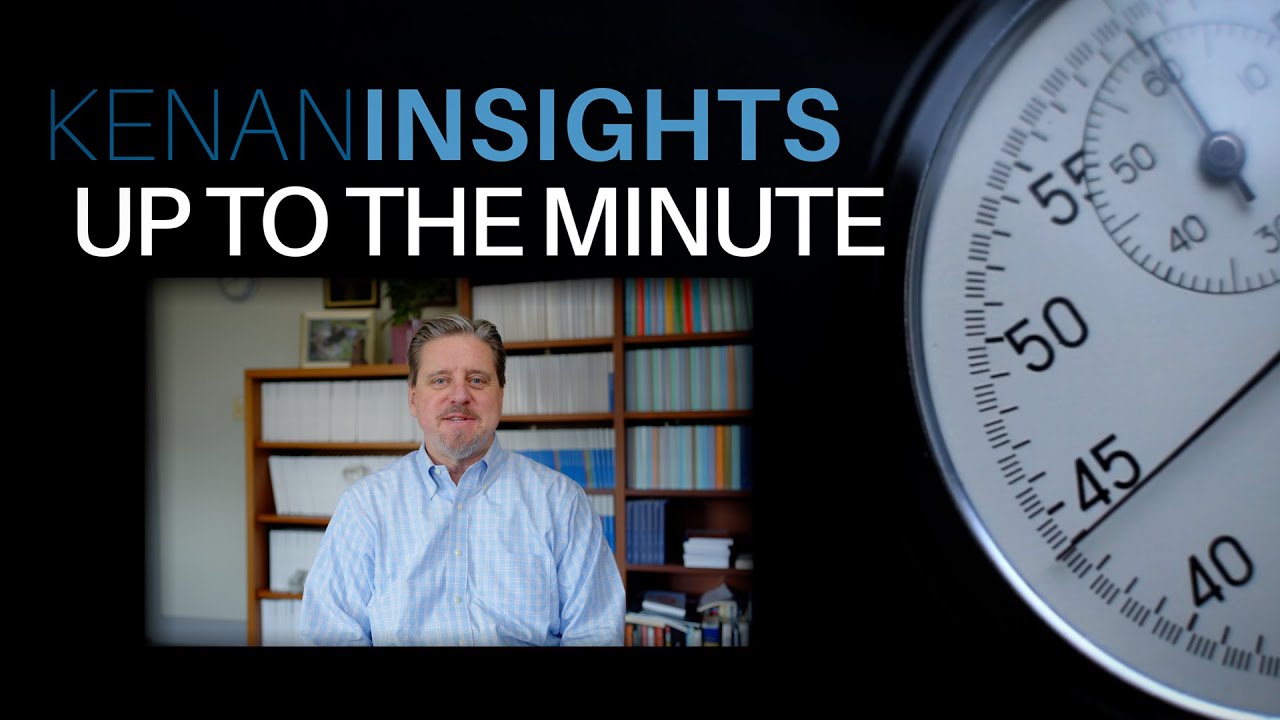
For much of 2022 economic forecasters, including those at the Federal Reserve, assumed that higher inflation rates would be short-lived – shifting back toward the Fed’s 2% target as supply-chain bottlenecks were resolved and a pandemic-induced shift in demand for consumer goods swung back toward consumer services. Instead, recent inflation prints have set 40-year records and we are seeing more discussion about the possibility of a “wage-price” spiral. In this short video, Kenan Institute Executive Director Greg Brown examines the factors which can lead to a wage-price spiral – and assesses the risk of a spiral causing even higher and more persistent inflation in the U.S. over the next few years.

Total funding in North Carolina hit a record $3.4 billion in 2020 with the potential to hit $4 billion in 2021, along with a 10% increase in the number of companies funded, but it’s often a challenge to get cash cycled into new companies and new investments.
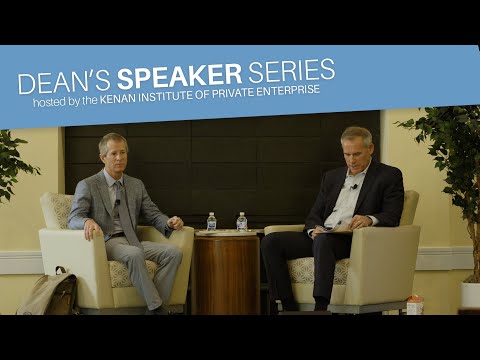
On Wednesday, Feb. 16, Worthington Industries President and Chief Executive Officer Andrew Rose joined UNC Kenan-Flagler Business School Dean Doug Shackelford for a fireside chat. Rose discussed the impacts of COVID-19 and the economy on the manufacturing industry and gave advice to students about to enter today's workforce.
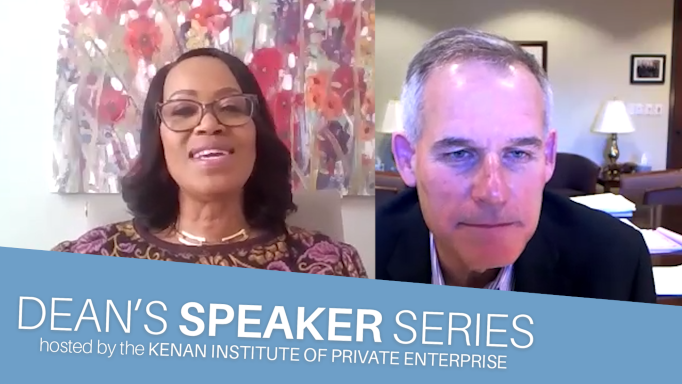
On Wednesday, Feb. 9, North Carolina Secretary of Commerce Machelle Baker Sanders joined UNC Kenan-Flagler Business School Dean Doug Shackelford for a virtual discussion. Sanders discussed the many challenges facing rural North Carolina and the solutions that are being proposed to make the state's businesses and citizens thrive post-pandemic.
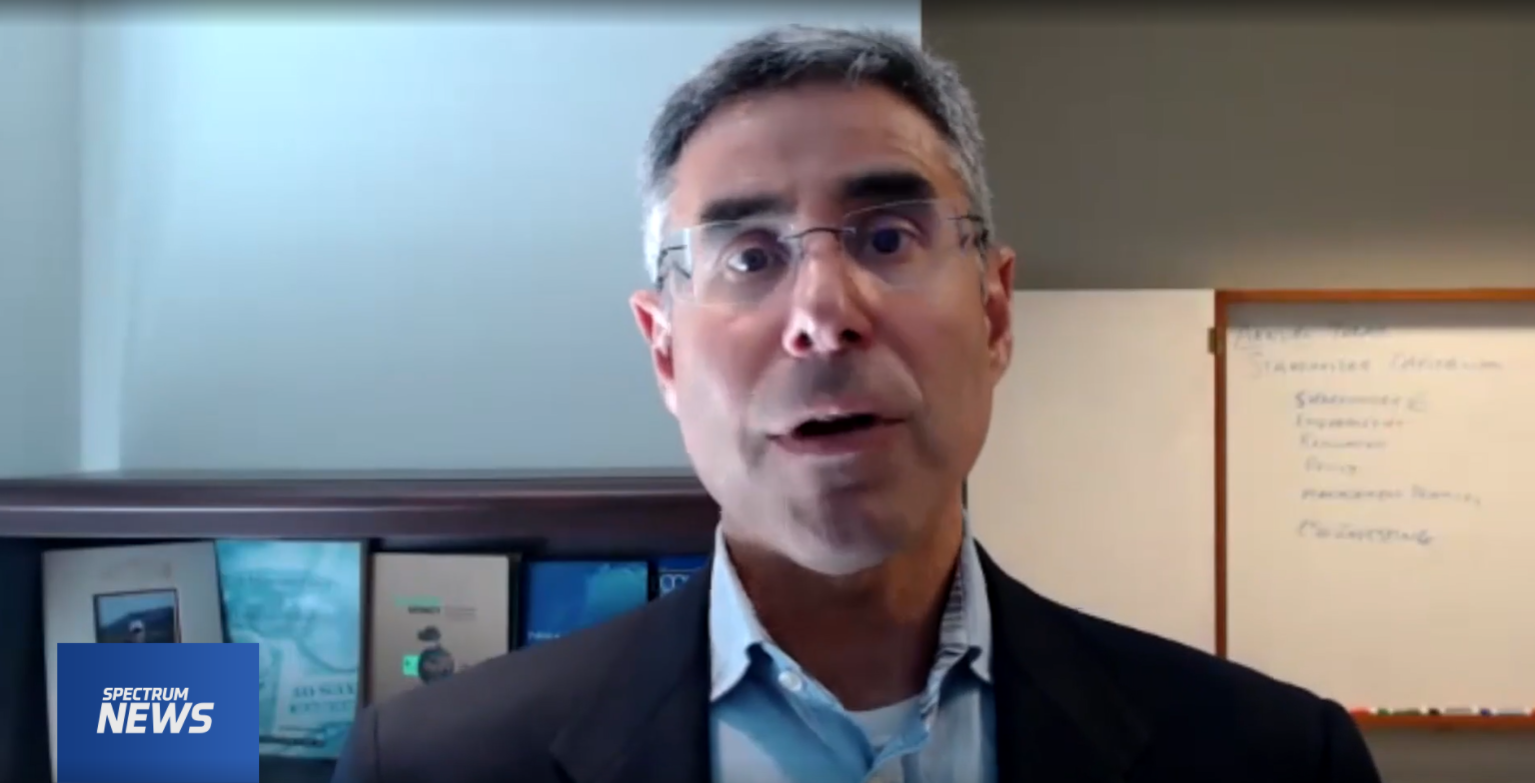
As an increased demand for goods, supply chain issues and worker shortages continue to affect all areas of the economy, U.S. consumers are facing the steepest inflation increase in four decades. Watch Kenan Institute Chief Economist Gerald Cohen talk to Spectrum News NY1 about the link between the country’s rebound from the pandemic and inflation.
Please join us for an exclusive virtual conversation with North Carolina Commerce Secretary Machelle Baker Sanders on Wednesday, February 9. This discussion is part of the Dean’s Speaker Series, hosted by Kenan-Flagler Business School Dean Doug Shackelford.

Apple’s plans to build a new campus and engineering hub in the Research Triangle Park is estimated to bring about 3,000 new jobs to the region and boost the state’s economy by almost $79.8 billion over 39 years. Kenan institute Chief Economist Gerald Cohen answers questions from The Well just how far the company’s impact will reach in the local and state economies.
Following last week’s debate about the overheating economy, Kenan Institute experts return this week for round two – this time focusing on policy. In this week's insight, Kenan Institute’s Executive Director Greg Brown and Chief Economist Gerald Cohen debate the pandemic’s influence on U.S. fiscal policies.
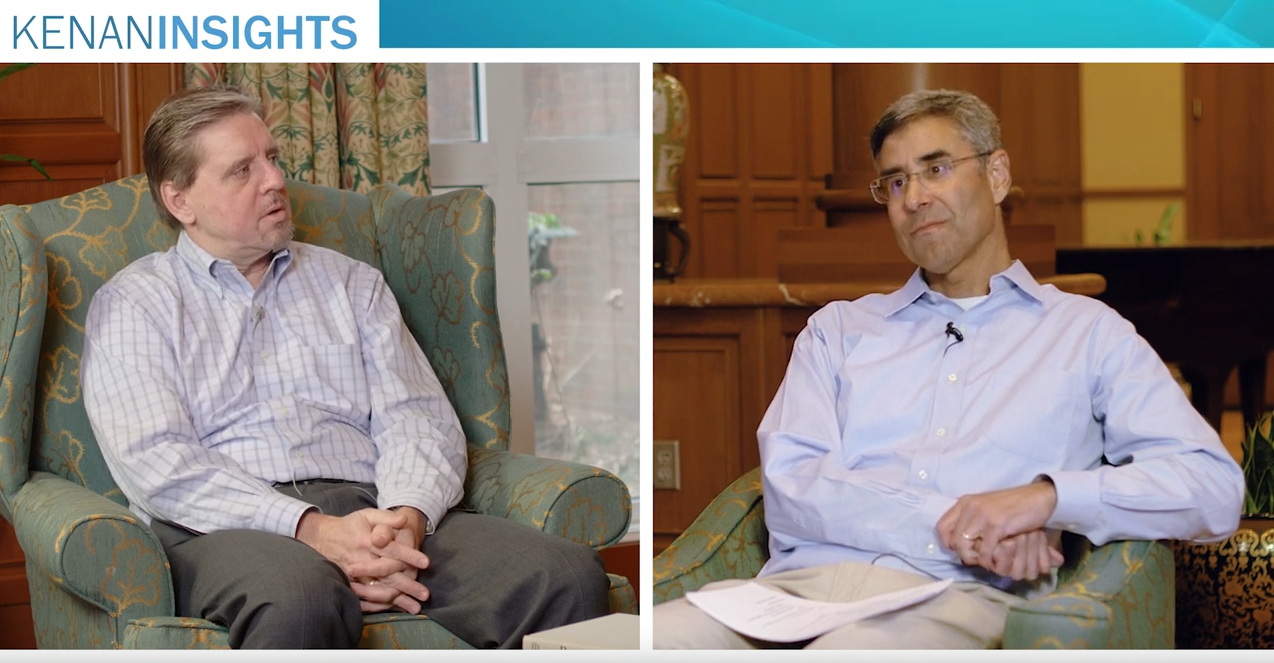
Following last week’s debate about the overheating economy, Kenan Institute experts return this week for round two – this time focusing on policy. Kenan Institute Executive Director Greg Brown and Chief Economist Gerald Cohen debate the pandemic’s influence on U.S. fiscal policies.
Following last week’s debate about the overheating economy, Kenan Institute experts return this week for round two – this time focusing on policy. Check out highlights of Kenan Institute Executive Director Greg Brown and Chief Economist Gerald Cohen's debate of the pandemic’s influence on U.S. fiscal policies.
As the U.S. continues to face COVID-19 and supply chain disruptions, experts debate just how worked up the economy is in its current state. This week’s Insight serves as the first in a two-part point-counterpoint series, in which Kenan Institute Executive Director Greg Brown and Chief Economist Gerald Cohen hash out the arguments both for and against an overheating economy.
As the U.S. continues to face the effects of the pandemic and supply chain issues, Kenan Institute Executive Director Greg Brown and Chief Economist Gerald Cohen debate whether the overheated economy is ready to boil over – or if it’s simply simmering.
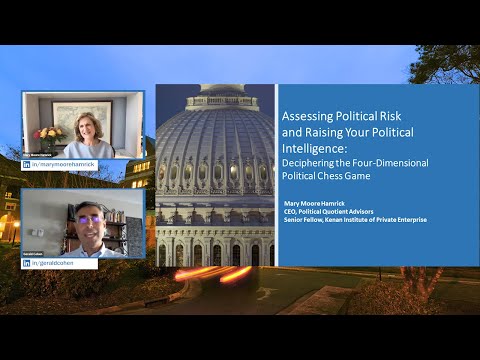
During a fireside chat on Jan. 5, Kenan Institute Chief Economist Gerald Cohen and Political Quotient Advisors CEO Mary Moore Hamrick discussed the political gamesmanship behind the $1.2 trillion U.S. infrastructure bill, drivers influencing national budget and debt ceiling debates, and the potential impact on U.S. and global economies.
As we begin the new year, we wanted to highlight five topics, beyond the impact of COVID-19 and related uncertainties, that we believe business leaders and policymakers will be grappling with in 2022. Throughout the year, we will focus our efforts to provide solutions-focused analysis on these topics as well as a host of others.

Join us for a virtual discussion between Kenan Institute Chief Economist Gerald Cohen and Political Quotient Advisors CEO Mary Moore Hamrick on Jan. 5, 2022. Cohen and Hamrick will discuss the political gamesmanship behind the $1.2 trillion U.S. infrastructure bill, drivers influencing national budget and debt ceiling debates, and the potential impact on U.S. and global economies.
Kenan Institute Chief Economist Gerald Cohen highlights five hot topics – from labor shortages to cryptocurrency – that business leaders and policymakers will grapple with in 2022.
As we begin the new year, we wanted to highlight five topics, beyond the impact of COVID-19 and related uncertainties, that we believe businesspeople and policy makers will be grappling with in 2022. Throughout the year, we will focus our efforts to provide solutions-focused analysis on these topics as well as a host of others.

Toyota announced a plan to build its first North American battery manufacturing plant in Randolph County, North Carolina — a $1.272 billion project that’s expected to bring up to 3,000 jobs – in 2025. Kenan Institute Chief Economist Gerald Cohen said the investment will be beneficial for the region and state, citing the “network effects” these types of facilities can create.
Kenan Institute Chief Economist Gerald Cohen reflects on the economic impact of the past year’s events in this holiday special for WRAL TechWire.

While the COVID-19 pandemic was devastating for many, research shows its impact was not felt equally. Black Americans experienced disproportionate health and economic ramifications, which compounded the financial, social and psychological strain many felt pre-pandemic, and have contributed to growing inter-generational wealth disparities. In today’s Kenan Insight, our experts explore whether the multi-trillion dollar “Build Back Better” plan proposed by the Biden administration holds the potential to begin closing pervasive gaps in American society.

With consumer prices rising for a third straight month in June, consumer demand continuing to outstrip supply and stock valuations well above long-term averages, our experts explore whether the so-called “everything bubble” of asset prices could be set to burst – and examine what’s next for investors and firms.
Director of Research Christian Lundblad and Professor Paige Ouimet examine why some businesses are struggling to fill open positions amid the economic recovery.
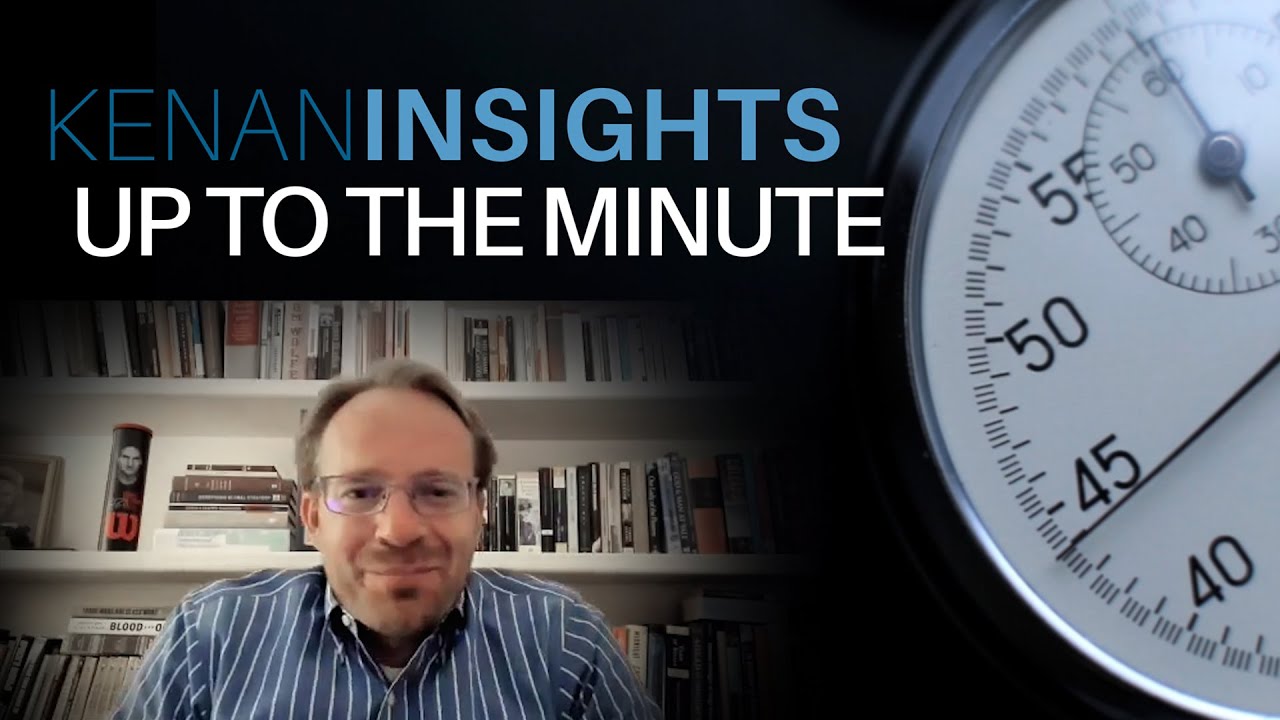
Research Director Christian Lundblad explores the implications of a long-brewing skills mismatch for companies’ bottom lines and our approach to combatting income inequality.
The current narrative around the U.S. labor market is a mixed bag, with unemployment numbers well above pre-pandemic rates while many companies struggle to fill jobs. In this Kenan Insight Q&A, three experts weigh in on the critical issues behind this dichotomy.

The current narrative around the U.S. labor market is a mixed bag. On the one hand, many companies are struggling to find enough workers to return to a semblance of normal operations. On the other, 8 million fewer Americans were employed in April 2021 as compared to February 2020. We asked three experts from the University of North Carolina at Chapel Hill — Christian Lundblad, Director of Research, Kenan Institute of Private Enterprise and Richard "Dick" Levin Distinguished Professor of Finance, Area Chair of Finance and Associate Dean of the Ph.D. program, Kenan-Flagler Business School; Luca Flabbi, Associate Professor of Economics; and Paige Ouimet, Professor of Finance, Kenan-Flagler Business School — to weigh in on the critical issues behind this dichotomy.

As the Consumer Price Index rises, businesses sound the alarm over supply-chain bottlenecks, and federal stimulus checks spur spending, the chatter around inflation is increasing. In this Kenan Insight, we explore what this potential perfect storm for an inflation spike could have on a recovering U.S. economy.
In this virtual fireside chat, Kenan Institute Senior Fellow Mary Moore Hamrick, CEO of Political Quotient Advisors, will outline the impact of the Biden Administration’s legislative, regulatory and executive order actions on business thus far.
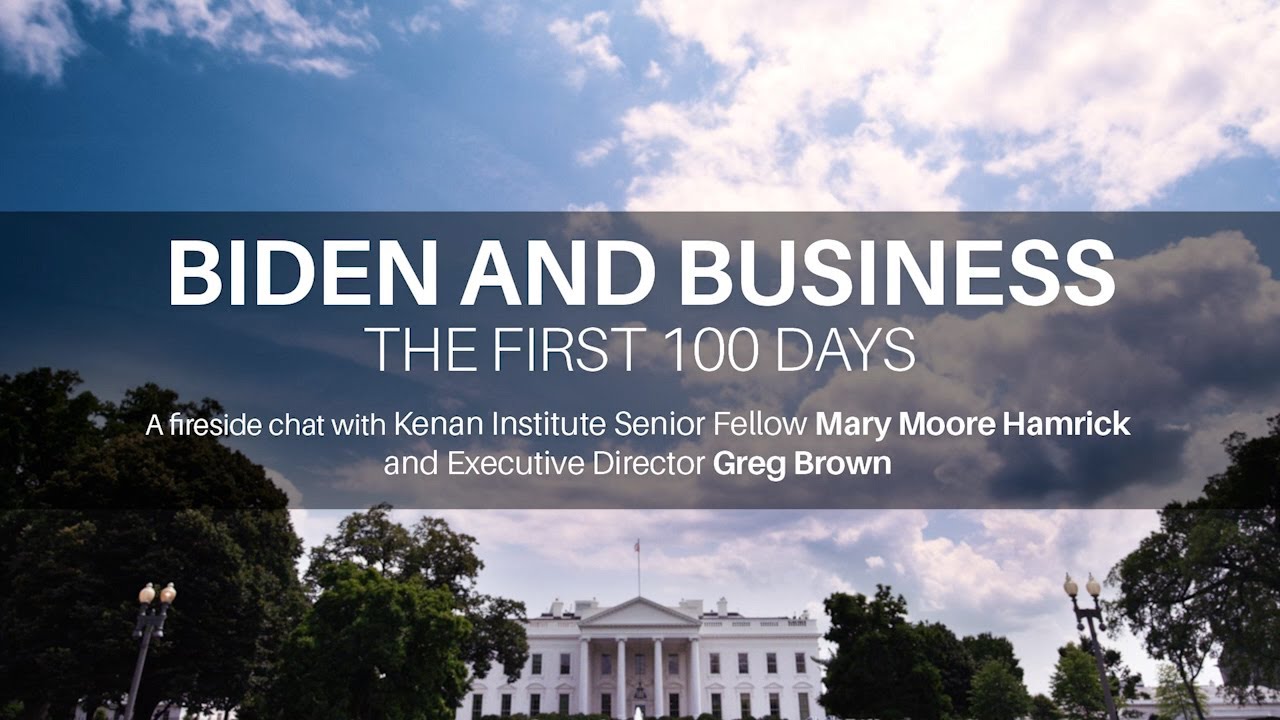
In this virtual fireside chat with Kenan Institute Director Greg Brown, Senior Fellow Mary Moore Hamrick, CEO of Political Quotient Advisors, outlined the impact of the Biden Administration’s legislative, regulatory and executive order actions on business thus far.

The 2020 COVID-fueled economic downturn generated what has been referred to as a K-shaped recession, with both big losers (such as restaurants and the hospitality sector) and big winners (such as high tech and online retail). In this Kenan Insight, we explore how a nascent K-shaped recovery will likely affect U.S. businesses and households.
Kenan Institute Senior Fellow Mary Moore Hamrick, CEO of Political Quotient Advisors, outlines the major “buckets” of President Biden’s proposed $3 trillion infrastructure bill.
The 2020 U.S. economic downturn fueled by the COVID-19 pandemic generated both big losers (such as restaurants and the hospitality sector) and big winners (such as high tech and online retail), leading economic commentators to call the recession “K-shaped.” As the pandemic evolves in 2021, this K-shaped recovery will go global; though some countries, notably the U.S. and China, are securely tethered to the largest economic booster rocket ever built, a sizable swath of the world will continue to suffer weak growth.
In a recent ABC-11 news feature, Kenan Institute Executive Director Greg Brown weighed in on the proliferation of new businesses formed in North Carolina during the COVID-19 pandemic.

President Biden’s $1.9 trillion stimulus bill is one of the largest bills ever passed by Congress. Mary Moore Hamrick, Political Quotient Advisors CEO and Kenan Institute of Private Enterprise Senior Fellow, breaks down the bill’s provisions and discusses its as-yet-unknown effects.
Adam Reed, professor of finance and Julian Price Distinguished Scholar of Finance with UNC Kenan-Flagler Business School, comments on the Reddit-fueled GameStop trading frenzy.
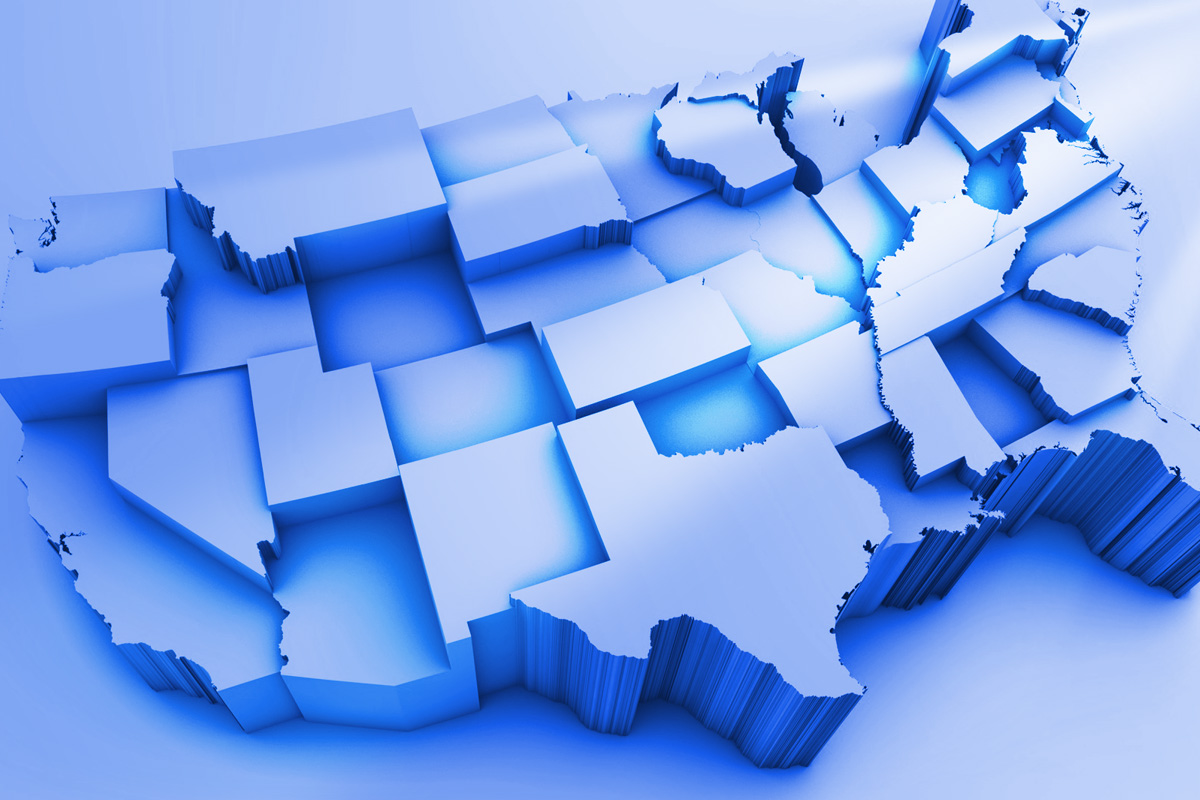
As we approach the one-year mark of state-issued stay-at-home orders, the short- and long-term impact of the global COVID-19 pandemic on state coffers is still being assessed. With businesses forced to close and unemployment at near-record levels, state policymakers are scrambling to find ways to make up for lost tax revenue. In this Kenan Insight, we look at both the challenges and opportunities for balancing state budgets in light of this new economic reality.
2020 brought an end to North Carolina’s decade-long economic expansion that began in 2010 after the Great Recession. It has now been a year since COVID-19 arrived on U.S. shores, and we can see some changes clearly, while others are just starting to emerge from the haze. It will likely be years before we fully grasp the myriad ways COVID-19 has affected the nation’s and the state’s economies. Now seems like a good time to take stock of the fallout from 2020, the trends we’re seeing a year into the crisis and where things are starting to turn around for North Carolina.

On January 20, Joseph R. Biden, Jr. will become the 46th president of the United States. In this Kenan Insight, we look at what the Biden administration might mean for the economy and business activity in 2021, including what Biden's highest priorities are, what we can expect in both his and Congress's first 100 days and what we can learn from the divisiveness of the elections and the January 6 attack on the Capitol.

The arrival of two approved COVID-19 vaccines provides a clear path to the end of the pandemic that held most of 2020 hostage. But a recent resurgence of the virus and skyrocketing rates of infection indicate that a full return to normalcy—including the pre-pandemic work environment— is still months in the future. In this Kenan Insight, we examine the relevant factors that will determine when and how we go back to the office.
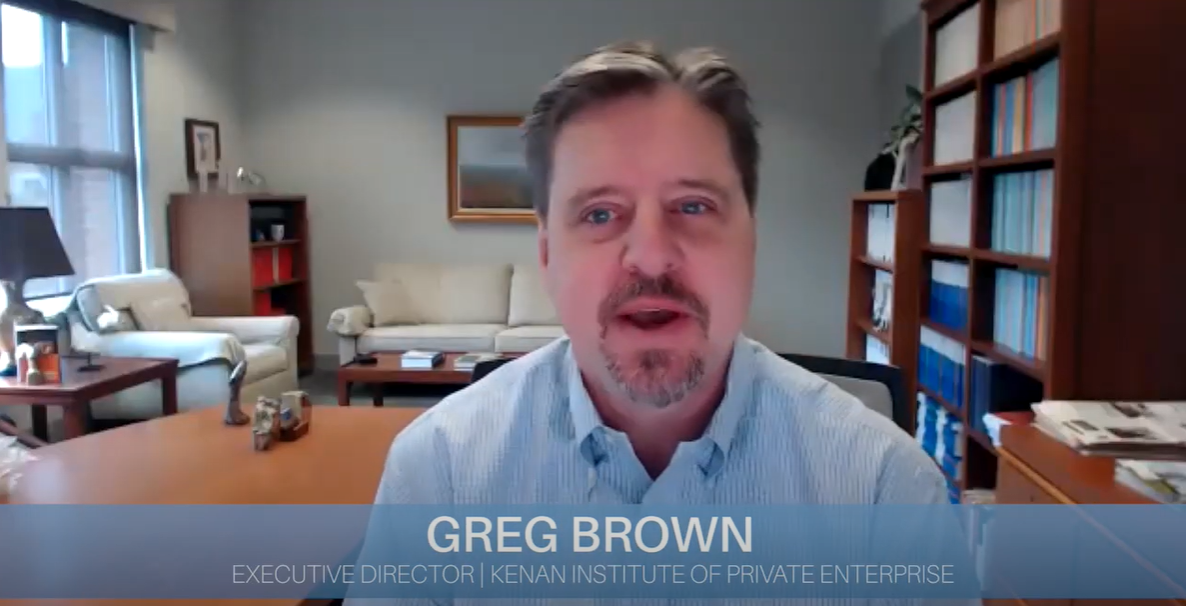
Kenan Institute Executive Director Greg Brown is quoted in this recent Los Angeles Times article on what some entertainment venues are doing to make up for lost revenue due to COVID-19 restrictions.
A follow-up to our pre-election coverage, this discussion will explore the impact of the presidential and congressional race outcomes on U.S. business and the economy, trade and foreign relations, ongoing COVID-19 recovery efforts and more.
A follow-up to our pre-election coverage, this discussion explored the impact of the presidential and congressional race outcomes on U.S. business and the economy, trade and foreign relations, ongoing COVID-19 recovery efforts and more. The webinar featured Kenan Institute Director of Research Christian Lundblad, Political Quotient Advisors CEO and Kenan Institute Senior Fellow Mary Moore Hamrick, U.S. Chamber Center for Capital Markets Competitiveness Executive Vice President and Senior Advisor to the Senior Executive Vice President Tom Quaadman and Kenan Institute Executive Director Greg Brown as moderator.

As a second wave of COVID-19 cases makes its way around the world, the danger to the U.S. economy is clear. In this Kenan Insight, we examine the potentially damaging effects of the ongoing pandemic on an already battered workforce, and make the case for why Congress must act quickly to ensure economic stability.

With COVID-19 cases on the rise, much uncertainty remains about how much more damage the pandemic will inflict on the U.S. economy, particularly on certain sectors and small businesses. What is clear, however, is that many businesses will continue to require infusions of capital to stay afloat, and that private sector capital providers will need to play a role in long-term recovery efforts. In this Kenan Insight, we explore how those providers will need to shift their approach to risk assessment in the post-COVID world, and what opportunities might be created for investors who can solve two outstanding issues.

With COVID-19 cases on the rise, much uncertainty remains about how much more damage the pandemic will inflict on the U.S. economy, particularly on certain sectors and small businesses. What is clear, however, is that many businesses will continue to require infusions of capital to stay afloat, and that private sector capital providers will need to play a role in long-term recovery efforts. In this Kenan Insight, we explore how those providers will need to shift their approach to risk assessment in the post-COVID world, and what opportunities might be created for investors who can solve two outstanding issues.

The global COVID-19 pandemic has been a recurring theme throughout the 2020 U.S. elections, and its health and economic consequences will be felt far beyond November 3. In this Kenan Insight, we look at both the challenges and potential opportunities the pandemic has created for accelerating innovations in healthcare delivery and pharmaceutical development.
In this virtual fireside chat, Kenan Institute Senior Fellow Mary Moore Hamrick, CEO of Political Quotient Advisors, will explore the political landscape ahead of the historic 2020 U.S. presidential election.
On Wednesday, Oct. 28, the Kenan Institute hosted a virtual fireside chat with Senior Fellow and Political Quotient Advisors CEO Mary Moore Hamrick. In discussion with Director of External Affairs MacKenzie Babb, Hamrick talked through the current political landscape just one week before the historic 2020 U.S. presidential election.

The COVID-19 pandemic has generated a significant shift in how and where we work, play and live. In this Kenan Insight, we explore which changes will be temporary and which are here to stay.

The COVID-19 pandemic has exposed flaws in the global supply chain that have existed for years, with disruptions that have led to a scarcity of goods as diverse as PPE, food and toilet paper. In this Kenan Insight, we examine how threats to supply chains are forcing companies to rethink how they can position themselves to mitigate future risk.

Greg Brown, executive director of the Kenan Institute, says policymakers, companies and individuals need to focus on longer-term solutions in order to move forward through the pandemic.

The COVID-19 pandemic has generated a significant shift in how and where we work, play and live. In this Kenan Insight, we explore which changes will be temporary and which are here to stay.
Join the Kenan Institute of Private Enterprise and the North Carolina CEO Leadership Forum September 22 for the launch of a new report examining the state of our national economy – and exploring its future.
As the historic 2020 U.S. presidential election draws nearer, voters are taking stock of the impact the COVID-19 pandemic has had on their lives and livelihoods, and demanding that policymakers present their plans for economic recovery. In this Kenan Insight, we look at the major forces reshaping the U.S. economy and offer suggestions for forging an intentional and equitable path forward.

September 13 will mark six months since U.S. President Donald Trump declared a national state of emergency in response to the COVID-19 a national pandemic. And here in North Carolina, Governor Roy Cooper announced last week that the state will transition to “Phase 2.5,” with further easing of restrictions on certain places and types of activities including mass gatherings, playgrounds and gyms, but with other restrictions – such as those on bars and entertainment venues – remaining in place. It seems like a good time to take stock of where we’ve been, where we are now and what lies ahead.

On March 11, 2020, the World Health Organization declared COVID-19 a global pandemic. Within two months, nearly half a million people fled hard-hit New York City. Will they return once the crisis has passed? In this Kenan Insight, we explore how the ongoing pandemic is raising questions about the future attractiveness of large cities as places to live and do business.

As states reopen amid the COVID-19 pandemic, experts are looking to consumer spending as an indicator of a return to normalcy. But consumers need to both be safe and feel safe for nonessential activities and spending to resume. Kenan Institute Director of Research and UNC Kenan-Flagler Business School Professor Christian Lundblad spoke with WABC 11 News about this phenomenon, and how the institute is tracking it through a new data dashboard.

In this week’s commentary, we’ll discuss the robustness of the improved health statistics, what the president’s executive orders mean for the economy and the first estimates from our undetected cases model. We do this with an eye toward what could be impending deterioration on both the pandemic and economic front.
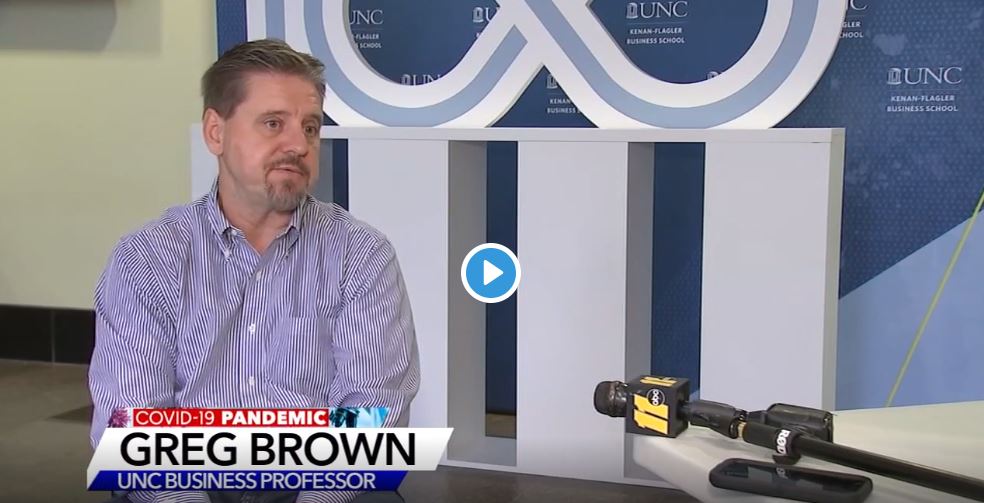
Greg Brown, executive director of the Kenan Institute, spoke with ABC 11 (WTVD) News about LinkedIn’s workforce confidence survey. The survey shows that North Carolina workers’ confidence in workplace safety dropped 10 points from May to June — which Brown said is not surprising.

In this week’s data commentary we’ll provide our usual review of health statistics, but primarily focus on what is an increasingly perilous juncture for both the U.S. and North Carolina economies. Specifically, the failure of Congress to agree on a new stimulus plan is feeling more and more like a game of chicken, with U.S. households standing between the onrushing vehicles. Hopefully, there is still time to slam the brakes on the rhetoric and approach the problem with solid economic logic.

The health and economic data from this past week brought both good and bad news about the state of affairs in North Carolina. Health data suggest the growth in new cases is slowing, that hospital capacity remains available and that we might be getting a better handle on identification. While this is certainly encouraging in the battle against the pandemic, a similar levelling off in business activity does not bode as well for the economy. In this week’s commentary we seek to unpack some of the details in the data to understand what may be a new plateau.
The recent spike in COVID-19 cases nationally, including a large bump in North Carolina, has us worried on a number of fronts—including its potential impact on the budding economic recovery. The $64,000 question has become, “Will we see a double-dip recession?” After the substantial rebound in consumer spending in May and early June, the most recent data suggests a stall in activity over the last month. Combined with an out-of-control worsening of the pandemic in several states, this trend is worrisome. Yet current conditions do not guarantee another plunge in the economy like the one we experienced in April. In this commentary, we look at the situation from our preferred three angles: health statistics, economic data, and individual behavior and welfare assessment.

Greg Brown, executive director of the Kenan Institute of Private Enterprise, discussed on WRAL-TV’s July 16 primetime newscast the shortcomings of the federal COVID-19 economic relief package and outlined provisions to make the next stimulus package more effective.
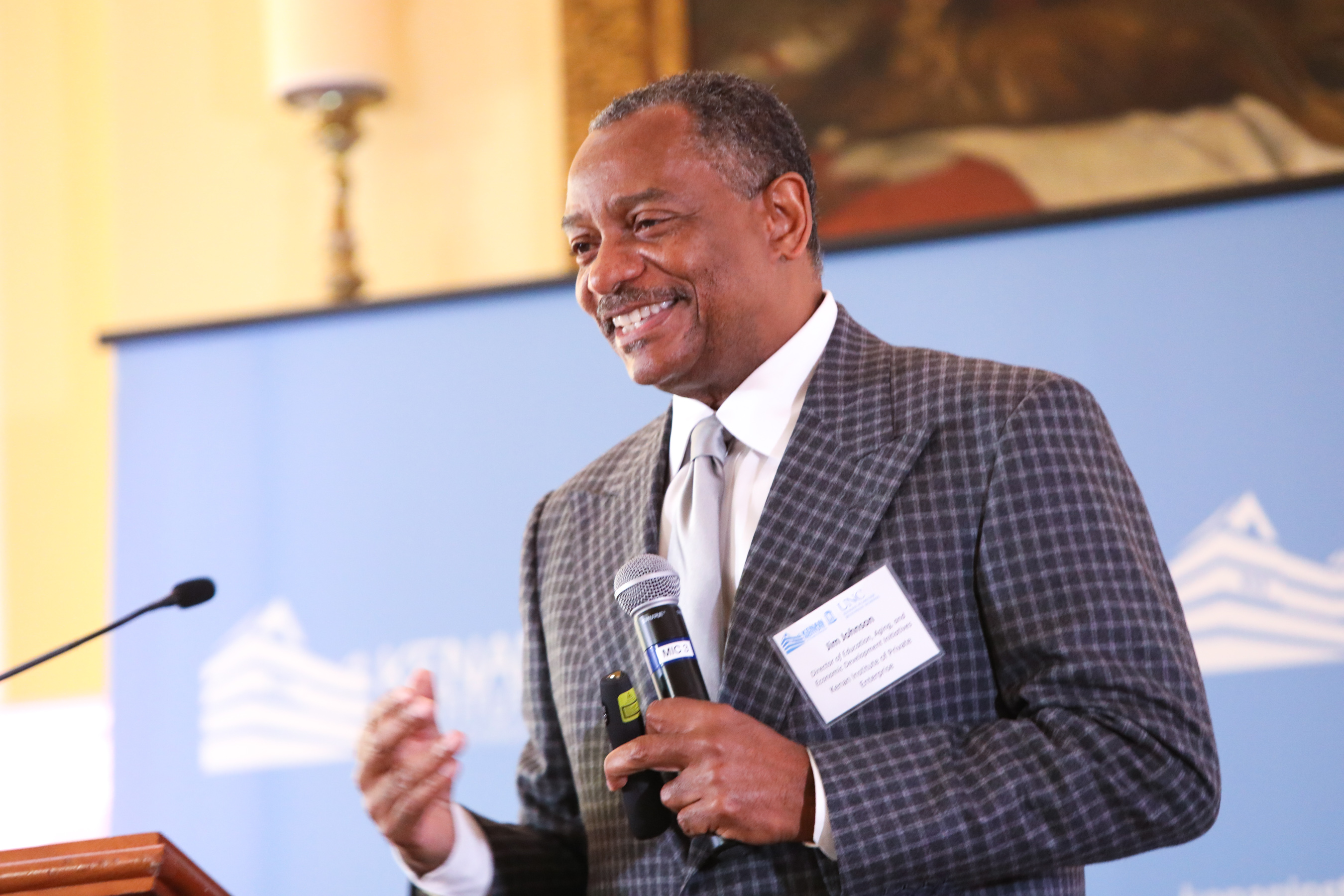
North Carolina Governor Roy Cooper has named Dr. James H. Johnson Jr., William R. Kenan Distinguished Professor of Strategy and Entrepreneurship and director of the Kenan Institute-affiliated Urban Investment Strategies Center, to the newly created Andrea Harris Social, Economic, Environmental, and Health Equity Task Force.

In response to the economic chaos caused by the COVID-19 pandemic, the federal government launched its largest fiscal stimulus in modern history—the CARES Act. But with $2 trillion invested in small businesses, unemployment benefits and direct cash payments to households, the CARES Act has still fallen short of its goals to spur consumer spending and restore employment. This Kenan Insight analyzes what went wrong, and offers suggestions for the anticipated next round of federal economic aid.

As federal, state and local governments struggle to reopen the economy as the COVID-19 pandemic surges onward, efforts to ensure people’s health and safety are seemingly at odds with attempts to spur economic activity. In this Kenan Insight, we explore how a data-driven approach to reopening North Carolina (and the U.S. as a whole) can help preserve both lives and livelihoods.

Join experts from Wells Fargo, First Citizens Bank, UNC Kenan-Flagler Business School and the Kenan Institute of Private Enterprise for a discussion on the North Carolina CEO Forum’s launch of a new framework to aggregate non-standard, real-time data to guide policy and business next steps. Join Tuesday, July 7, at 11 a.m. EDT.

A panel of experts convened by UNC Kenan-Flagler Business School and its affiliated Kenan Institute of Private Enterprise will be offering a press briefing via webinar that will examine the impact COVID-19 has had on supply chains. Join Tuesday, June 2, at 11 a.m. EDT.

From small towns to big cities and everywhere in between, there is still a long road ahead to address the current economic crisis spurred by the coronavirus pandemic and adapt to the new normal, but NCGrowth and SmartUp have been hosting webinars to provide communities with key resources. On Wednesday, May 20, three panelists offered their perspectives to explore the economic impacts of COVID-19.
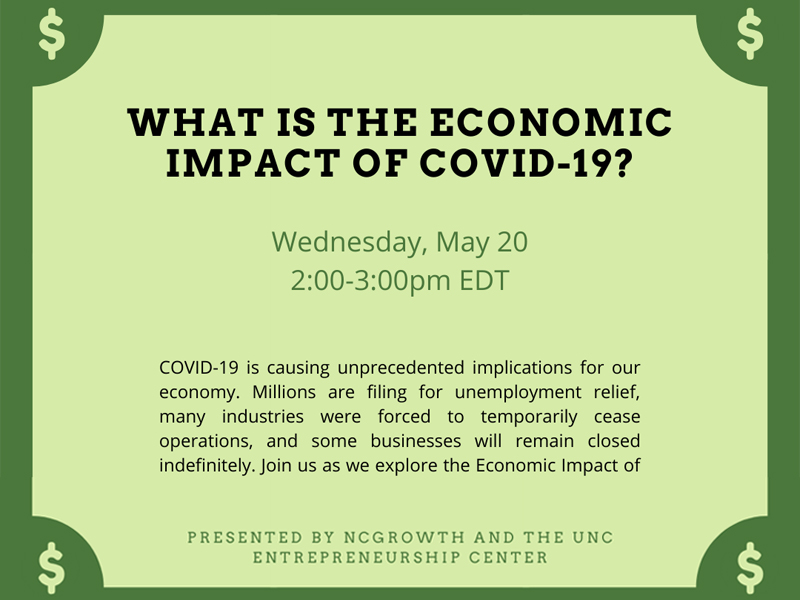
COVID-19 is causing unprecedented implications for our economy. Millions are filing for unemployment relief, many industries were forced to temporarily cease operations, and some businesses will remain closed indefinitely. Join us as we explore the Economic Impact of COVID-19.
A panel of experts convened by UNC Kenan-Flagler Business School and its affiliated Kenan Institute of Private Enterprise will be offering a press briefing via webinar on the vital role state governments have played in response to COVID-19, the significant variance we’ve seen in responses state by state, and what’s next as governors and state lawmakers work with the federal government to fund relief while working to balance their own budgets. Join tomorrow, Tuesday, May 19, at 11 a.m. EDT.
There is no doubt that the COVID-19 crisis has devastated the U.S. economy. But the particulars of this devastation are difficult to gauge, because unique aspects of the of the pandemic distort the data commonly used to assess such situations. In this Kenan Insight, we take a deep dive into the data to learn what it actually tells us about the economic impact of COVID-19, and suggest possibilities for a restart and recovery of the U.S. economy.

A panel of experts convened by UNC Kenan-Flagler Business School and its affiliated Kenan Institute of Private Enterprise will be offering a press briefing via webinar on recent economic data releases which show the nation’s largest ever declines in business activity, employment and aggregate wages. Join tomorrow, Tuesday, May 12, at 11 a.m. EDT to hear from the following experts:

This webinar is invite only.

Prior to the COVID-19 outbreak, institutions of higher education were under immense pressure to live up to their value propositions, with underlying tensions that have been developing for years posing an existential threat to their financial viability. As colleges and universities move classes and operations online in response to the pandemic, questions arise as to what such changes hold not just for now, but for the long-term success of higher education. Can ed tech provide a way forward? Find out in this week’s Kenan Insight.

Join RedHat’s Chief People Officer, DeLisa Alexander and UNC Kenan-Flagler Business School Faculty members Dave Hofmann and Arv Malhotra as they explore how business leaders can motivate their teams and meet the changing needs of a remote workforce.
This webinar is invite only.

The COVID-19 pandemic has put 18 million jobs at small businesses in the U.S. at risk – which could as much as quadruple the nation’s total unemployment rate. The effects of both the coronavirus and recent government relief programs were explored by a panel of Kenan Institute-convened experts during a press briefing held yesterday. The full recording of this briefing—along with a deeper-dive analysis on the specific implications of the financial downturn on small business employment by Kenan Institute Research Director Professor Christian Lundblad and UNC Kenan-Flagler Business School Professor Paige Ouimet—is available in this week’s Kenan Insight.

A panel of experts convened by UNC Kenan-Flagler Business School and its affiliated Kenan Institute of Private Enterprise will be offering a press briefing via webinar examining the massive implications the COVID-19 market disruption has, and will continue to have, on small business employment, including a projected 11.5 percentage point addition to the overall U.S. unemployment rate by small business layoffs. They will also examine the role relief legislation can and should play in mitigating the economic effects of the pandemic. Join tomorrow, Tuesday, March 31, at 11 a.m. EDT.
A panel of experts convened by UNC Kenan-Flagler Business School and its affiliated Kenan Institute of Private Enterprise will be offering a press briefing via webinar on the dramatic short- and long-term impact of the COVID-19 financial downturn on personal and consumer finance—including effects on retirement, mortgage rates and tax policy. Join tomorrow, Tuesday, March 24, from 11-11:45 a.m. EDT.

The COVID-19 financial downturn will have short- and long-term effects on personal and consumer finance, as explored by a panel of Kenan Institute-convened experts during a press briefing held yesterday. The full recording of this briefing—along with a deeper-dive analysis on the specific implications of the downturn on personal retirement income by Kenan Institute Executive Director Greg Brown—is available in this week’s Kenan Insight.
A panel of experts convened by UNC Kenan-Flagler Business School and its affiliated Kenan Institute of Private Enterprise will be offering a press briefing via webinar on the dramatic short- and long-term impact of the COVID-19 financial downturn on personal and consumer finance—including effects on retirement, mortgage rates and tax policy. Join tomorrow, Tuesday, March 24, from 11-11:45 a.m. EDT.
On Saturday, March 21, the Small Business Investor Alliance released a survey focusing on the effect COVID-19 is having on small businesses across the U.S. Kenan Institute Executive Director Greg Brown and UNC Kenan-Flagler Business School Ph.D. candidate Matteo Binfarè provided data analysis.

To help separate fact from fiction and legitimate concern from panic, the Kenan Institute of Private Enterprise and UNC Kenan-Flagler Business School convened six top faculty researchers to discuss the likely effects of the pandemic on business and the economy.

A slate of experts from UNC Kenan-Flagler Business School and its affiliated Kenan Institute of Private Enterprise will be offering a press briefing via teleconference on the tremendous effects of COVID-19 on business, workers and the economy at large. Join tomorrow, Tuesday, March 17, at 11 a.m.

Timely insights into topics that affect founders, funders and the broader entrepreneurial ecosystem.
China’s venture capital funding has contracted significantly since mid-2018. According to Christian Lundblad, director of research at the Kenan Institute, this is a byproduct of U.S. trade policy, some domestic Chinese investment policy and the usual ups and downs in a developing market.
Five individuals from the fields of economics and entrepreneurship will spend a year strengthening collaboration between the University of North Carolina at Chapel Hill and Duke University, contributing to the schools’ teaching missions, and providing at least one major public lecture or performance.

The Kenan Institute of Private Enterprise and Duke University have announced the selection of the 2020 Keohane Distinguished Visiting Professorship recipients.

As U.S. and Chinese delegations prepare to meet May 9 and 10, experts weigh in on the ongoing U.S.-China trade talks and ramifications for businesses, governments and consumers around the globe.

Join us for an afternoon with SEC Commissioner Michael S. Piwowar, who will share how the SEC is protecting investors, maintain the integrity of markets, and facilitate capital formation. Michael S. Piwowar was first appointed to the U.S. Securities and Exchange Commission (SEC) by President Barack Obama and was sworn in on August 15, 2013. Dr. Piwowar was designated Acting Chairman of the Commission by President Donald Trump from January 23, 2017, to May 4, 2017.