
The World Has Changed, Four Years On: A Scorecard
Four years ago, Christian Lundblad wrote that the world had changed and underlined three concerns for business leaders. Now the professor is grading his work.
Four years ago, Christian Lundblad wrote that the world had changed and underlined three concerns for business leaders. Now the professor is grading his work.

Join us on Tuesday, November 4, from 1:30 - 2:30 PM for this Dean's Speaker Series talk featuring Reggie Townsend of SAS, a leading voice on responsible innovation, as he shares insights and best practices for leading with integrity in the age of AI.

Join us for a fireside chat with Michelle Peluso, CEO of Revlon, moderated by UNC Kenan-Flagler Business School Dean Mary Margaret Frank, at 4:15 PM on Thursday, October 9, at The Carolina Inn.
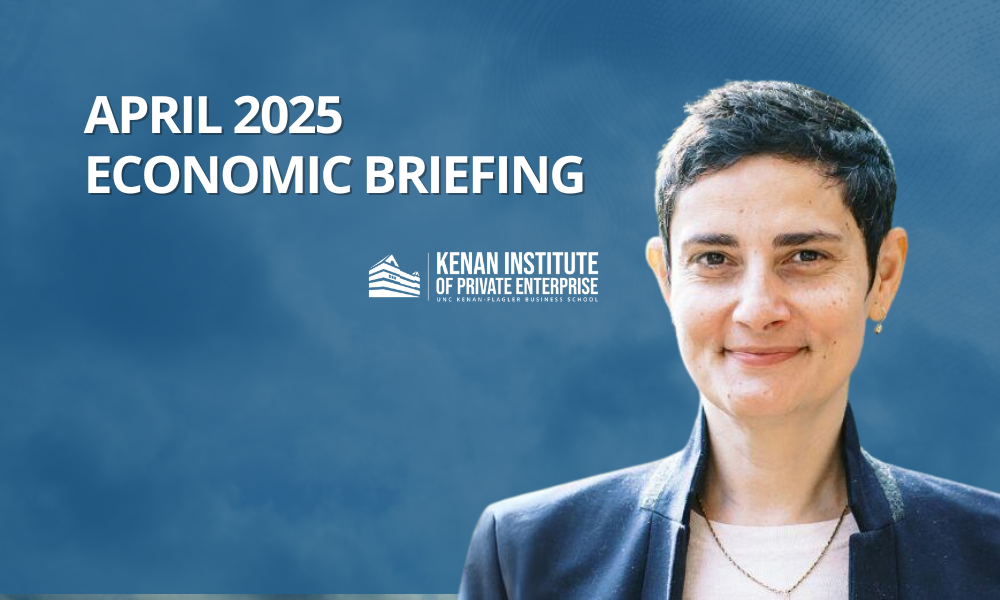
In the institute's April 4 briefing, Research Director Camelia Kuhnen dissected consumer confidence and sentiment data with an emphasis on growing pessimism among young people and answered questions on potential economic effects of new tariffs.

Please join us for an exclusive conversation with Eli Gross on March 7 at 1 PM as a part of the Dean’s Speaker Series, hosted by the Kenan Institute in partnership with UNC Kenan-Flagler Business School.

Kenan Institute Chief Economist Gerald Cohen kicks off 2025 with a rundown of five issues that will be top of mind for business leaders and policymakers, accompanied by his analysis.


Our country's cities, towns and rural communities hold the key to understanding current and forecasted national trends – but for far too long, our nation’s microeconomic data has been lacking. The American Growth Project is here to help.

Kenan Institute Distinguished Fellow Josh Lerner of Harvard Business School says achieving resilience is difficult, in part because businesses are hard to change.
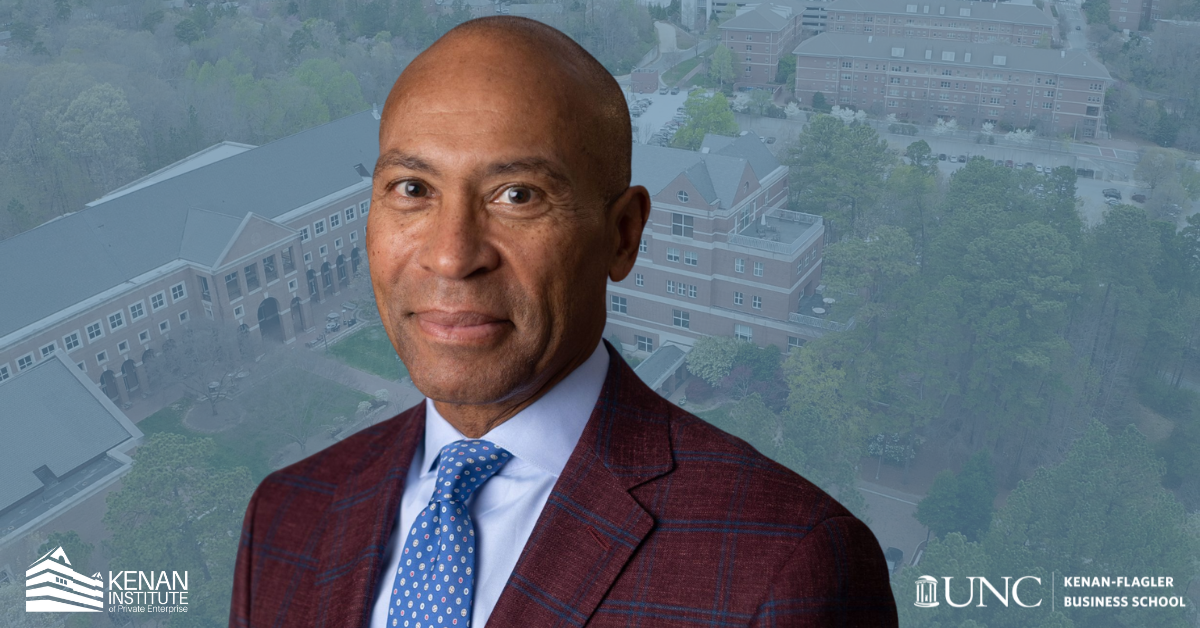
Former Massachusetts Gov. Deval Patrick of the Center for Public Leadership at the Harvard Kennedy School shared insights on resilience and leading through uncertain times with Dean Mary Margaret Frank on April 23.
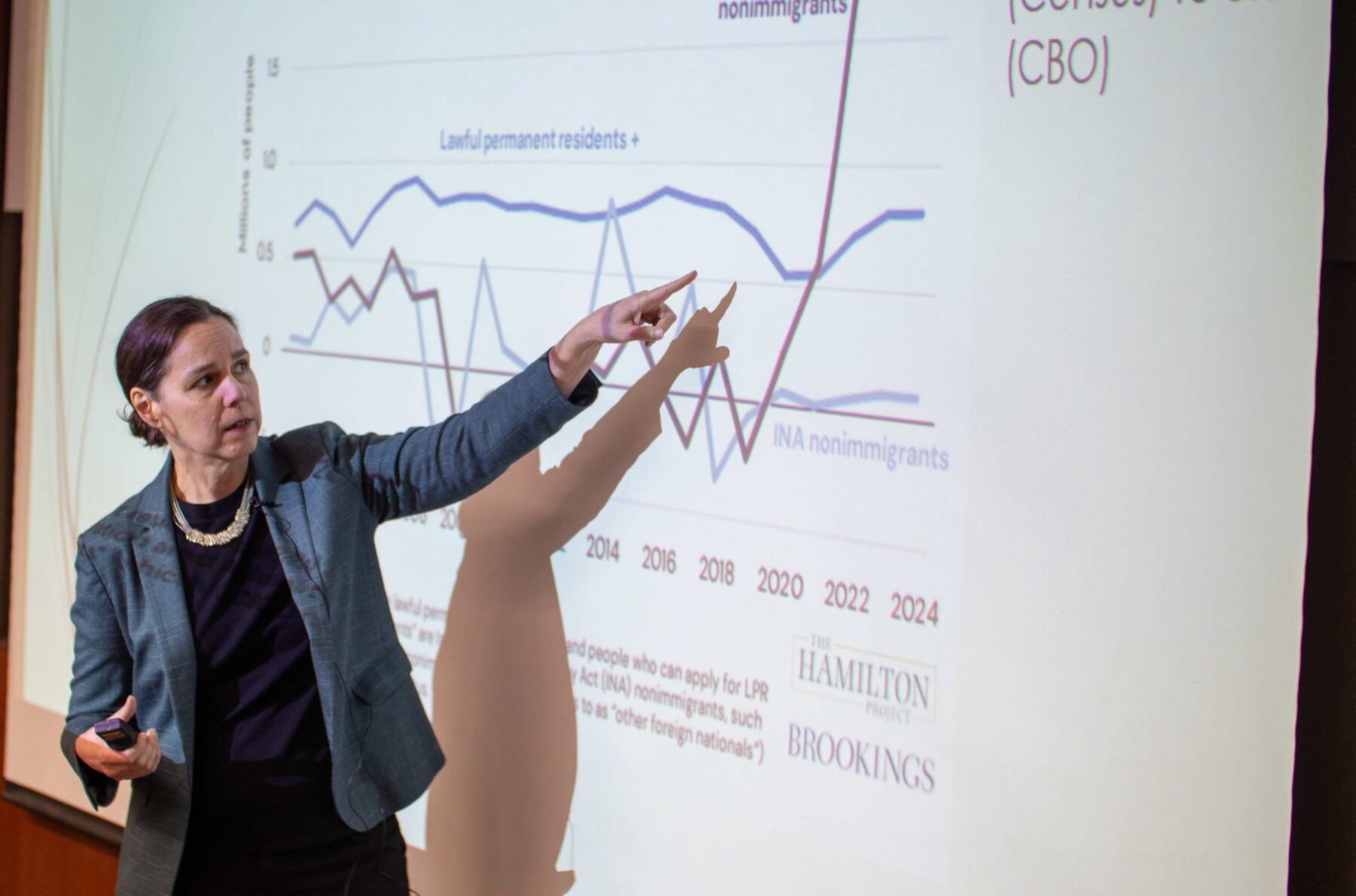
Kenan Institute Distinguished Fellow Tara Watson discussed "An Economist’s Guide to Immigration Reform" before an audience of UNC Kenan-Flagler Business School faculty and students on April 11.

Learn more about the impact of machine learning on the resiliency of supply chain management in this recent article in the Harvard Business Review, co-authored by UNC Kenan-Flagler Business School’s Vinayak Deshpande.
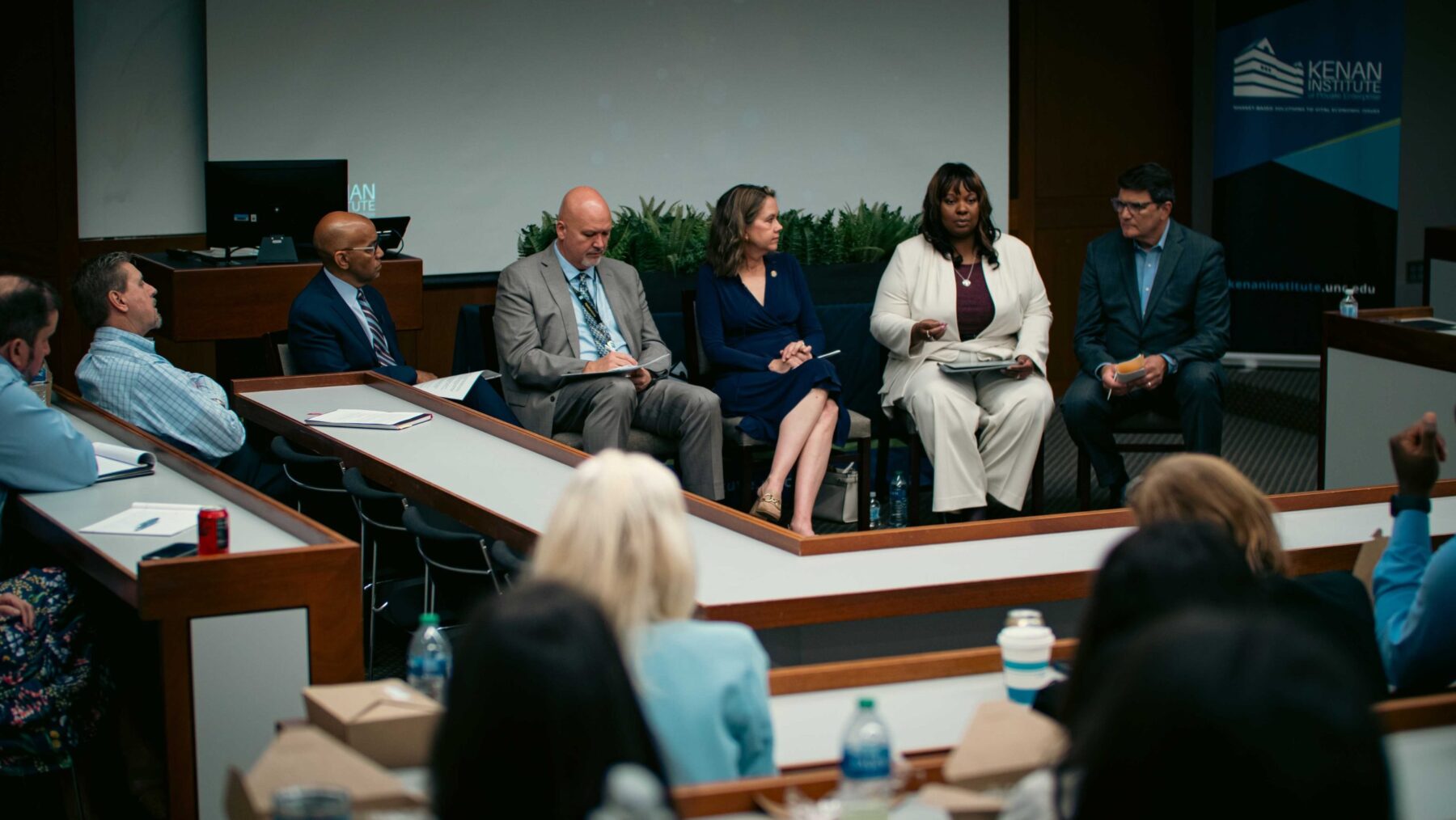
Kenan Institute Distinguished Fellow Thomas Stith moderated the panel discussion "Seeking a New Labor Market Equilibrium: A Leadership Perspective" on Aug. 23.
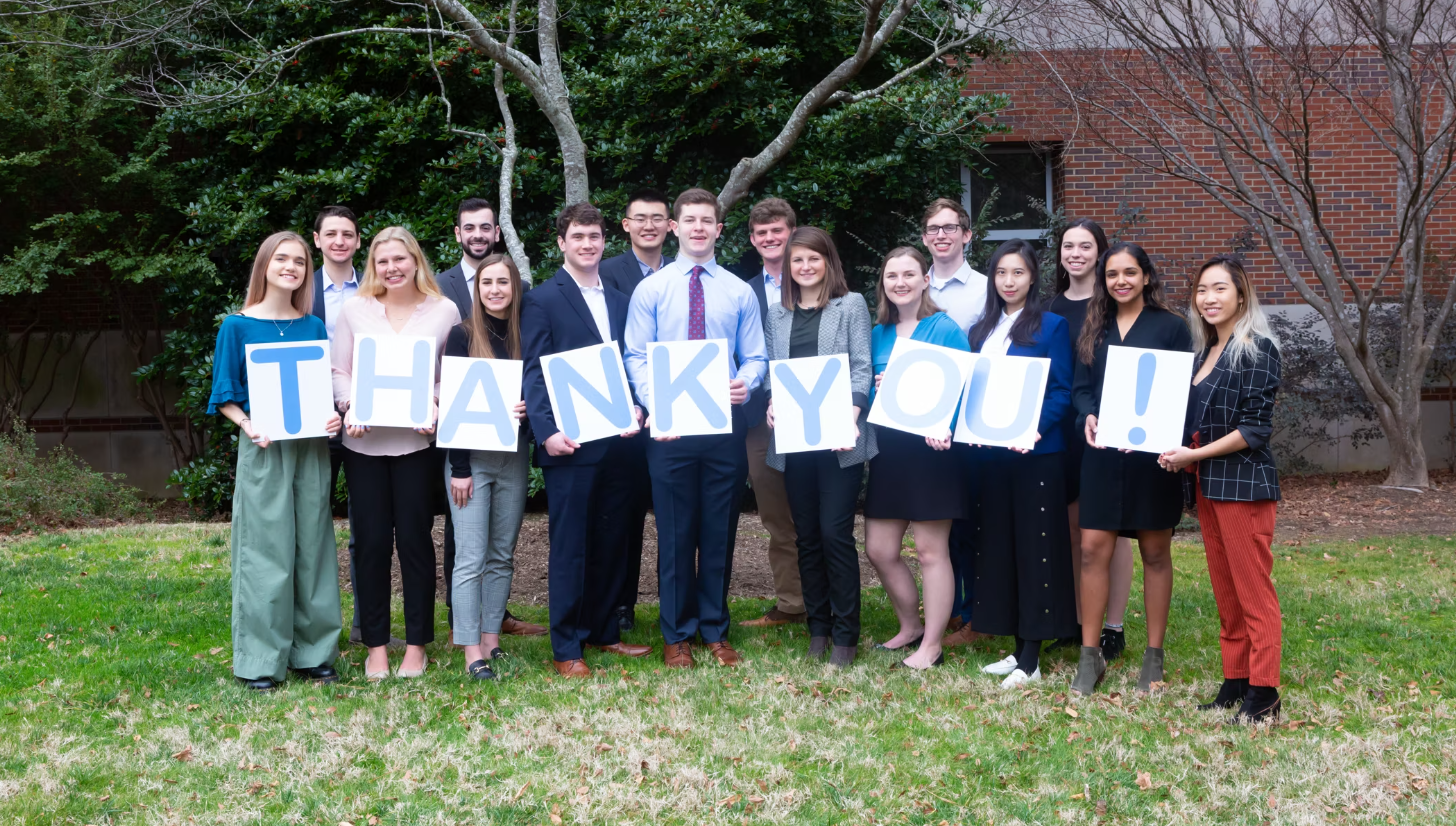
UNC Kenan-Flagler Business School's Kenan Institute of Private Enterprise will launch the Luther Hodges Scholars program in fall 2023, thanks to a naming gift from Carolina alumnus Luther Hodges.

Academics and innovators recently convened at the institute's wealth inequality conference to discuss the effects of income disparity and how education and research can create opportunities for more equitable access.

Kenan Institute Distinguished Fellow John Haltiwanger of the University of Maryland talks about why the Hollywood story of rising from the mailroom to the boardroom is less likely to happen now.
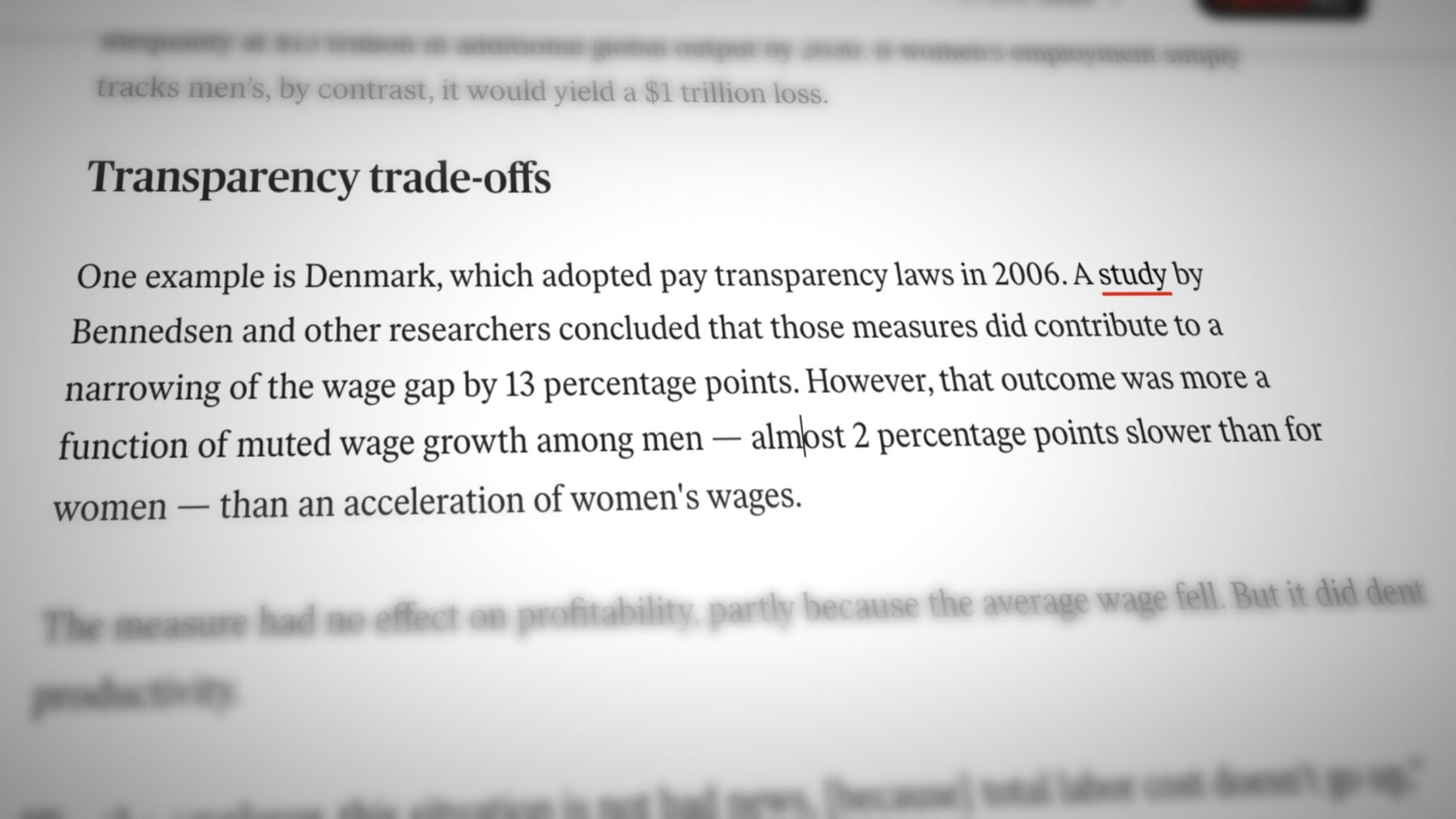
Ricardo Perez-Truglia of the UC Berkeley Haas School of Business discusses recent research on pay transparency, which shows that new laws may help reduce the gender pay gap but may also produce unintended consequences.
Craig Allen, president of the U.S.-China Business Council, provides insights on U.S.-China relations and its impact on U.S. firms. The Q&A session facilitated by UNC Kenan-Flagler Business School's Denis Simon further delves into the issue's complexities.

During this webinar, Mr. Allen will give a 30-minute presentation sharing his expert insights on U.S.-China relations and what it means for U.S. firms.

Professor Denis Simon, who recently joined the UNC Kenan-Flagler Business School faculty, will provide expert commentary about the ups and downs of business and technology relations between the U.S. and China.

Zach Clayton of Three Ships and Bill George of Harvard Business School, co-authors of the book “True North: Emerging Leader Edition,” talk about the challenges and benefits of stakeholder capitalism for companies and their leaders.

High levels of inflation have dominated global headlines for a good part of the last year, but what’s the connection between high global inflation and a strong dollar?

The high cost of building plants and safety concerns are among the obstacles blocking U.S. nuclear power’s return to relevance as an energy source, but the opportunity is there and government action will play a part.

Nuclear power’s star has dimmed in recent years, diminished by the rise of solar, wind and natural gas as well as the 2011 disaster at Japan’s Fukushima plant. Now many nations, suddenly in need of a secure, clean energy source, have plans to reopen or extend the lives of their existing facilities.
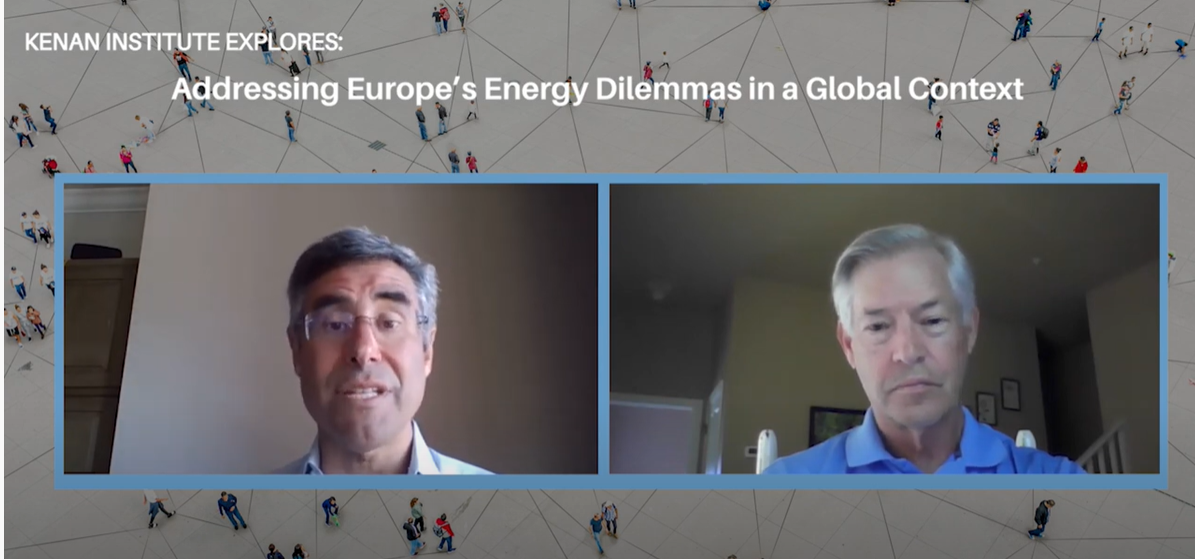
UNC Kenan-Flagler Business School Finance Professor Stephen Arbogast discusses why embargoes on Russian oil aren’t working, why renewable energy sources aren’t the fix and how the missing link in increasing production could stabilize Europe’s energy outlook.

Further embracing renewable energy sources can help in the long term, but short- and medium-term solutions will require other answers. Join us for a virtual discussion at 11 a.m. June 20 as Stephen Arbogast, Kenan-Flagler Business School Finance Professor and director of the Energy Center, talks with Chief Economist Gerald Cohen about how focusing on the global energy supply can help Europe select the best options for creating a more stable energy outlook.

Much attention is being focused on energy supply security issues, especially for European oil and gas supplies. The latest Russian decision to halt natural gas sales to Poland and Bulgaria has reinforced that continent’s awareness of the perils of unreliable suppliers. Europe’s short-term focus is on sanctioning Russia and then backfilling the forgone oil and gas from other sources.

Concerns about further supply-chain troubles are on the rise. Just a few months ago the “temporary disruptions” stemming from covid were predicted to work themselves out in 2022. However, businesses are now faced with the possibility of disruptions much more severe than those experienced to date. These stem from two sources: interrupted supplies in essential raw materials and agricultural commodities resulting from Russia’s invasion of Ukraine and the potential for a rapid (and massive) spread of COVIC-19 in China resulting in suspensions to manufacturing operations there.

Society faces a series of major problems, such as climate change, which require transformative technological change as part of the solution. From our 2022 Frontiers of Entrepreneurship Conference, MIT Sloan School of Management Professor Jacquelyn Pless, Duke University Professor Emeritus Eric Toone and Kenan Institute Chief Economist Gerald Cohen explore the potential and limits of entrepreneurship in solving these problems.

Out of the rubble of World War II, we collectively and deliberately built an institutional order that established norms of acceptable behavior and placed constraints on powerful nations. While work remains to create broader economic opportunity and some regions have suffered terrible conflict, the economic and financial globalization that this order fostered nevertheless yielded the greatest period of peace and economic prosperity that humanity has ever known. The more than 70 years since the war’s conclusion are, however, very atypical, and we are now returning to a setting far more familiar to any student of history, where strength and power supersede norms and rules. The world is characterized by a renewed struggle between illiberal autocracy and liberal democracy.

Russia’s invasion of Ukraine has disrupted the movement toward globalization that has benefited investors since the end of the Cold War. This development, combined with inflationary pressures not seen in three decades, should prompt individual and institutional investors to reconsider their approach to managing their money, Director of Research Christian Lundblad recently shared with the Raleigh News & Observer.

Together with many business and economic leaders around the globe, we at the Kenan Institute of Private Enterprise support the harshest feasible sanctions against Vladimir Putin in the immediate interest of Ukraine and its people. More broadly, we view such measures as vital to the long-term survival of democratic values. But as the Russian invasion continues, seemingly unabated by unprecedented economic and financial sanctions, we must ask: what more is feasible? And for how long can such restrictions be sustained?

Consumers will long associate the early months of the COVID-19 pandemic with seemingly apocalyptic searches for toilet paper, hand sanitizer and PPE. But even now, amid continued surges of the Delta variant, many global supply chains continue to experience disruptions at record rates. This week’s Kenan Insight invites our experts to weigh in on the immediate impact of these disruptions for business and society, the longer term effects across industries and the roles government and emerging tech should be playing to drive solutions.

As the Consumer Price Index rises, businesses sound the alarm over supply-chain bottlenecks, and federal stimulus checks spur spending, the chatter around inflation is increasing. In this Kenan Insight, we explore what this potential perfect storm for an inflation spike could have on a recovering U.S. economy.

The 2020 COVID-fueled economic downturn generated what has been referred to as a K-shaped recession, with both big losers (such as restaurants and the hospitality sector) and big winners (such as high tech and online retail). In this Kenan Insight, we explore how a nascent K-shaped recovery will likely affect U.S. businesses and households.
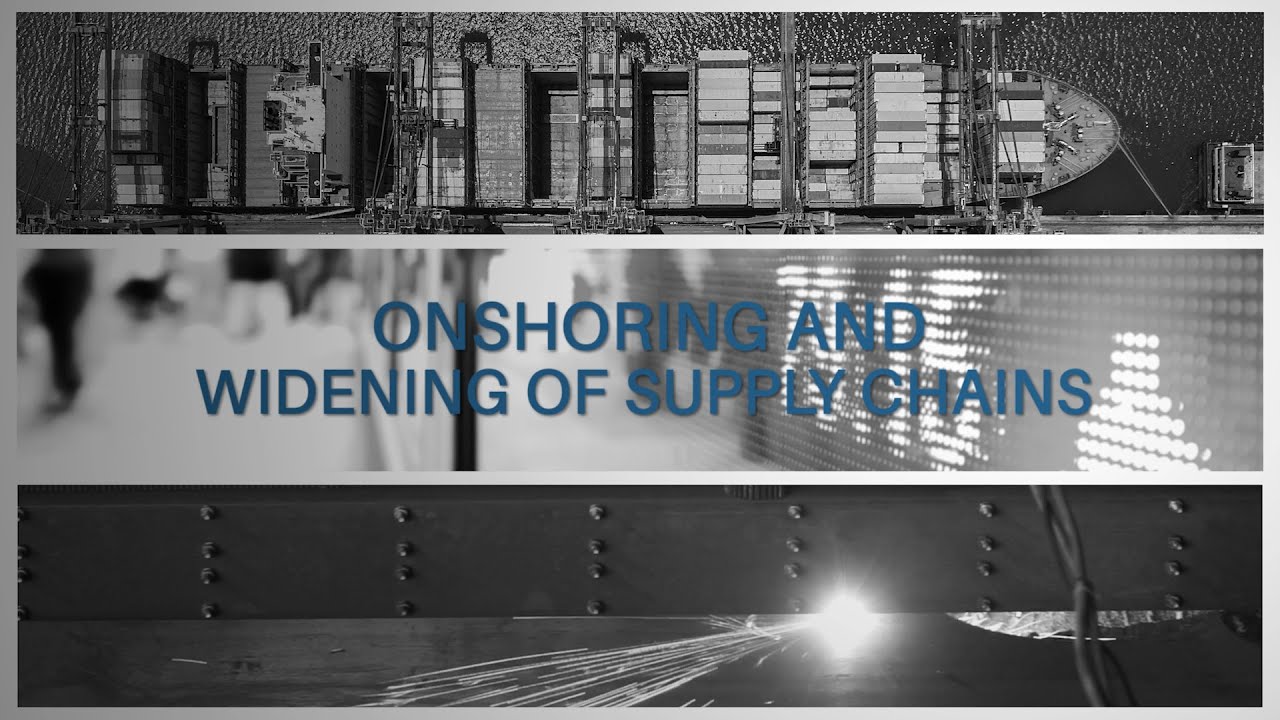
The COVID-19 pandemic has exposed flaws in the global supply chain that have existed for years, with disruptions that have led to a scarcity of goods as diverse as PPE, food and toilet paper. In this Kenan Insight, we examine how threats to supply chains are forcing companies to rethink how they can position themselves to mitigate future risk.

The COVID-19 pandemic has exposed flaws in the global supply chain that have existed for years, with disruptions that have led to a scarcity of goods as diverse as PPE, food and toilet paper. In this Kenan Insight, we examine how threats to supply chains are forcing companies to rethink how they can position themselves to mitigate future risk.

On March 11, 2020, the World Health Organization declared COVID-19 a global pandemic. Within two months, nearly half a million people fled hard-hit New York City. Will they return once the crisis has passed? In this Kenan Insight, we explore how the ongoing pandemic is raising questions about the future attractiveness of large cities as places to live and do business.

There is growing evidence that many multinational corporations are lowering their tax obligations by engaging in income shifting—moving income from high-tax countries to low-tax countries or tax havens, and shifting deductions from low-tax countries to high-tax countries. By at least one estimate, the result is loss of nearly $100 to $240 billion annually in global tax revenues. In this Kenan Insight, we explore the extent of the problem and what might be done to address it.

The COVID-19 pandemic has exposed vulnerabilities in many supply chains, none more so than the healthcare supply chain. What factors have contributed to the alarming lack of readily available healthcare resources in the wake of overwhelming need? And what can be done to prevent such a disconnect from happening again? Professor Brad Staats, faculty director of the UNC Center for the Business of Health, and UNC Kenan-Flagler Business School Professor Jay Swaminathan present the findings of their most recent supply chain research in this week’s Kenan Insight.

To help separate fact from fiction and legitimate concern from panic, the Kenan Institute of Private Enterprise and UNC Kenan-Flagler Business School convened six top faculty researchers to discuss the likely effects of the pandemic on business and the economy.

A slate of experts from UNC Kenan-Flagler Business School and its affiliated Kenan Institute of Private Enterprise will be offering a press briefing via teleconference on the tremendous effects of COVID-19 on business, workers and the economy at large. Join tomorrow, Tuesday, March 17, at 11 a.m.
China’s venture capital funding has contracted significantly since mid-2018. According to Christian Lundblad, director of research at the Kenan Institute, this is a byproduct of U.S. trade policy, some domestic Chinese investment policy and the usual ups and downs in a developing market.
China’s venture capital funding has contracted significantly since mid-2018. According to Christian Lundblad, director of research at the Kenan Institute, this is a byproduct of U.S. trade policy, some domestic Chinese investment policy and the usual ups and downs in a developing market. Some experts are now questioning if this will be China’s “tech bubble."
Venture capital has existed since the 1970s, expanding and becoming more institutionalized year after year. But its growth in the aftermath of the global financial crisis has been unprecedented.
Private equity investments have risen dramatically during the last two decades, not only in developed countries but in developing economies as well. Several studies have found evidence of improvement in firm performance following a private equity (PE) transaction, but surprisingly little is known about the implications of PE transactions for the economy – particularly the global economy. Kenan Institute Executive Director Greg Brown shares takeaways on his research with George Mason University Assistant Professor of Finance Serdar Aldatmaz.
As U.S. and Chinese delegations prepare to meet May 9 and 10, experts weigh in on the ongoing U.S.-China trade talks and ramifications for businesses, governments and consumers around the globe.