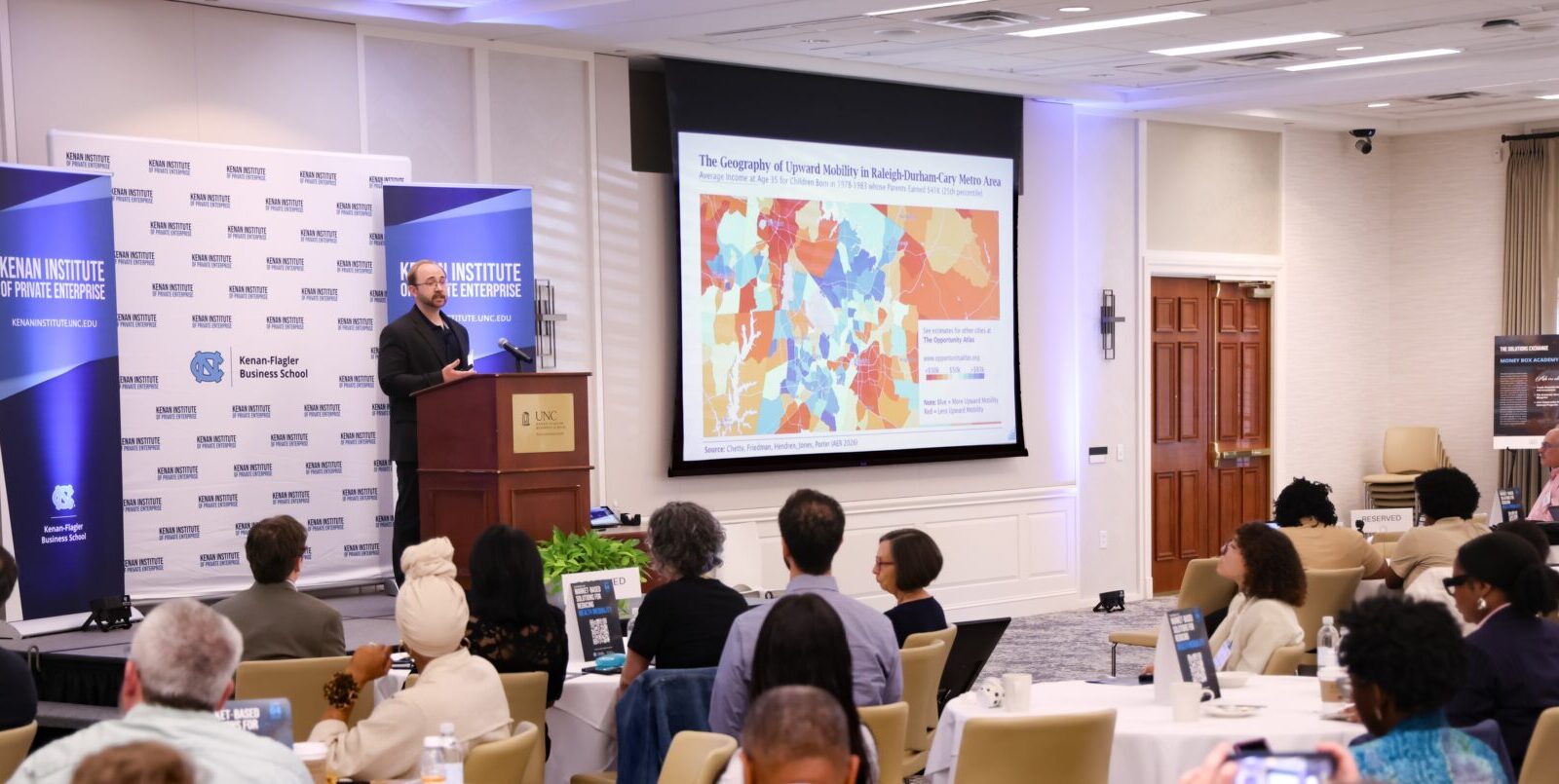
Structures and Solutions: Conference Tackles Wealth Inequality Issues
Speakers brought research and experience to bear on access issues tied to education, childcare and more at the Conference on Market-Based Solutions for Reducing Wealth Inequality.
inequality
Speakers brought research and experience to bear on access issues tied to education, childcare and more at the Conference on Market-Based Solutions for Reducing Wealth Inequality.

At the institute’s annual Conference on Market-Based Solutions for Reducing Wealth Inequality, a diverse group of experts from business, government and academia discussed practical solutions for improving upward mobility.

What do we mean when we talk about “inequality”? There are numerous ways to measure it, each method with its relative strengths and weaknesses, and we must be clear what we mean when assessing inequality for policymaking.

Take a look back at highlights from the second annual Conference on Market-Based Solutions for Reducing Wealth Inequality, which brought academics together with the public and private sectors to hear about new research and venture into the community.

UNC Kenan-Flagler Business School Professor Jim Johnson, director of the Urban Investment Strategies Center, defines three groups facing challenges as companies return to the office and updates his forecast of demographic gale force winds.

In addition to academic presentations, the Conference on Market-Based Solutions for Reducing Wealth Inequality took participants out of the classroom and into the community for a walking tour and on-site discussions in nearby Durham, N.C.

The Kenan Institute and UNC Kenan-Flagler Business School’s inaugural Conference on Market-Based Solutions for Reducing Wealth Inequality on June 1-2 highlighted research on market mechanisms that might also work to ameliorate inequality.

In recent years, the importance of reducing wealth inequality and spurring inclusive economic growth has become apparent. Most approaches to reducing wealth inequality have been on the policy side, for example, through changing taxation. But economic prosperity can also occur for people in the lower half of the wealth distribution through market-based actions. The business sector has innovated and found profitable opportunities by serving lower income or lower wealth communities — for example, fintech or telehealth are two domains in which for-profit businesses have created opportunities for those in more disadvantaged situations to improve their well-being, including their finances.

Perez-Truglia, a Kenan Institute Distinguished Fellow, will summarize the latest research, including his own, to provide a better understanding of the effectiveness of pay transparency laws.

Generative AI such as ChatGPT holds the potential to alter many kinds of work, but analysis of a new report shows the occupations most likely to be affected are populated by more women than men.

CEO pay is the latest point of contention in the political fight over ESG, but the arguments have become oversimplified. When we think about good corporate governance, what does the evidence say about CEO pay? The results may surprise you.

With direct care facilities and workers in crisis, we explore trends behind the labor shortages in the industry as well as a menu of solutions that could possibly alleviate the issue.

Recent infrastructure legislation offers an opportunity to focus on how new projects can increase wealth in communities with the greatest needs and minimize harm to the environment, all while supporting the broader economy.

Apprenticeship programs have not historically been successful in reaching a diverse array of people. A report by the institute-affiliated NCGrowth examines trends within apprenticeship and offers a set of best practices to continue diversifying these programs

As a destination for both migration and business growth, North Carolina must reassess the capabilities of local entrepreneurial and small-business ecosystems to ensure that its diverse population of aspiring entrepreneurs and small-business owners has equitable access to opportunities.

Some analysis indicates companies with diverse executive teams drive more revenue and are more likely to experience higher profits relative to their nondiverse peers, yet founding teams for both high-growth startups and the private capital groups that fund them stand in stark contrast to the U.S. working age population. Why? And why should it matter? In this week’s Kenan Insight, Kenan Institute Distinguished Fellow Emmanuel Yimfor unpacks statistics on the composition of both high-growth startups and private capital groups, explores the economic and societal implications of their lack of diversity and provides suggestions to facilitate change.

Last month our home state of North Carolina was named “America’s Top State for Business” by CNBC (see the full ranking here). It wasn’t long after when some commentators pointed out that Oxfam had recently ranked N.C. as the worst state for workers. The extreme juxtaposition of rankings made me wonder if this was a coincidence or if there are systematic factors that make states good for businesses and bad for workers. Perhaps “right-to-work” laws, lax worker protection regulation or regional wage differences attract businesses looking to take advantage of areas with weak labor bargaining power. This in turn leads to business growth and thus job migration to states that are less desirable for individual workers. At the end of the day, economic planning should have the best interest of residents in mind when crafting business policy, so it seems worth unpacking what drives the rankings.

Three institute-associated experts provided analysis for the July 30 edition of WRAL-TV’s “On the Record” news program. In a segment on dwindling child care options in the Raleigh area, Director of Research Paige Ouimet talked about how child care access affects the ability of women to work.

Unions seem to be popping up everywhere these days. In fact, the National Labor Relations Board reported that requests for union elections during the last nine months are up 58% over the prior fiscal year. This trend has received significant coverage in the media, with particular interest in successful organization efforts at Amazon, Starbucks and Apple.

Seventeen states have enacted salary transparency laws to combat pay gaps historically experienced by people of color and women, but the laws take different forms and have produced varying results. How does requiring companies to provide summary salary statistics compare with, for example, preventing companies from asking applicants about their previous salaries? Can such laws actually work against employees? Two experts address these questions and more in this week’s Kenan Insight.

With the school year winding down, we invited Frank Porter Graham Child Development Institute Fellow and UNC-Chapel Hill Public Policy Research Professor Iheoma Iruka to join us for a discussion on the business of childcare and early education – as well as the ways in which the COVID-19 pandemic has shifted families’ expectations and workers’ needs

Mark Little, executive director of the Kenan Institute-affiliated center CREATE, provided expert testimony in a process that resulted in a May 11 settlement agreement regarding contracting and hiring practices for Dominion Energy’s $9.8 billion Coastal Virginia Offshore Wind renewable energy project.

The recent surge in inflation is making things worse for “a much larger number of people than one might think,” Urban Investment Strategies Center Director Jim Johnson tells The News & Observer.
Firms continue to strive for greater representation on corporate boards. One California law, attempting to mandate such greater representation, has encountered a recent setback. Two experts discuss obstacles to more diverse corporate leadership and offer approaches for surmounting them.

CREATE, an economic development center at the institute, worked with civic and business leaders in Rocky Mount last summer to plan a Black Business Matters District downtown in an effort to address the racial wealth gap in the area. Executive Director Mark Little will join CREATE’s Rocky Mount partners on a panel at 9 a.m. on Thursday, March 24 to share their work as part of Carolina’s Engagement Week.

The U.S. spends significantly less on child care than other developed nations, and the consequences of that spending became evident during the pandemic – particularly within underserved communities. In this week’s insight, our experts discuss why the U.S. should prioritize and fund early childhood education and care.
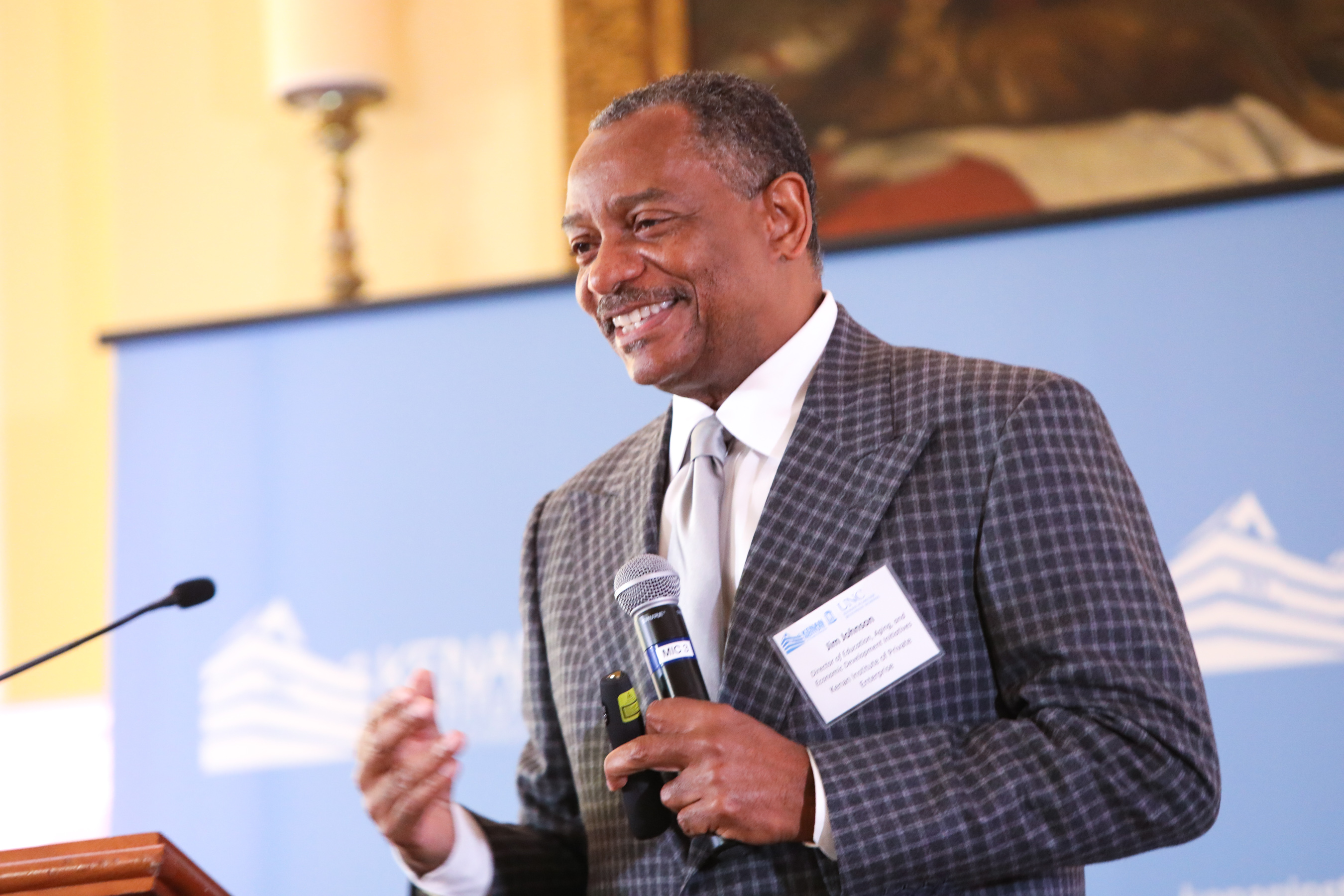
On Jan. 7, North Carolina Gov. Roy Cooper announced a sweeping new executive order that aims to achieve net-zero emissions within 30 years while protecting and empowering North Carolina’s underserved communities. Urban Investment Strategies Center Director Jim Johnson, who serves as chairman of the N.C. Department of Environmental Justice and Equity Board and as a member of the task force on social, economic and environmental equity, accompanied Cooper at a press conference in support of the order at N.C. A&T State University. Read Johnson's statements here.

COVID-19 brought heightened focus to paid sick leave policies – a benefit to which roughly 25% of civilian workers don’t have access in the U.S. After sick leave mandates were temporarily implemented during the pandemic, UNC Kenan-Flagler Business School researchers found employment increased, particularly among low-skilled workers and in industries that previously had little access to paid sick leave. In this week's Kenan Insight, our experts explore possible drivers behind this finding as well as potential policy and business implications.

The Institute for Private Capital’s newly-released interactive model that aims to help private equity leaders assess diversity, equity and inclusion (DEI) goals was featured in a report by Ernst & Young.

As the pandemic forced shutdowns across the globe, U.S. government entities at the federal, state and local levels worked swiftly to secure known drivers of economic growth and job creation – including entrepreneurial ecosystems and small businesses. And while the programs implemented were widely lauded as successful, the story of who benefitted – and who did not – is more complex. This week’s Kenan Insight explores our experts’ key findings around the roles of policy and implementation in supporting equal access to opportunity.

While economists have long theorized that wealthier individuals may purchase less life and property insurance because they can rely on their savings if something unexpected happens, a new study of more than 63,000 people shows that, in practice, quite the opposite is true. This week’s Kenan Insight offers a chance for our experts to explore the findings of their new study, which suggest disparities in insurance coverage could help explain and exacerbate existing financial inequalities.

While the COVID-19 pandemic was devastating for many, research shows its impact was not felt equally. Black Americans experienced disproportionate health and economic ramifications, which compounded the financial, social and psychological strain many felt pre-pandemic, and have contributed to growing inter-generational wealth disparities. In today’s Kenan Insight, our experts explore whether the multi-trillion dollar “Build Back Better” plan proposed by the Biden administration holds the potential to begin closing pervasive gaps in American society.

The COVID-19 pandemic increased economic inequities in a number of ways, including in access to external capital – and while 2020 marked a break-out year for venture-backed firms, the pandemic hit many main street businesses hard. In this Kenan Insight, we explore the forces driving the haves and have-nots in this new economic climate, as well as actionable policy solutions as government support programs wind down.

As the U.S. economy begins to recover from the COVID-19 pandemic and businesses grapple with ongoing labor shortages, the debate around increasing the federal minimum wage – which hasn’t budged in over a decade – has returned to the fore. In this Kenan Insight, we examine whether now is the right time to raise the standard minimum, why these benefits may come at a cost, and what approach might work best given the inevitable tradeoffs.
As The Wall Street Journal reported this week, Congress is gearing up for a potential showdown with the largest tech companies in the U.S. And with a bipartisan group of representatives pushing for legislation that would dismantle the monopoly power of Big Tech, this week's Kenan Insight revisits research on how regulating Amazon, Apple and others may be key to reviving the economies of America’s held-back cities and regions.

The current narrative around the U.S. labor market is a mixed bag, with unemployment numbers well above pre-pandemic rates while many companies struggle to fill jobs. In this Kenan Insight Q&A, three experts weigh in on the critical issues behind this dichotomy.

Much has been written about the disproportionate number of women who have suffered pandemic-related job losses during COVID-19, but a related consequence has not been as well explored: the serious disruption of women’s careers, particularly in fields in which “path dependence” matters for success. In this Kenan Insight, we examine this more subtle asymmetry in the pandemic’s impact as indicative of far broader issues for women’s advancement in the workplace.

As the Consumer Price Index rises, businesses sound the alarm over supply-chain bottlenecks, and federal stimulus checks spur spending, the chatter around inflation is increasing. In this Kenan Insight, we explore what this potential perfect storm for an inflation spike could have on a recovering U.S. economy.

Lowe’s CEO Marvin Ellision shared the company's approach to diversity, equity and inclusion following this past summer’s social unrest. In this conversation-style format, Mr. Ellison gave a brief overview of Lowe’s anti-racism statement and reviewed specific actions the company has taken to combat racism and inequality. He shared insights on his hands-on leadership approach and how it impacts his relationships with employees and his success at Lowe’s.

Join NCGrowth, the North Carolina African American Heritage Commission and the Conservation Trust for North Carolina to explore how economically mindful heritage placemaking is taking shape in Black communities across the country.

The 2020 COVID-fueled economic downturn generated what has been referred to as a K-shaped recession, with both big losers (such as restaurants and the hospitality sector) and big winners (such as high tech and online retail). In this Kenan Insight, we explore how a nascent K-shaped recovery will likely affect U.S. businesses and households.

Join our panel of experts who will share their technological, legal and social expertise to answer the questions raised by the real-world performance of risk assessment instruments.

A recent TechCrunch article describes the new collaboration between the Kenan Institute-affiliated Entrepreneurship Center, Duke University, Stanford University and others to grow and support founder diversity in the tech industry.

The widespread adoption of technological advances has made the move to working from home during the COVID-19 pandemic a success. In this Kenan Insight, we look at why the switch was such a win, its impact on worker productivity, and what it means in the long term for workers, office spaces and cities.

During the past 40 years, the income gap between top and bottom earners has expanded exponentially, with the top 1% controlling about 20% of national income and the bottom 50% holding less than 13%. In this Kenan Insight, we examine the role of two factors contributing to regional inequalities in the U.S and Europe: job automation and telecommuting.

Please join us for an exclusive conversation with the President of the Ford Foundation, Darren Walker on Wednesday, March 3. This virtual experience is part of the Dean’s Speaker Series, hosted by UNC Kenan-Flagler Business School Dean Doug Shackelford.

Most organizational leaders have come to recognize that hiring and retaining a diverse workforce is a business imperative. But many struggle to achieve their diversity goals. In this Kenan Insight, we explore how organizations can measure their “organizational equity” — that is, their internal distribution of power and resources — and build a diverse workforce that leads to greater organizational success.

The factors that determine our health go far beyond what happens in the doctor’s office. In this Kenan Insight, we explore how the physical well-being of many Americans has been placed in jeopardy by upstream social and economic factors such as racism, food and job insecurity, and a lack of community and social support systems.

The nursing profession in the United States was experiencing a labor shortage and facing diversity and inclusion challenges prior to the COVID-19 pandemic. Magnifying these problems was a shift in the nation’s population, both geographically and demographically. The result was changes in both where nurses are needed in the healthcare system and the nursing skill set required to address healthcare needs of a far more diverse clientele of patients—in terms of race, ethnicity, sex, gender identity, age, living arrangements, socioeconomic status and primary language.

American Indian communities face a growing housing crisis, compounding long-standing social and economic challenges. In this Kenan Insight, we examine the structural and historic factors that underlie the current lack of affordable housing, and identify several promising options for both addressing the immediate crisis and improving the broader economic situation for tribal communities.

Workplaces are under pressure to be more inclusive due to public demands and rapidly changing demographics in the U.S. workforce. These commitments to diversity, equity and inclusion (DEI) aren't just moral, they're crucial to business prosperity. In this Kenan Insight, we explore strategies for startups to employ and explain why starting early is key to success.

In a recent Triangle Business Journal article, Urban Investment Strategies Center Director Jim Johnson and UNC Kenan-Flagler Business School Professor Jeanne Milliken Bonds discuss why Americans are increasingly turning to companies with purpose and ethics, and provide a corporate reputational equity checklist to help organizations move toward greater diversity, equity and inclusion (DEI) practices.

Workforce (moderate income) housing remains a critical area of need across the State of North Carolina. Without government subsidies, developers are challenged to deliver a multifamily for-rent product accessible to those who earn 80%-120% of Area Median Income. Building on their previous efforts to address this deficiency, the Wood Center for Real Estate Studies, in partnership with the Kenan Institute for Private Enterprise, will be convening a roundtable of selected participants within the multifamily development process.

The global COVID-19 pandemic has been a recurring theme throughout the 2020 U.S. elections, and its health and economic consequences will be felt far beyond November 3. In this Kenan Insight, we look at both the challenges and potential opportunities the pandemic has created for accelerating innovations in healthcare delivery and pharmaceutical development.
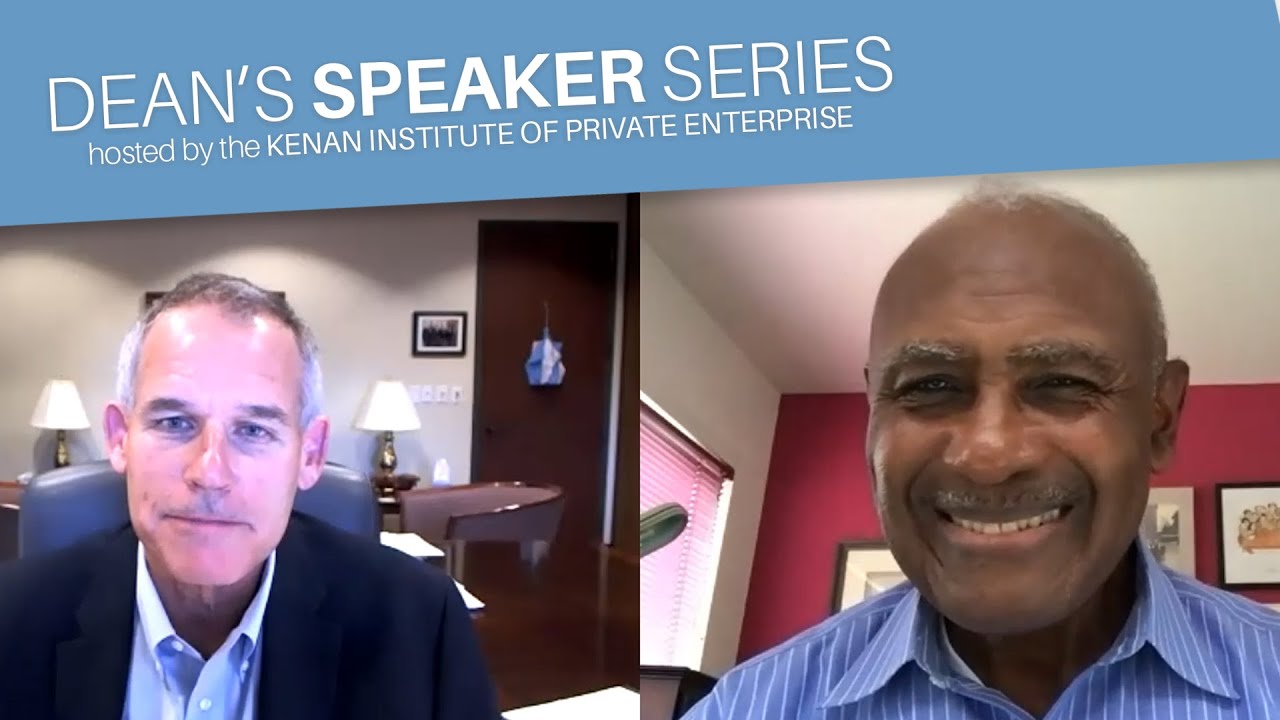
On Thursday, Oct. 29, architect, politician and former mayor of Charlotte Harvey Gantt joined UNC Kenan-Flagler Business School Dean Doug Shackelford for an exclusive fireside chat. Gantt discussed his career, the current political climate and the social justice movement in the U.S. This virtual experience was part of the Dean’s Speaker Series.

Please join us for an exclusive conversation with Harvey Gantt, architect, politician and former mayor of Charlotte, on Thursday, Oct. 29. This virtual experience is part of the Dean’s Speaker Series, hosted by Kenan-Flagler Business School Dean Doug Shackelford.

The COVID-19 pandemic has generated a significant shift in how and where we work, play and live. In this Kenan Insight, we explore which changes will be temporary and which are here to stay.

Historically, most businesses have attempted to stay on the sidelines of controversial issues to avoid alienating customers and limit internal discord. But the COVID-19 pandemic (which has disproportionately affected people of color) and rising racial tensions have increased awareness of systemic racism in the U.S. In this Kenan Insight, we explore how business leaders are increasingly taking a stance on diversity and inclusion issues through both internally and externally focused actions and policies.

For African Americans and individuals from other historically underrepresented groups, work cultures can be difficult to navigate. In a new white paper, The Seven "What Matters" In a System Not Designed for Us, Urban Investment Strategies Center Director Jim Johnson draws upon his 40 years of experience in academia to offer strategies for individuals in these groups to thrive within work cultures that do not fully embrace and may even be antagonistic to diversity and inclusion.

In our previous Kenan Insight, we outlined the major findings in our recent report, Seven Forces Reshaping the Economy. This week, we explore how the COVID-19 pandemic has upended education and childcare, ushering in changes to both that will last far beyond the current crisis.

Join the Kenan Institute of Private Enterprise and the North Carolina CEO Leadership Forum September 22 for the launch of a new report examining the state of our national economy – and exploring its future.
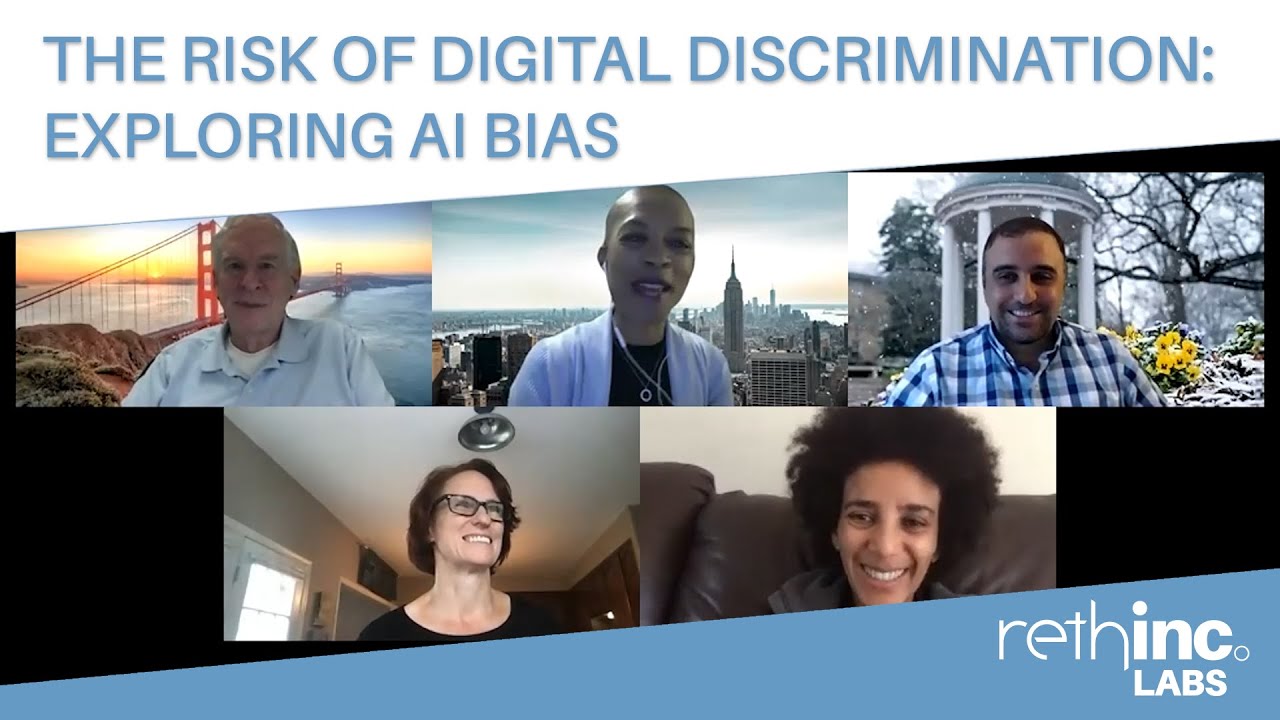
AI applications are ubiquitous – and so is their potential to exhibit unintended bias. Algorithmic and automation biases and algorithm aversion all plague the human-AI partnership, eroding trust between people and machines that learn. But can bias be eradicated from AI? Dr, Fay Cobb Payton, Professor of Information Systems & Technology at NC State’s Poole College of Management and a Program Director at the National Science Foundation in the Division of Computer and Network Systems moderates a discussion between Timnit Gebru, research scientist and the co-lead of the Ethical AI Team at Google and the co-founder of Black in AI; Brenda Leong, senior counsel and director of artificial intelligence and ethics at the Future of Privacy Forum; Professor Mohammad Jarrahi, associate professor at UNC’s School of Information and Library Science; and Chris Wicher, Rethinc. Labs AI Research Fellow, former director of AI Research at KPMG’s AI Center of Excellence and Vice President of Watson Engineering at IBM.

Join our panel of industry and academic leaders, who will share their technological, legal, organizational and social expertise to answer the questions raised by emerging artificial intelligence capabilities.

Mark Little, executive director of CREATE, a Kenan Institute-affiliated center, has been named to the inaugural North Carolina Black Entrepreneurship Council (NC BEC). The council was founded by NC IDEA, a private foundation committed to supporting entrepreneurial ambition and economic empowerment in North Carolina.

One of the long-standing damages of institutional racism in the United States has been a bleak economic outlook for African Americans. In this Kenan Insight, we ask whether today’s activism might prove to be a defining moment in turning the tide for Black economic futures, and if so, who will play the key roles in creating lasting change.

A panel of experts convened by UNC Kenan-Flagler Business School, its affiliated Kenan Institute of Private Enterprise and the Institute of African American Research will offer a press briefing via webinar on the intersection of the COVID-19 crisis and the Black Lives Matter movement—providing a framework for developing solutions to achieve equitable public health and economic outcomes for the short- and long-term.
North Carolina Governor Roy Cooper has named Dr. James H. Johnson Jr., William R. Kenan Distinguished Professor of Strategy and Entrepreneurship and director of the Kenan Institute-affiliated Urban Investment Strategies Center, to the newly created Andrea Harris Social, Economic, Environmental, and Health Equity Task Force.

In response to the economic chaos caused by the COVID-19 pandemic, the federal government launched its largest fiscal stimulus in modern history—the CARES Act. But with $2 trillion invested in small businesses, unemployment benefits and direct cash payments to households, the CARES Act has still fallen short of its goals to spur consumer spending and restore employment. This Kenan Insight analyzes what went wrong, and offers suggestions for the anticipated next round of federal economic aid.

As federal, state and local governments struggle to reopen the economy as the COVID-19 pandemic surges onward, efforts to ensure people’s health and safety are seemingly at odds with attempts to spur economic activity. In this Kenan Insight, we explore how a data-driven approach to reopening North Carolina (and the U.S. as a whole) can help preserve both lives and livelihoods.

Unemployment insurance has been a lifeline for millions of Americans who have found themselves out of work in the wake of the economic shutdown triggered by the COVID-19 pandemic. But with federal, state and local government coffers strained, the time has come for short-time compensation (STC) and partial unemployment insurance programs to receive a closer look. In this Kenan Insight, we explore how these little-known initiatives can benefit both employees and employers and provide relief to an ailing U.S. economy.
Join Black Communities Conference co-chairs Mark Little and Karla Slocum as they discuss the impact of COVID-19 on Historic Black Communities. This week focuses on what are the food security and access questions facing Black communities during and in the aftermath of COVID19.
Join Black Communities Conference co-chairs Mark Little and Karla Slocum as they discuss the impact of COVID-19 on Historic Black Communities. Questions will include: How have Black communities survived and navigated disasters of the past and are there aspects of Black communities today that make them more susceptible or less susceptible to the pandemic?
This week, co-hosts Mark Little and Karla Slocum will discuss the events surrounding the horrific killing of George Floyd and protests across the country against persistent anti-Black violence and police brutality. Our discussion will cover community building amid racial trauma, ongoing legacies of racial violence and how it all relates to our work and lives.

The mounting health and economic toll of the COVID-19 pandemic raises many questions about how this unprecedented event will affect the U.S. economy. In this Kenan Insight, we explore how people’s expectations about their own financial situation may hold some answers as to how the larger economy will perform.
There is no doubt that the COVID-19 crisis has devastated the U.S. economy. But the particulars of this devastation are difficult to gauge, because unique aspects of the of the pandemic distort the data commonly used to assess such situations. In this Kenan Insight, we take a deep dive into the data to learn what it actually tells us about the economic impact of COVID-19, and suggest possibilities for a restart and recovery of the U.S. economy.

The coronavirus pandemic has been especially traumatic on our country’s African American working poor. From being disproportionately concentrated in low-wage hospitality and service sector jobs to struggling with caregiving and food insecurity issues due to shuttered daycare facilities and food banks, working-poor African Americans are facing an inequitable share of financial, social and psychological challenges. What can be done to ease the burdens of working-poor African Americans, both during the pandemic and moving forward? In this Kenan Insight, Urban Investment Strategies Center Director and William R. Kenan Jr. Distinguished Professor of Strategy and Entrepreneurship Jim Johnson invokes a little-known federal program, the Southeast Crescent Regional Commission (SCRC), as part of a strategic response to providing a coherent, place-based development plan.

A panel of experts convened by UNC Kenan-Flagler Business School and its affiliated Kenan Institute of Private Enterprise will be offering a press briefing via webinar on the vastly uneven impact of COVID-19 on different types of workers and organizations. Join tomorrow, Tuesday, May 5, at 11 a.m. EDT.

The COVID-19 pandemic has put 18 million jobs at small businesses in the U.S. at risk – which could as much as quadruple the nation’s total unemployment rate. The effects of both the coronavirus and recent government relief programs were explored by a panel of Kenan Institute-convened experts during a press briefing held yesterday. The full recording of this briefing—along with a deeper-dive analysis on the specific implications of the financial downturn on small business employment by Kenan Institute Research Director Professor Christian Lundblad and UNC Kenan-Flagler Business School Professor Paige Ouimet—is available in this week’s Kenan Insight.

A slate of experts from UNC Kenan-Flagler Business School and its affiliated Kenan Institute of Private Enterprise will be offering a press briefing via teleconference on the tremendous effects of COVID-19 on business, workers and the economy at large. Join tomorrow, Tuesday, March 17, at 11 a.m.

While technological advances have traditionally been a boon to the U.S. economy, the rapid rise of new platforms and the increased financialization of the economy in recent years have encouraged the growth of monopolies—driving an ever-widening geographic gap in the distribution of income across the country. New research from the Kenan Institute’s Professor Maryann Feldman explores the ramifications of this growing divide.

An inside look at the plenary sessions of the fourth annual Frontiers of Entrepreneurship conference, which convened practitioners, policymakers and academics to discuss the most challenging issues in the field of entrepreneurship and set the agenda for future research and policy.
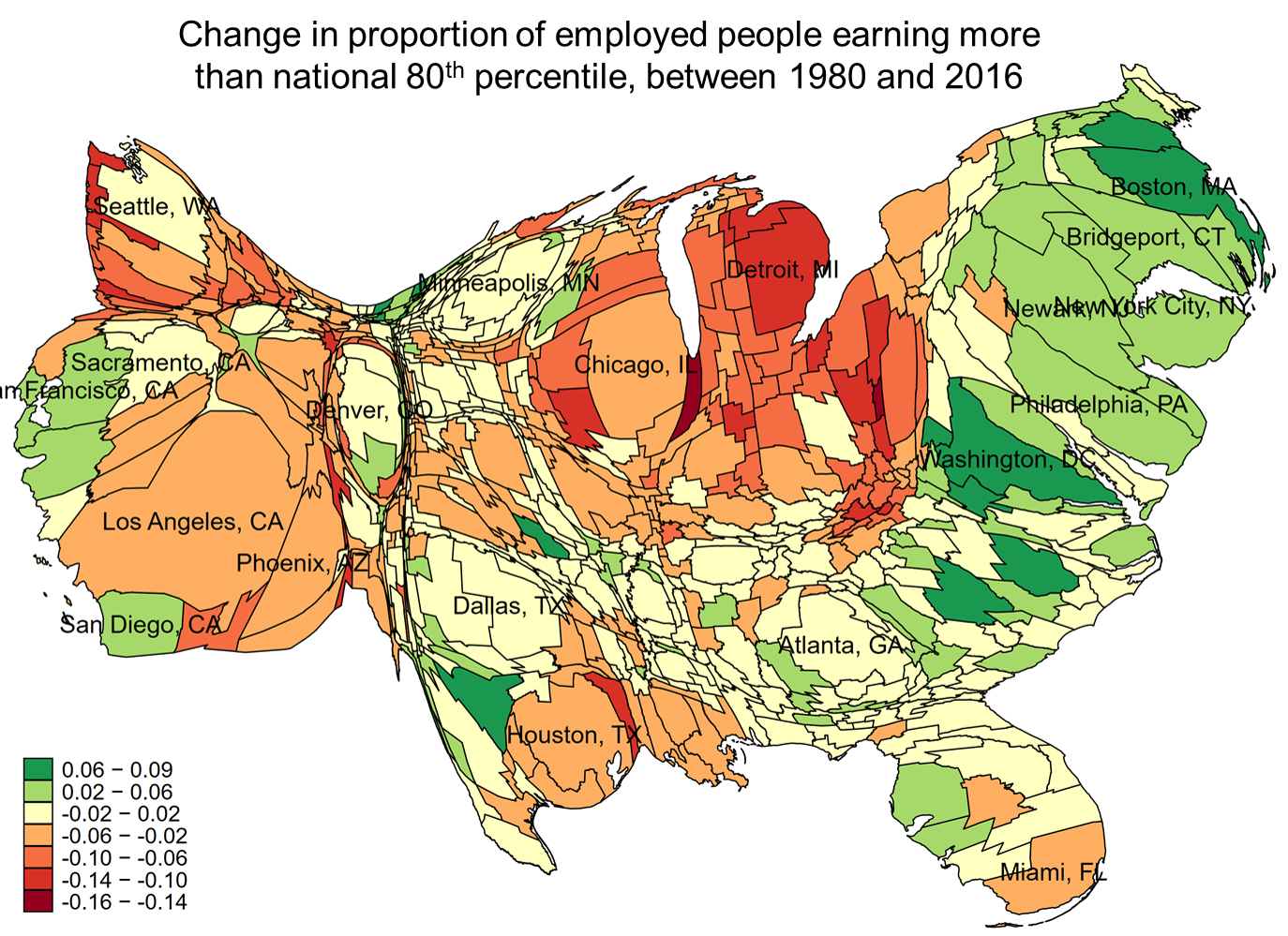
In a new study, researchers examine how the rising economic power of technology and finance firms has contributed to regional income disparities across America.

In partnership with Vista Equity Partners, NCIF hosted the inaugural Software Growth & Investment Symposium on Tuesday, Nov. 12, 2019. The event brought together members of the Triangle’s burgeoning tech ecosystem to learn from leading software executives and their investors about proven approaches to scaling from $10 million to $100 million annual recurring revenue.
The mission of the Kenan Institute of Private Enterprise to develop and promote innovative, market-based solutions to vital economic issues—and its capacity for bringing together diverse constituencies to create those solutions were both on full display on Nov. 22 at the Investing in Affordable Housing Symposium.

The most important economic challenge of our time is the large, and growing, wealth gap. Increasing income disparities and declining opportunities have diminished America's middle class. On Nov. 6-7, the Closing the Wealth Gap conference was held at UNC Kenan-Flagler Business School in Chapel Hill.

The conference, hosted by the Center for the Business of Health, the Kenan-Flagler Healthcare Club, and the Kenan Institute of Private Enterprise, attracted students, faculty and practitioners from all sectors of the healthcare system.
In the last 20 years, there's been a drastic increase in the percentage of rental household income that goes towards paying rent. How can private markets contribute solutions to this problem?