Small businesses are the engine of the American economy, and business formation is a key driver of wealth creation. These axioms, which are reflected in official statistics as well as anecdotal data, hold true not only in major financial hubs and centers of innovation but also for individuals, households and communities in rural and underserved areas. In fact, small and rural communities have shown time and again that they are fertile ground in which seed investment can take root. Yet these communities often lack access to the resources needed to build and sustain businesses. What are these requisite yet missing resources? And how do we efficiently supply them to those who put them to good use?
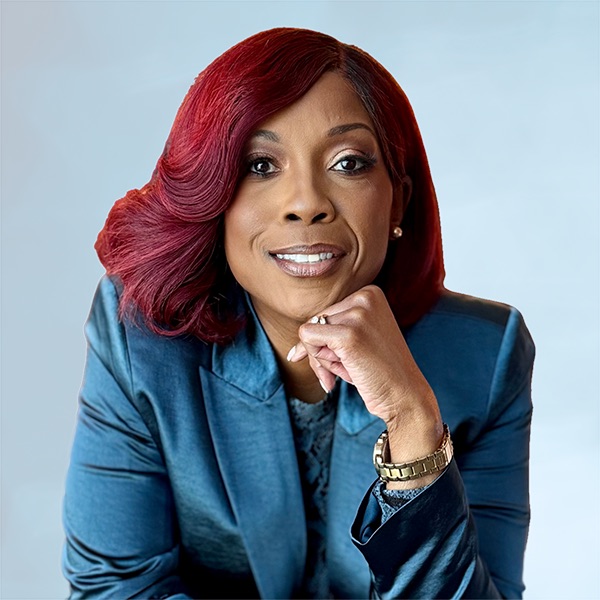
Dionne Griffin McGee will join us June 4 at the Kenan Institute’s Conference on Market-Based Solutions for Reducing Wealth Inequality to help answer these and other questions on promoting upward mobility through enterprise creation. Drawing on more than two decades working in corporate leadership, McGee is a speaker, author, consultant and executive coach, helping others to elevate their voices, build their careers and achieve their goals in the business world. With a focus on underrepresented groups, she helps people from all backgrounds work through and beyond the barriers impeding their personal and professional advancement. She sat down with the institute to share some of the lessons she has learned about resource access, opportunity and business formation in a preview of her conference panel.
Conference on Market-Based Solutions for Reducing Wealth Inequality
Jun 04, 2026 • Rizzo Center, Chapel Hill, NC
Register Today
You have spoken to the importance of mentorship, access to capital, and training for entrepreneurs. What would you say is the most vital support entrepreneurs need to thrive in small and rural communities?
Dionne Griffin McGee: The most important factor is access — access to information, capital and belief.
In many rural communities, the challenge is not a lack of talent or ideas. It’s a lack of exposure and structured opportunity. Entrepreneurs need access to mentorship, funding pathways and practical training that helps them move from concept to long-term success.
Equally important is mindset. Many individuals have been conditioned by their environment to believe that certain levels of success are out of reach. When we combine access with intentional programming and community support, we begin to shift not only businesses but belief systems.
Would you speak to entrepreneurship’s impacts on small or rural communities? Why is business formation important for expanding opportunity and growing generational wealth?
Dionne Griffin McGee: Entrepreneurship is a powerful driver of economic mobility and generational wealth, especially in rural communities. When small businesses succeed, they don’t just generate income for the owner. They create jobs, circulate dollars locally and model what is possible for others. This causes a ripple effect that strengthens entire communities.
I believe, however, that it’s important to broaden the conversation. Not everyone needs to become an entrepreneur to build wealth. We need to equip individuals — whether in careers or business — with the tools to increase income, manage money effectively and build long-term assets.
Your panel at the wealth inequality conference on June 4 will discuss ways to build ecosystems that help small businesses scale sustainably. What does it mean to scale sustainably?
Dionne Griffin McGee: Scaling sustainably means growing in a way that is intentional, profitable and repeatable, without burnout or instability. Too often, entrepreneurs are encouraged to grow quickly without the proper systems, pricing strategies or financial discipline in place. Sustainable growth focuses on strong operational systems, clear revenue models, consistent client acquisition strategies, financial literacy, and cash flow management. The most successful growth is not the fastest. It’s the most structured and strategic.
From your experience, how can private and public sector organizations work together most effectively to create an ecosystem that supports growth? What are some existing programs that serve as good examples?
Dionne Griffin McGee: Collaboration between the public and private sectors is essential for building strong, sustainable entrepreneurial ecosystems.
One example I’ve seen firsthand is the Eastern North Carolina Entrepreneurial Promise (ENCEP) program. In partnership with the National Institute of Minority Economic Development and Partner Community Capital, I led the design and delivery of this cohort-based initiative to support entrepreneurs in underserved communities, particularly east of I-95. The program was initially funded through NC IDEA, with additional support from financial institutions, including local and national banks, who invested in the program to expand access to capital and resources across the state of North Carolina.
What made this model effective was the alignment of public funding and economic development priorities, private sector investment and financial institution support, technical assistance and cohort-based programming, community-centered delivery and accountability.
Through my work with ROAR University, I have built on this model by developing structured programming that helps entrepreneurs and professionals not only launch but sustain and scale through strategy, systems and revenue-focused execution. This type of collaboration ensures that individuals are not only funded but also equipped, supported and positioned for long-term success.
We need more initiatives like ENCEP, alongside ongoing platforms like ROAR University, that are intentional, well-funded and designed for lasting impact. These programs bring together public agencies, private capital and community-based organizations to drive real economic mobility.
If you could tell the next generation of workers one thing, what would it be?
Dionne Griffin McGee: I would tell them to think beyond a single path and begin building both stability and opportunity at the same time. We are seeing more individuals become what I call “dualpreneurs”: those who maintain a career while building additional income streams. This is often driven by real factors like rising costs, healthcare needs and economic uncertainty.
I would encourage young people to develop a strong foundation in financial literacy, an understanding of how to earn, manage and grow money over time. In my life, this understanding has meant living below our means, having intentional family conversations about money, and creating a clear plan for building and protecting wealth. At the end of the day, success is not just about how much you make — it’s about what you build, what you sustain and what you pass on.