small business

Creating Your Family Business Succession Roadmap
Jun 10, 2026

Creating Your Family Business Succession Roadmap

Designed for family business leaders, non-family executives, business-owning families and future leaders, this UNC Kenan-Flagler Business School Family Enterprise Center online course is a unique opportunity to create a thoughtful roadmap for succession in family business. Come explore family business continuity challenges and common practices for successfully leading family-owned enterprises. Emphasis is placed on the importance of open, transparent communication in the family; the creation of a shared vision for the business; and the alignment of family and business goals.

Washington Post: ‘It’s Been One Hit After Another for Small Businesses’

Washington Post: ‘It’s Been One Hit After Another for Small Businesses’

Small-business owners say they’re just beginning to recover from the sudden blow that hobbled many of them during the early 2020 pandemic restrictions. Now mixed economic messages have them wondering what to do next, according to a Washington Post story. “There is so much that’s up in the air, and uncertainty affects small businesses much more so than it does larger ones,” said institute Director of Research Paige Ouimet.

closed

Carolina Across 100 – The State of North Carolina’s Small Business During COVID-19 Pandemic

Thirty-five percent of respondents from the Carolina Across 100 Survey said that loss of small business had a negative impact on their community during the pandemic. There is good reason to fear this loss. Small businesses play a vital role to their communities. Specifically, they provide economic mobility, breed innovation, deliver crucial services for communities and drive economic growth.

Equitable Entrepreneurship

What COVID-19 Taught Us About Equitable Entrepreneurship

As the pandemic forced shutdowns across the globe, U.S. government entities at the federal, state and local levels worked swiftly to secure known drivers of economic growth and job creation – including entrepreneurial ecosystems and small businesses. And while the programs implemented were widely lauded as successful, the story of who benefitted – and who did not – is more complex. This week’s Kenan Insight explores our experts’ key findings around the roles of policy and implementation in supporting equal access to opportunity.

Main Street Venture Capital

Venture-backed vs. Main Street: A Widening Business Gap

The COVID-19 pandemic increased economic inequities in a number of ways, including in access to external capital – and while 2020 marked a break-out year for venture-backed firms, the pandemic hit many main street businesses hard. In this Kenan Insight, we explore the forces driving the haves and have-nots in this new economic climate, as well as actionable policy solutions as government support programs wind down.

Is There a Small Business Funding Gap?

Is Now the Time to Raise Minimum Wage?

As the U.S. economy begins to recover from the COVID-19 pandemic and businesses grapple with ongoing labor shortages, the debate around increasing the federal minimum wage – which hasn’t budged in over a decade – has returned to the fore. In this Kenan Insight, we examine whether now is the right time to raise the standard minimum, why these benefits may come at a cost, and what approach might work best given the inevitable tradeoffs.

World Economy

The “Global-K” Recovery

The 2020 U.S. economic downturn fueled by the COVID-19 pandemic generated both big losers (such as restaurants and the hospitality sector) and big winners (such as high tech and online retail), leading economic commentators to call the recession “K-shaped.”  As the pandemic evolves in 2021, this K-shaped recovery will go global; though some countries, notably the U.S. and China, are securely tethered to the largest economic booster rocket ever built, a sizable swath of the world will continue to suffer weak growth.
U.S. Economic Development Administration

U.S. Department of Commerce Invests $300,000 in CARES Act Funding to Boost University of North Carolina at Chapel Hill’s Capacity to Help Communities and Businesses Respond to and Recover from Economic Impact of Coronavirus Pandemic

The U.S. Department of Commerce’s Economic Development Administration (EDA) is awarding a $300,000 CARES Act Recovery Assistance grant to the University of North Carolina at Chapel Hill's NCGrowth University Center to boost their capacity to support regional economic development strategies in response to the coronavirus pandemic.

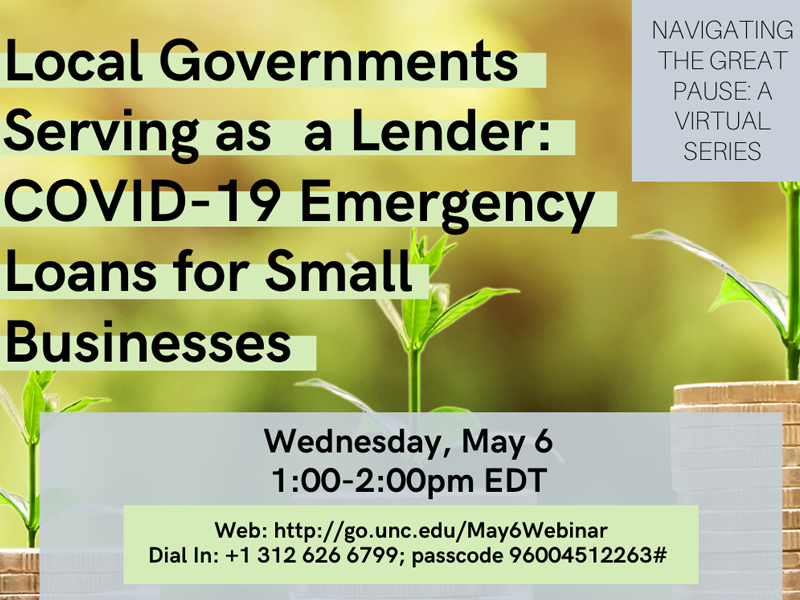
Webinar: Local Governments Serving as a Lender: COVID-19 Emergency Loans for Small Businesses
Jun 10, 2026

Webinar: Local Governments Serving as a Lender: COVID-19 Emergency Loans for Small Businesses

Join us as personnel from the Development Finance Initiative (DFI) discuss best practices for local governments as they consider implementing a loan program for small businesses. We will also hear from The City of Fayetteville and The City of Belmont, two communities who successfully created small business emergency loan programs to provide bridge loans to local businesses impacted by COVID-19.

Eship webinar 1
Jun 10, 2026

Webinar: Navigating the Great Pause: Assessing Your Situation, Money & Legal Resources

During this panel, attendees will learn from three leading experts on how to assess their own situation, create calm and create a foundation from which to make sound decisions. Panelists with expertise in financial, personnel and legal issues will provide insights. In addition, there will be an expert who will guide businesses on assessing where they stand and developing a framework and timeline of tasks to be accomplished.

Eship webinar 1
Jun 10, 2026

Webinar: Navigating the Great Pause: Leading Your Organization & Maintaining Strong Culture in the Midst of FUD

In the" Leading Your Organization and Maintaining Strong Culture in the midst of FUD (fear, uncertainty, and doubt)" session, panelists will talk specifically about how to keep your team positive and motivated in these challenging times. They will share leading indicators to assess if people on a team are struggling, tips for keeping yourself positive and suggestions for creating a sense of team and togetherness virtually.

Small Town Economy

The COVID-19 Pandemic and Small Business Employment

The COVID-19 pandemic has put 18 million jobs at small businesses in the U.S. at risk – which could as much as quadruple the nation’s total unemployment rate. The effects of both the coronavirus and recent government relief programs were explored by a panel of Kenan Institute-convened experts during a press briefing held yesterday. The full recording of this briefing—along with a deeper-dive analysis on the specific implications of the financial downturn on small business employment by Kenan Institute Research Director Professor Christian Lundblad and UNC Kenan-Flagler Business School Professor Paige Ouimet—is available in this week’s Kenan Insight.

Press Briefing: UNC Kenan Institute Projects Small Business Layoffs to Quadruple Total U.S. Unemployment Rate
Jun 10, 2026

Press Briefing: UNC Kenan Institute Projects Small Business Layoffs to Quadruple Total U.S. Unemployment Rate

A panel of experts convened by UNC Kenan-Flagler Business School and its affiliated Kenan Institute of Private Enterprise will be offering a press briefing via webinar examining the massive implications the COVID-19 market disruption has, and will continue to have, on small business employment, including a projected 11.5 percentage point addition to the overall U.S. unemployment rate by small business layoffs. They will also examine the role relief legislation can and should play in mitigating the economic effects of the pandemic. Join tomorrow, Tuesday, March 31, at 11 a.m. EDT.

Kenan Insights Is There A Small Business Funding Gap Greg Brown

Is There a Small Business Funding Gap?

Small businesses are an undeniable engine of growth for the United States, comprising 99 percent of all U.S. firms and driving nearly half our total economic activity. Yet small business owners across the country lack sufficient capital to succeed, grow and scale. The Kenan Institute has conducted a new analysis on the role of the Small Business Administration’s SBIC program in providing capital to the often-overlooked small businesses operating outside of metropolitan centers, as well as those owned by women and underrepresented minorities. Greg Brown, executive director at the Kenan Institute and professor of finance at UNC Kenan-Flagler Business School, discusses the findings in this video.

Is There a Small Business Funding Gap?

Is There a Small Business Funding Gap?

Small businesses are an undeniable engine of growth for the United States, comprising 99 percent of all U.S. firms and driving nearly half our total economic activity. Yet small business owners across the country lack sufficient capital to succeed, grow and scale. The Kenan Institute has conducted a new analysis on the role of the Small Business Administration’s SBIC program in providing capital to the often-overlooked small businesses operating outside of metropolitan centers, as well as those owned by women and underrepresented minorities. You can access an overview of our findings, as well as key takeaways for business and policy leaders, by clicking below.

Maryann Feldman testifies

CREATE Director Maryann Feldman Testifies Before U.S. House Subcommittee

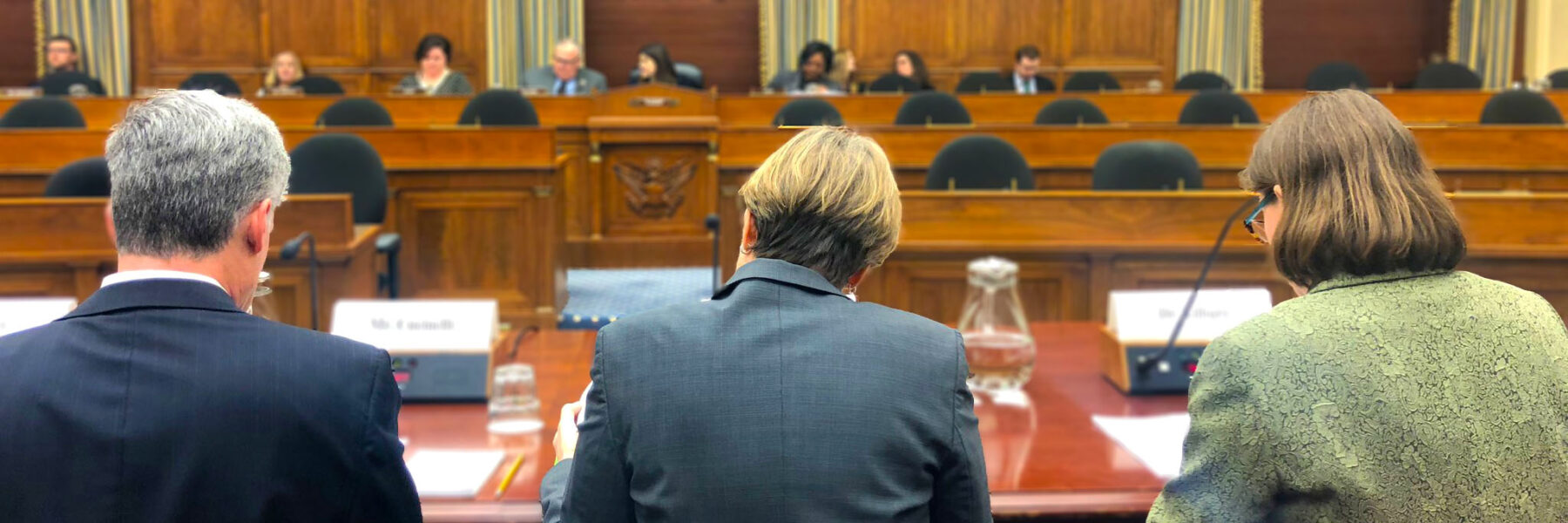
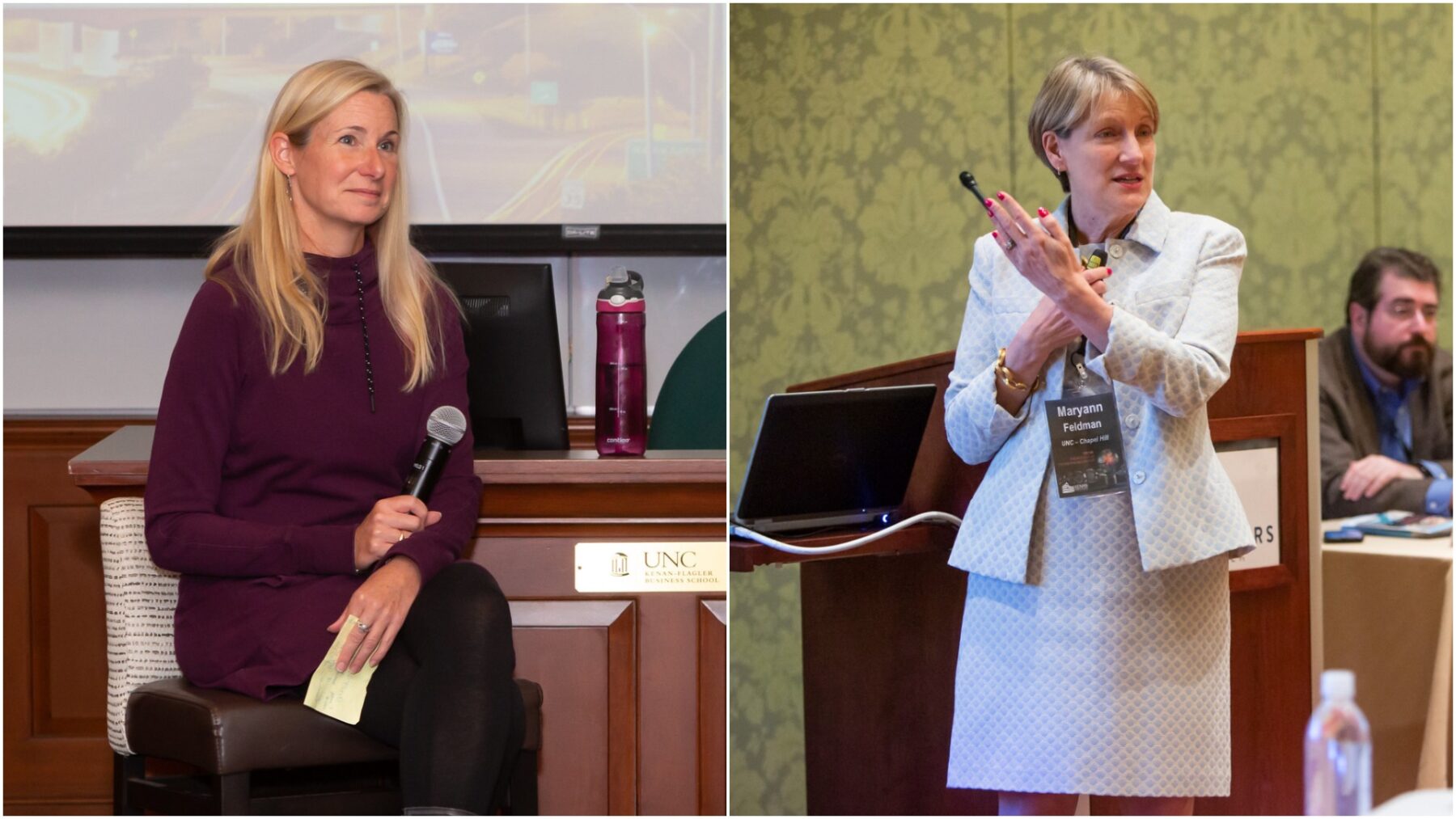
On Wednesday, Feb. 5, Maryann Feldman, Heninger Distinguished Professor in the Department of Public Policy at the University of North Carolina, adjunct professor of finance at UNC Kenan-Flagler Business School and director of the Kenan Institute-affiliated center CREATE, testified before the Subcommittee on Research and Technology, part of the U.S. House of Representatives Committee on Science, Space, and Technology. The hearing, titled "America's Seed Fund: A Review of SBIR and STTR," discussed the role of the Small Business Innovation Research (SBIR) program and Small Business Technology Transfer (STTR) program in helping to move the results of federally funded research into commercial development and generating new economic growth.