State Establishes NC Economic Forecasting Initiative at UNC Kenan-Flagler Business School
The North Carolina Economic Forecasting Initiative will use state economic data to generate rigorous, accessible county-level forecasts for all 100 counties.

The Kenan Institute of Private Enterprise is establishing a state forecasting initiative designed to support economic growth from the ground up.
The initiative will focus on providing county-level nowcast and forecast economic data to support economic development across North Carolina. The Kenan Institute will leverage its strength in translational research to communicate these forecasts in a way that makes the information accessible and informative to a wide audience. Additionally, through our community engagement team, NCGrowth, we will collaborate directly with communities seeking assistance in using this data to maximize their resources.
Access to economic data is crucial for state policymakers who aim to drive sustainable, broad-based growth in their local economies and create opportunities for all residents.
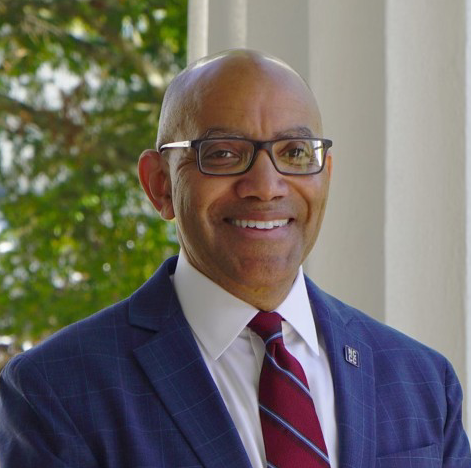
Paige Ouimet, Executive Director, Kenan Institute of Private Enterprise
By partnering with community stakeholders, the Kenan Institute team aims to build tools and tailor data-driven analyses to match the challenges unique to counties across the state.
The Kenan Institute is uniquely positioned to establish a statewide resource given our existing forecasting infrastructure, unbiased mission and connections to both experts and communities across North Carolina.
Stakeholder input at the local level will continue to shape our efforts. In 2025, supported by NC Collaboratory grants, we launched a pilot program in Rockingham, New Hanover and Caldwell counties to demonstrate the benefits of the proposed forecasting initiative. In addition to county level pilot programs, the Kenan Institute is building a network of key leaders from community colleges and county governments, community partners, chambers of commerce, business alliances, and regional economic development authorities to further inform the initiative.
Innovative methods to nowcast and forecast local economic trends will require developing key indicators at the county level. We will publish forecasts of local GDP and employment through 2027. We will also introduce two new county-level measures: housing affordability and the skills most demanded by employers in the county. In 2026, we will update the GDP and employment forecasts, as well as produce forecasts of our housing affordability and skills measures for all 100 North Carolina counties. In 2027, we plan to introduce a county-level measure of tax revenue.
In partnership with NCGrowth, the institute will connect forecasting analysis and tools to small-business networks, community development experts and technical assistance providers across the state. Additionally, we will collaborate with existing forecasting efforts and establish an advisory board to guide our forecasting efforts. Our goal is to address unmet data needs, particularly at the county level, and to add value by complementing existing forecasting initiatives.
The North Carolina Economic Forecasting Initiative will use state economic data to generate rigorous, accessible county-level forecasts for all 100 counties.

Rural districts face persistent challenges recruiting and retaining teachers. We examine teacher housing efforts in three North Carolina counties and identify practical lessons for other communities considering similar efforts.

In the past few years, buying a home has become much more expensive for the typical North Carolina household. We look at a few of the reasons why costs are rising so sharply for new buyers.

The Kenan Institute has developed a housing affordability index for North Carolina counties. The index and accompanying interactive map allow users to compare current county-level affordability metrics and see how these measures have changed over time.

Forecasting gross domestic product is a challenging practice, but because GDP can reveal so much about the growth of a local economy, forecasts are an important guide in making policy and business decisions.

Recent Kenan Institute research based on interviews across the state highlights the successes and remaining barriers that North Carolina community colleges face in recruiting and retaining students as the labor market continues to evolve.

North Carolina’s growing skills gap reflects a national challenge, but the state’s robust job market is creating high-paying opportunities for skilled workers. We talked to four experts about how to successfully scale the state’s apprenticeship and training efforts.

New business formation fuels local growth in North Carolina and offers real-time data to guide policy and forecasting, according to new research from the Kenan Institute, the North Carolina Collaboratory, and the Secretary of State.
Two principle leaders are guiding the efforts of both economists and staff to ensure the long-term impact of the initiative.