economic development policy

Maryann-Feldman

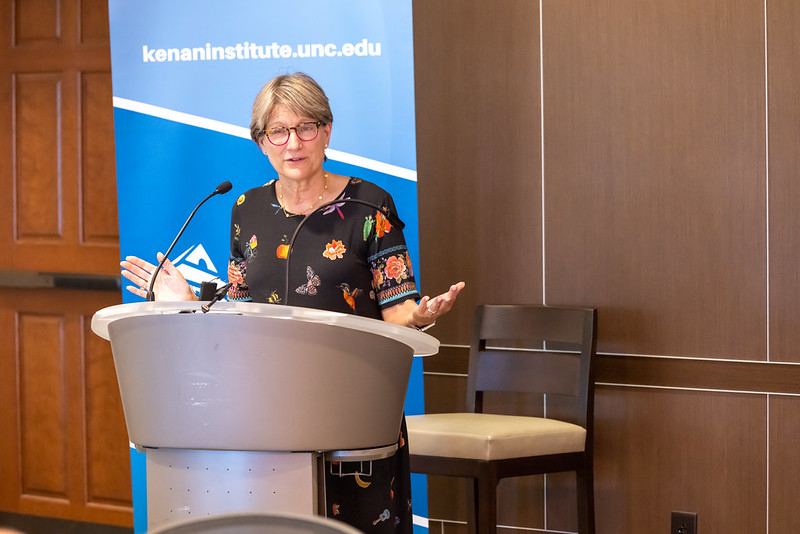
CREATE’s Feldman Testifies on Technology-Based Economic Development Challenges

CREATE Faculty Director and UNC Public Policy Professor Maryann Feldman recently served as a panelist examining conditions for technology-based economic development. While speaking to the President’s Council of Advisors on Science and Technology Sept. 29, Feldman cautioned against treating universities as lynchpins in the effort to drive regional innovation—noting reforms are needed to help university technology transfer offices recoup operating costs—and strongly advocated for new financing models to spur economic development in areas lacking venture capital support.

Equitable Entrepreneurship

What COVID-19 Taught Us About Equitable Entrepreneurship

As the pandemic forced shutdowns across the globe, U.S. government entities at the federal, state and local levels worked swiftly to secure known drivers of economic growth and job creation – including entrepreneurial ecosystems and small businesses. And while the programs implemented were widely lauded as successful, the story of who benefitted – and who did not – is more complex. This week’s Kenan Insight explores our experts’ key findings around the roles of policy and implementation in supporting equal access to opportunity.

Insurance

Could Insurance Coverage Disparities be Widening the Wealth Gap?

While economists have long theorized that wealthier individuals may purchase less life and property insurance because they can rely on their savings if something unexpected happens, a new study of more than 63,000 people shows that, in practice, quite the opposite is true. This week’s Kenan Insight offers a chance for our experts to explore the findings of their new study, which suggest disparities in insurance coverage could help explain and exacerbate existing financial inequalities.

Biden’s Build Back Better: A Brighter Future for Black Families?

Biden’s Build Back Better: A Brighter Future for Black Families?

While the COVID-19 pandemic was devastating for many, research shows its impact was not felt equally. Black Americans experienced disproportionate health and economic ramifications, which compounded the financial, social and psychological strain many felt pre-pandemic, and have contributed to growing inter-generational wealth disparities. In today’s Kenan Insight, our experts explore whether the multi-trillion dollar “Build Back Better” plan proposed by the Biden administration holds the potential to begin closing pervasive gaps in American society.

Is There a Small Business Funding Gap?

Is Now the Time to Raise Minimum Wage?

As the U.S. economy begins to recover from the COVID-19 pandemic and businesses grapple with ongoing labor shortages, the debate around increasing the federal minimum wage – which hasn’t budged in over a decade – has returned to the fore. In this Kenan Insight, we examine whether now is the right time to raise the standard minimum, why these benefits may come at a cost, and what approach might work best given the inevitable tradeoffs.

Big Tech

Is Big Tech Headed for a Big Tumble?

As The Wall Street Journal reported this week, Congress is gearing up for a potential showdown with the largest tech companies in the U.S. And with a bipartisan group of representatives pushing for legislation that would dismantle the monopoly power of Big Tech, this week's Kenan Insight revisits research on how regulating Amazon, Apple and others may be key to reviving the economies of America’s held-back cities and regions.

US Economy

Biden Throws the Book (Income) at Corporate Taxes

The Biden administration's $2.3 trillion American Jobs Plan comes with a hefty price tag, which the president hopes to pay in part by introducing a 15% minimum tax on corporate book income.  Predictably, policymakers from both sides of the aisle are sounding off, but the argument is more complicated and nuanced than partisan rhetoric. In this Kenan Insight, we outline the intricacies and implications of taxing book income.

Opportunity Zones

The Land of Opportunity (Zones)

The Tax Cuts and Jobs Act of 2017 (TCJA) allowed for the creation of Opportunity Zones (OZs) — specially designated census tracts encompassing low-income neighborhoods meant to stimulate investment through large tax incentives. But critics say the program has not spurred additional investment as much as rewarded politically connected investors. In this Kenan Insight, we investigate what role, if any, bias and political party affiliation plays in the selection of OZs.

Black Lives Matter
May 24, 2026

Press Briefing: Driving Equitable Solutions for Racial Justice Amid COVID-19

A panel of experts convened by UNC Kenan-Flagler Business School, its affiliated Kenan Institute of Private Enterprise and the Institute of African American Research will offer a press briefing via webinar on the intersection of the COVID-19 crisis and the Black Lives Matter movement—providing a framework for developing solutions to achieve equitable public health and economic outcomes for the short- and long-term.

CARES Act

Who CARES? Assessing the Impact of the CARES Act

In response to the economic chaos caused by the COVID-19 pandemic, the federal government launched its largest fiscal stimulus in modern history—the CARES Act. But with $2 trillion invested in small businesses, unemployment benefits and direct cash payments to households, the CARES Act has still fallen short of its goals to spur consumer spending and restore employment. This Kenan Insight analyzes what went wrong, and offers suggestions for the anticipated next round of federal economic aid.

Is There a Small Business Funding Gap?

Decoding the Worst Quarter in Economic History

There is no doubt that the COVID-19 crisis has devastated the U.S. economy. But the particulars of this devastation are difficult to gauge, because unique aspects of the of the pandemic distort the data commonly used to assess such situations. In this Kenan Insight, we take a deep dive into the data to learn what it actually tells us about the economic impact of COVID-19, and suggest possibilities for a restart and recovery of the U.S. economy.

A Strategic Response to the Coronavirus Pandemic for the African American Working Poor

A Strategic Response to the Coronavirus Pandemic for the African American Working Poor

The coronavirus pandemic has been especially traumatic on our country’s African American working poor. From being disproportionately concentrated in low-wage hospitality and service sector jobs to struggling with caregiving and food insecurity issues due to shuttered daycare facilities and food banks, working-poor African Americans are facing an inequitable share of financial, social and psychological challenges. What can be done to ease the burdens of working-poor African Americans, both during the pandemic and moving forward? In this Kenan Insight, Urban Investment Strategies Center Director and William R. Kenan Jr. Distinguished Professor of Strategy and Entrepreneurship Jim Johnson invokes a little-known federal program, the Southeast Crescent Regional Commission (SCRC), as part of a strategic response to providing a coherent, place-based development plan.

Technology

Monopoly Money: Tech and the Changing Geography of Wealth

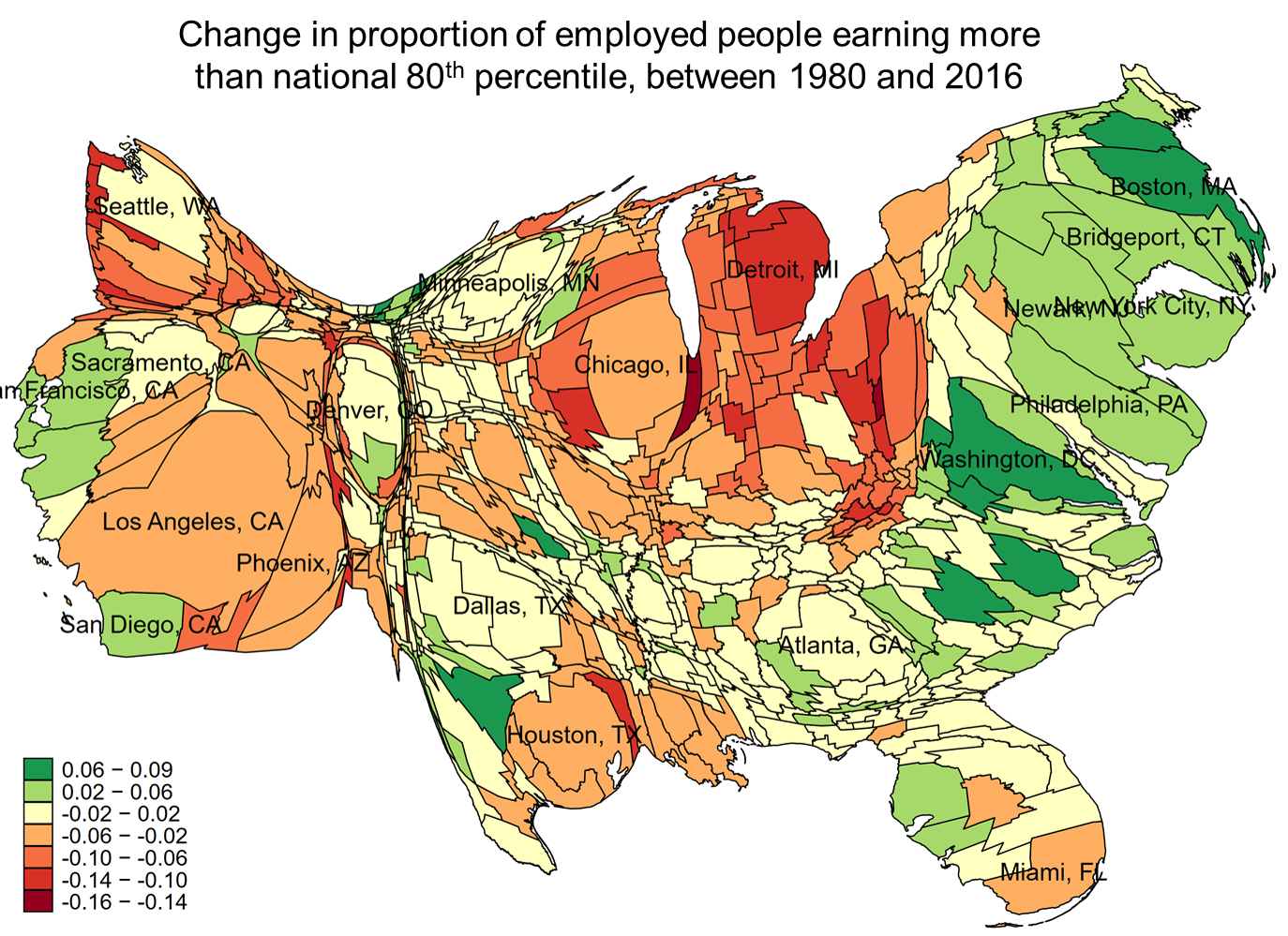
While technological advances have traditionally been a boon to the U.S. economy, the rapid rise of new platforms and the increased financialization of the economy in recent years have encouraged the growth of monopolies—driving an ever-widening geographic gap in the distribution of income across the country. New research from the Kenan Institute’s Professor Maryann Feldman explores the ramifications of this growing divide.

Is There a Small Business Funding Gap?

Is There a Small Business Funding Gap?

Small businesses are an undeniable engine of growth for the United States, comprising 99 percent of all U.S. firms and driving nearly half our total economic activity. Yet small business owners across the country lack sufficient capital to succeed, grow and scale. The Kenan Institute has conducted a new analysis on the role of the Small Business Administration’s SBIC program in providing capital to the often-overlooked small businesses operating outside of metropolitan centers, as well as those owned by women and underrepresented minorities. You can access an overview of our findings, as well as key takeaways for business and policy leaders, by clicking below.

Mark Little Carolina Business Review

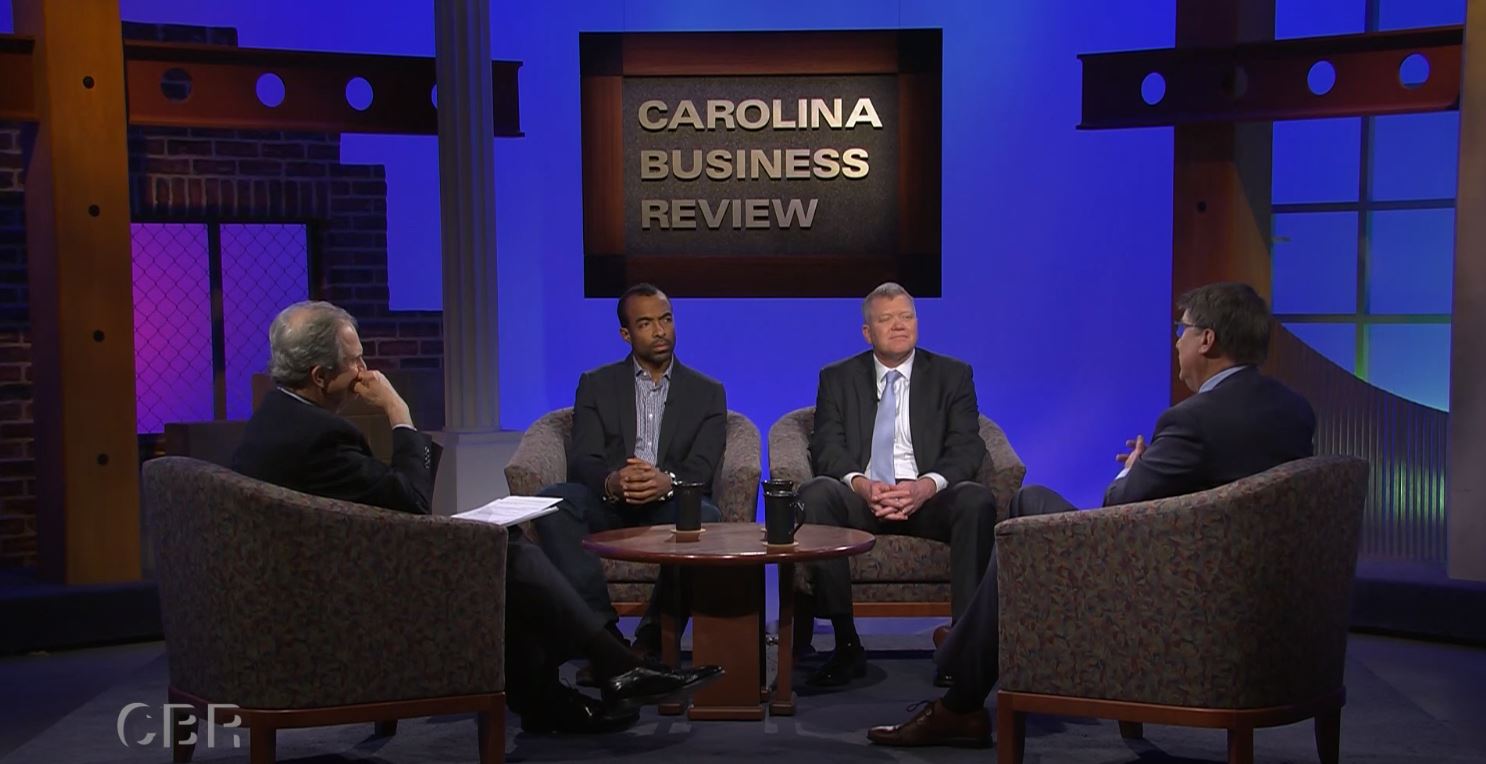
CREATE Executive Director and NCGrowth Co-founder Mark Little Featured as Guest on ‘Carolina Business Review’

Mark Little, executive director of the Kenan Institute affiliated center CREATE and co-founder of NCGrowth, appeared on the Friday, Feb. 21 episode of WTVI PBS Charlotte's "Carolina Business Review." Mark discussed economic development across the Carolinas with with Jeff Ruble, Richland County, South Carolina director of economic development; Pat McCrory, former North Carolina governor; and host Chris William. Watch the full episode here.

Maryann Feldman testifies

CREATE Director Maryann Feldman Testifies Before U.S. House Subcommittee

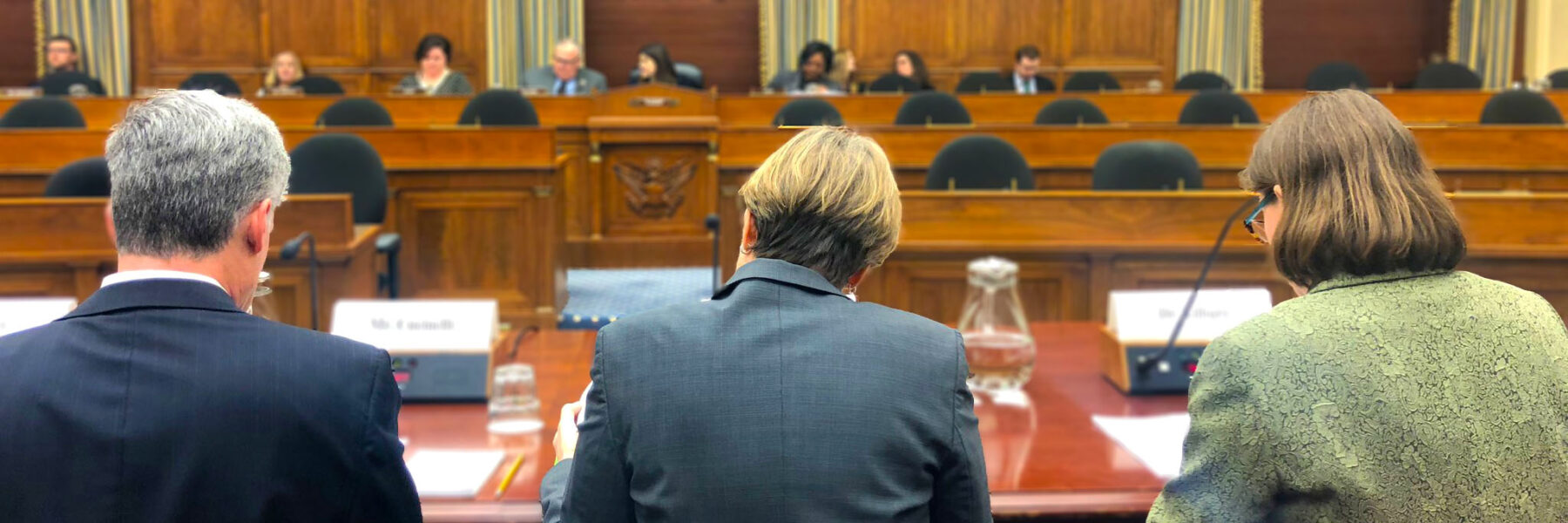
On Wednesday, Feb. 5, Maryann Feldman, Heninger Distinguished Professor in the Department of Public Policy at the University of North Carolina, adjunct professor of finance at UNC Kenan-Flagler Business School and director of the Kenan Institute-affiliated center CREATE, testified before the Subcommittee on Research and Technology, part of the U.S. House of Representatives Committee on Science, Space, and Technology. The hearing, titled "America's Seed Fund: A Review of SBIR and STTR," discussed the role of the Small Business Innovation Research (SBIR) program and Small Business Technology Transfer (STTR) program in helping to move the results of federally funded research into commercial development and generating new economic growth.